Chapter 1
The direct answer: make the buyer confident about details
A jewelry product detail Instagram carousel should show the hero piece, close-up craftsmanship, scale on body, material and stone information, styling ideas, care or durability notes, and a purchase or inquiry CTA. The goal is to answer the questions a buyer would ask before clicking the product page.
Meta's carousel format is useful because each card can carry a separate part of the buying decision. For jewelry, that means one card for beauty, one for scale, one for material, one for occasion, and one for proof or policy.
The carousel should avoid vague luxury language when a factual claim matters. 'Gold tone' is not the same as '14k gold.' 'Lab-created' and 'imitation' have specific consumer meaning. Good jewelry content is both emotional and precise.
Callout
Jewelry content rule
Use romance for style and precision for claims. The buyer should know what the piece is, how it wears, and what the brand can honestly say about it.
Chapter 2
Answer the product questions that photos usually hide
Jewelry photos can make a piece look larger, brighter, or more formal than it feels in real life. A good carousel reduces that uncertainty instead of hiding it.
Show scale on a hand, neck, ear, wrist, model, tray, or alongside a familiar object when appropriate. Show clasp, chain length, earring backing, band width, stone setting, and texture. These details help shoppers decide whether the piece fits their style and use case.
If the product page has specifications, use the carousel to explain the most decision-relevant specs in plain language. Do not bury material or care details only on the product page if they affect trust.
What metal, finish, or plating is used?
What stone or material description is accurate?
How large is the piece on a real person?
What is the closure, backing, chain length, or ring profile?
Is it daily wear, occasion wear, giftable, bridal, or collectible?
What care instructions matter before purchase?
Chapter 3
Use an eight-slide product detail structure
The best jewelry carousels feel like a guided inspection. The first slide attracts taste. The middle slides answer confidence questions. The final slide sends the buyer to the right action.
Keep the visual rhythm consistent. If every product detail post uses the same order, shoppers learn how to read the brand's product content quickly.
This structure works for rings, necklaces, earrings, bracelets, charms, bridal pieces, watches, handmade pieces, and limited drops.
- 1
Slide 1: hero angle
Show the piece clearly with a headline that names the style, use case, or drop.
- 2
Slide 2: close-up detail
Show stone, setting, texture, engraving, clasp, or handmade feature.
- 3
Slide 3: scale on body
Show how it looks on a hand, neck, ear, wrist, or model.
- 4
Slide 4: material facts
State approved metal, stone, plating, pearl, lab-created, or imitation terminology.
- 5
Slide 5: styling occasion
Show everyday, bridal, office, evening, layered, or gift styling.
- 6
Slide 6: care or durability
Explain water, storage, cleaning, or wear guidance without overpromising.
- 7
Slide 7: gift or policy detail
Mention sizing help, returns, packaging, shipping cutoff, or appointment path where current.
- 8
Slide 8: CTA
Shop the piece, book a styling consult, ask about sizing, save the gift idea, or join the drop list.
Chapter 4
Keep jewelry claims compliant and reviewable
The FTC Jewelry Guides are designed to help marketers avoid unfair or deceptive claims for gemstones, pearls, precious metals, alloys, and imitations. That matters for Instagram content because a short caption can still make a product claim.
Create an approved terminology bank before generating product posts. The bank should define how the brand describes gold, silver, vermeil, plated pieces, diamonds, lab-created stones, simulated stones, pearls, vintage pieces, recycled materials, and handmade claims.
A carousel does not need to quote regulation. It needs to use terms the business can substantiate. If a claim is complicated, route the shopper to the product page or customer service instead of compressing the nuance into tiny text.
Use approved metal and gemstone terms from product records.
Avoid using 'real,' 'solid,' 'natural,' or 'ethical' unless the brand can substantiate the claim.
Separate style language from material facts.
Have product, merchandising, or compliance review claims before publishing.
Update posts when product specifications or availability change.
Chapter 5
Turn one jewelry piece into multiple carousel angles
A single jewelry product can support more than one post because buyers have different questions. The brand should not publish the same hero image repeatedly. Instead, rotate the buying angle.
A detail carousel explains craftsmanship. A styling carousel shows how to wear it. A gift carousel frames the recipient and occasion. A care carousel reduces post-purchase anxiety. A drop carousel creates urgency when inventory is limited.
For ecommerce, connect each carousel to the product page that matches the promise. If the carousel is about pearl care, link to the pearl collection or care guide. If it is about one ring, link directly to that ring.
Craftsmanship story: setting, texture, stone, finish, and maker note.
Scale guide: body photos, measurements, chain length, ring profile, earring drop.
Gift guide: recipient, budget, packaging, shipping deadline, exchange policy.
Styling guide: day-to-night, bridal, office, layered, capsule wardrobe.
Care guide: storage, cleaning, water exposure, travel, repair path.
Drop guide: limited quantity, launch time, waitlist, restock status.
Chapter 6
How AttentionClaw helps jewelry brands produce detail posts
AttentionClaw helps jewelry teams turn product records, approved claim language, model photos, and detail shots into structured Instagram carousels. The workflow starts with the factual product sheet, not a blank caption box.
The brand can save templates for product detail, scale guide, styling guide, care education, gift guide, and collection drop. Each template asks for the assets and facts that must be reviewed before publishing.
This keeps the creative output elegant without letting AI invent materials, stone names, or policy details. Human review owns the claims; AttentionClaw speeds up formatting and variant production.
Callout
Jewelry workflow
Product record first, approved claims second, creative sequence third, compliance review fourth, publishing last.
Chapter 7
Measure detail engagement, product clicks, saves, and sizing questions
Jewelry carousel performance should be measured beyond likes. Saves can indicate gift research. Product clicks show purchase intent. Comments and DMs often reveal missing product details.
Track which slide types create action. If scale photos increase product clicks, make them standard. If care slides reduce returns or support questions, keep publishing them. If material slides trigger confusion, the product page may need clearer specifications.
Use carousel data to improve future product photography. The marketing team may discover that clasp photos, earring scale, or ring profile images drive more qualified clicks than another lifestyle shot.
Track product page clicks by carousel angle.
Track saves on gift and styling posts.
Track DMs about sizing, material, care, and shipping.
Track conversion by product-detail carousel versus lifestyle-only post.
Feed common questions back into product pages and future posts.
Next step
Turn jewelry details into shoppable social posts
AttentionClaw helps jewelry brands transform product records, model shots, detail photos, and approved claim language into consistent Instagram carousels and TikTok slideshows.
Common Questions
FAQ
More Reading
Keep reading
8-chapter read
Jeweler Ring Sizing Instagram Carousels
Jeweler ring sizing carousels should help shoppers understand fit, width, resizing limits, surprise proposal questions, and appointment CTAs without overstating what can be resized.
8-chapter read
Boutique Product Drop Instagram Carousels
Boutique product drop carousels should show new arrivals, fit and material details, care information, inventory timing, review proof, and shopping CTAs without misleading scarcity or labeling claims.
9-chapter read
Tattoo Studio Aftercare Instagram Carousels
Tattoo studio aftercare carousels should explain what clients should ask, how to follow artist instructions, infection warning signs, booking prep, and when to seek medical advice.
8-chapter read
Carousel Slide Order That Converts: Hook, Proof, Offer, CTA
A converting carousel usually follows a clear order: hook, context, problem, solution or product, proof, objection handling, offer, and CTA. The exact slide count can change, but the reader should never wonder why the next slide exists.
7-chapter read
How to Turn a Product Detail Page Into Social Content
A product detail page can become a full social campaign when you extract buyer questions, benefits, proof, variants, objections, reviews, and offers. The goal is not to copy the page into posts; it is to turn each product-page section into one useful social asset.
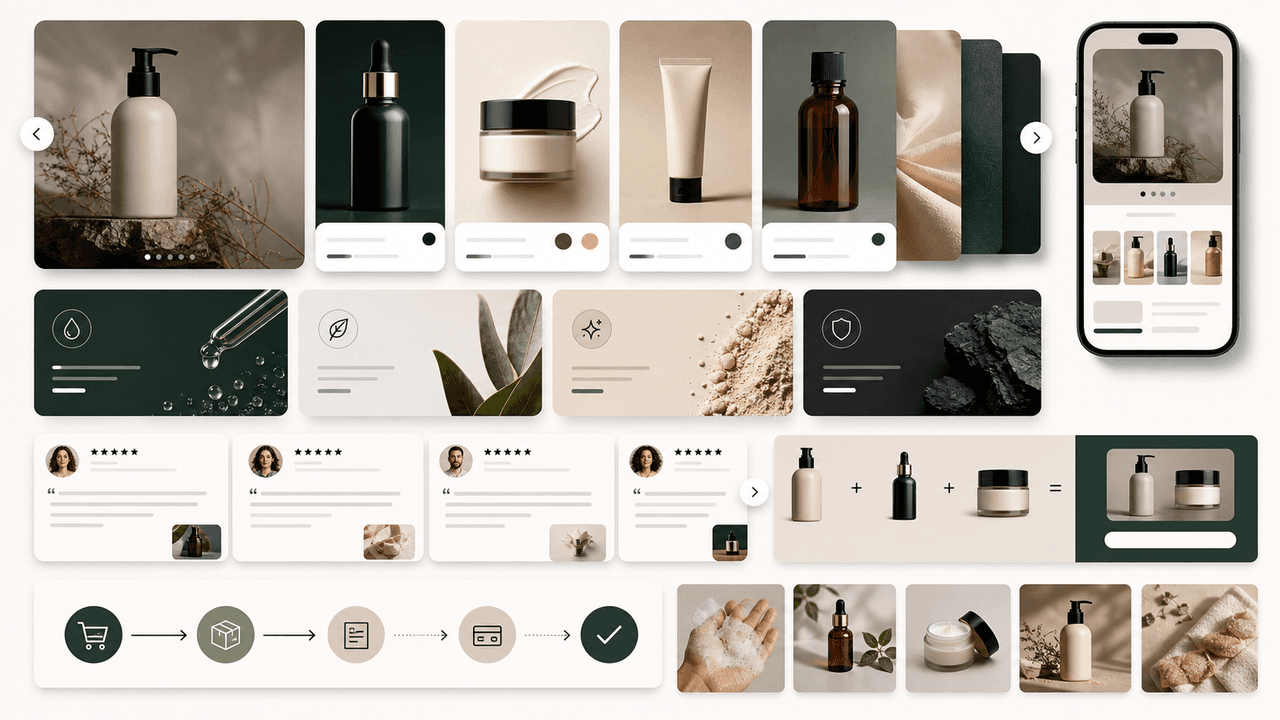
Four Product Carousel Formats Built Around Evidence
The best ecommerce carousel template depends on the buyer question and the evidence available. These four formats organize approved product details, media, comparison facts, bundle contents, and use cases into reviewable slide sequences without promising that a template will generate sales.

Product Comparison Carousels: Help Shoppers Choose (And Choose You)
Comparison carousels are some of the highest-converting content in e-commerce because they meet shoppers at the exact moment they are deciding between options. Done right, they make your product the obvious choice without feeling like a biased sales pitch.

UGC Carousels for E-Commerce: Turn Customer Photos Into Your Best Sales Tool
User-generated content converts at 4-5 times the rate of brand-produced content, but most e-commerce brands either ignore UGC or use it poorly. Repurposing customer photos into structured carousel formats turns scattered social proof into your highest-performing sales asset.
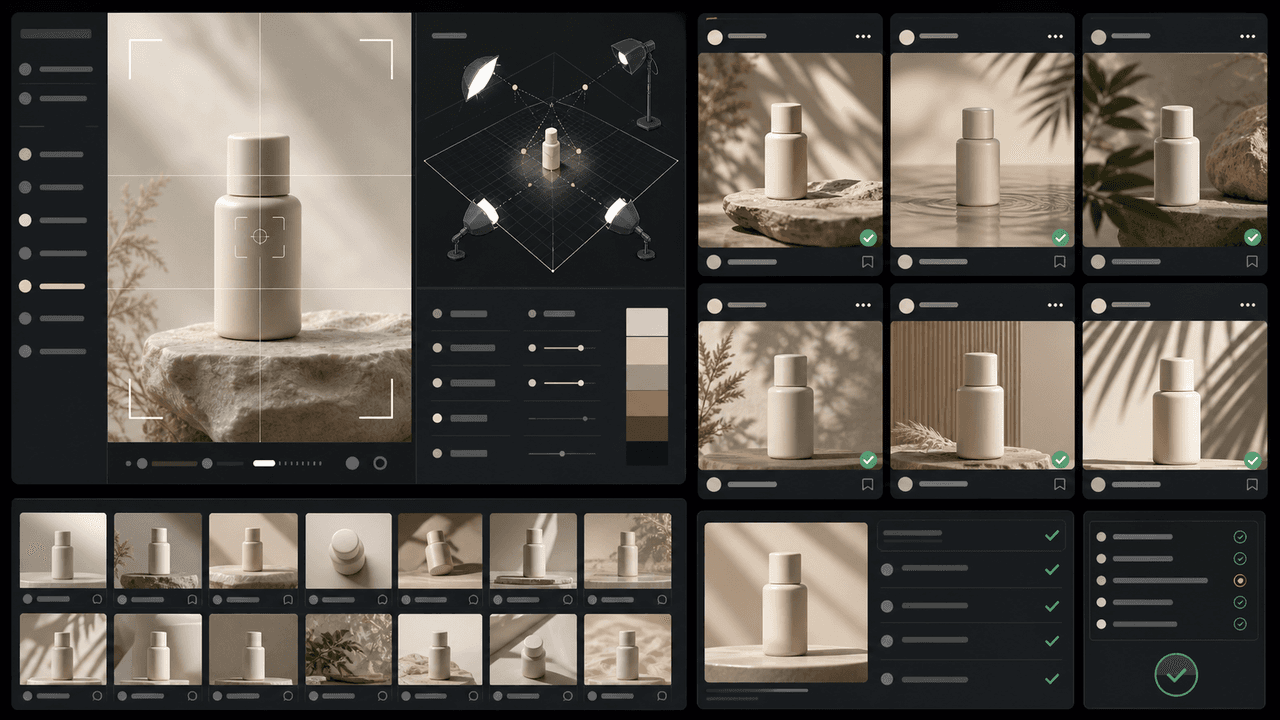
How to Keep Product Photos Consistent Across AI-Generated Social Posts
Consistent AI product images come from a system, not a lucky prompt. Lock the product reference, camera rules, lighting, background family, brand palette, allowed variations, and review checklist before generating campaign assets. Then vary context and message without changing the product identity.
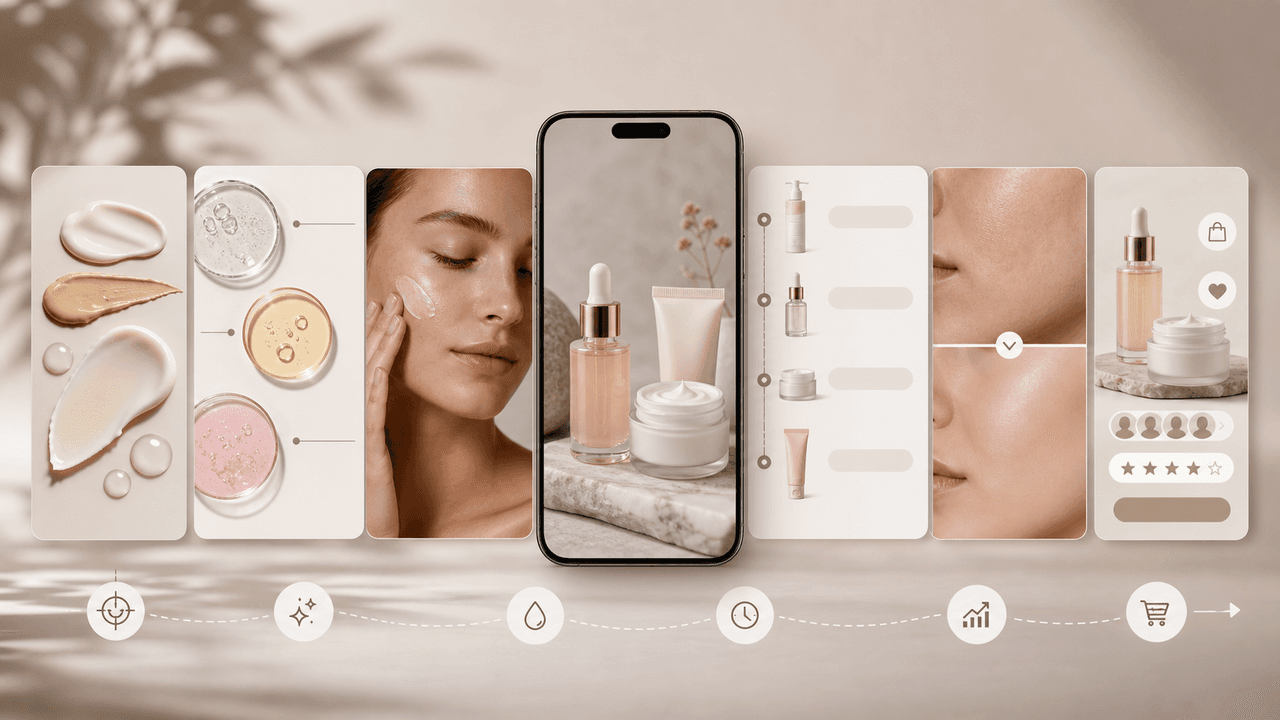
A Beauty Brand Carousel Strategy Built Around Evidence
A responsible beauty carousel starts with the exact claim and its support, not a dramatic visual promise. Use current product facts, review express and implied messages, disclose material connections, and preserve the limits of the evidence on the slide where readers need them.
Sources
- About Carousel Ads — Meta Business Help Center
- Jewelry Guides — Federal Trade Commission
- 16 CFR Part 23 - Guides for the Jewelry, Precious Metals, and Pewter Industries — Electronic Code of Federal Regulations
- Visual Merchandising: How to Make Standout Product Displays — Shopify
Written by
AttentionClaw
Editorial Team
Editorial context
Part of the Carousel Creation topic cluster. Last updated June 22, 2026.