Chapter 1
The direct answer: explain fit before the shopper buys
A jeweler ring sizing Instagram carousel should explain how sizing is measured, why finger and ring width matter, why surprise sizing is only an estimate, what designs may be harder to resize, and how to book a fitting.
GIA notes that wide shanks usually need to be a bit larger because they fit more snugly, and that estimating someone else's ring size is only approximate. FTC jewelry guidance also warns that depictions that make a gem look larger than actual size may mislead consumers unless true size is disclosed.
The carousel should not promise every ring can be resized, imply a surprise estimate is exact, or hide material and size facts that affect the buying decision.
Callout
Ring sizing rule
Use the carousel to reduce sizing risk: fit, width, design limits, scale, and appointment path should be clear before purchase.
Chapter 2
Build ring sizing posts from shopper questions
Shoppers ask how to measure a ring, whether to size up for wider bands, whether engagement rings can be resized, what to do for a surprise proposal, and how long resizing might take.
Keep one intent per carousel. Do not combine ring sizing, diamond education, financing, warranty, custom design, and holiday shipping in one post.
Ring width and fit.
Finger size changes.
Surprise proposal estimates.
Resizing limits by design.
Scale and product-photo context.
Appointment or fitting path.
Purchase CTA.
Chapter 3
Use an eight-slide ring sizing carousel
- 1
Slide 1: sizing hook
Open with a common question such as how to choose ring size for a surprise proposal.
- 2
Slide 2: professional sizing
Explain that in-store sizing is the cleanest path when possible.
- 3
Slide 3: width matters
Show how wider bands can fit differently from slim bands.
- 4
Slide 4: finger changes
Mention time of day, temperature, and hand differences without overcomplicating the post.
- 5
Slide 5: surprise estimate
Explain that borrowed rings or estimates are useful but not exact.
- 6
Slide 6: resizing caveat
Name designs that may require jeweler review before resizing.
- 7
Slide 7: scale proof
Show the ring on hand, sizing tool, or model with accurate scale.
- 8
Slide 8: CTA
Invite shoppers to book a fitting, ask about resizing, or save the sizing checklist.
Chapter 4
How AttentionClaw packages jewelry store content
AttentionClaw helps jewelers turn sizing FAQs, product specs, GIA-informed education, FTC-aware claim guardrails, scale photos, and appointment links into review-ready carousel drafts.
Templates can cover ring sizing, product detail pages, gift guides, engagement ring appointments, care instructions, limited drops, and custom design consults.
Chapter 5
Measure sizing confidence
Track fitting bookings, product page clicks, sizing-guide saves, DMs, and reduced post-purchase sizing confusion.
A strong ring sizing carousel should make shoppers more comfortable asking a jeweler before they guess.
Fitting bookings.
Sizing guide saves.
Product page clicks.
Sizing DMs.
Resize consult requests.
Chapter 6
A practical at-home sizing walkthrough to include in your carousel
One of the highest-value slides in a ring sizing carousel is a simple at-home measurement guide. Shoppers who already feel oriented about their size are far more likely to book a fitting appointment rather than stall. The walkthrough does not need to be exhaustive — three to four steps with a note about when in-store confirmation matters is enough.
A workable version: Step 1 — Wrap a thin strip of paper snugly (not tightly) around the base of your finger. Mark where it overlaps. Measure the length in millimeters. Step 2 — Compare that number to a standard size chart (US, UK, or European depending on your market). Step 3 — If your measurement falls between two sizes, note that wider bands typically fit better at the larger size. Step 4 — Measure at the end of the day when fingers are at their largest, not first thing in the morning.
Close that slide sequence with a CTA that frames the in-store fitting as a confirmation, not a correction: 'This gives you a great starting point — we'll confirm your exact fit in the shop and account for the specific band you choose.' That framing reduces the feeling that the at-home guide was a waste of time.
Chapter 7
How to explain resizing limits without making shoppers anxious
Most engagement and fashion rings can be resized within a range, but that range varies by metal, band width, setting style, and whether stones are channel-set around the shank. This is genuinely useful information for a shopper who might be choosing between a plain band and an eternity band without knowing the difference matters for future adjustments.
A sizing carousel can address resizing limits in one plain-language slide: 'Most rings can go up or down one to two sizes. Eternity bands and rings with channel-set stones around the full shank are harder to resize — if you're between sizes, we'll size up and discuss fit options with you in person.' This is specific, honest, and sets the right expectation without alarming the shopper or underselling the ring's appeal.
Avoid language that implies all resizing is simple and free. Resizing has a cost and a timeline, and a shopper who discovers this after purchase will feel misled. Naming the category of rings that has limits — and inviting a conversation — is a better long-term trust builder than omitting it entirely.
Plain bands: typically easiest to resize up or down.
Engraved bands: resizing may distort the engraving — mention this for custom pieces.
Eternity and half-eternity bands: resizing is limited by the stone setting around the shank.
Wide bands (over 6mm): may need to be remade rather than resized at larger adjustments.
Two-tone or plated rings: resizing can affect the appearance of the metal boundary or plating.
Chapter 8
The surprise proposal sizing problem and how your carousel can solve it
A significant portion of engagement ring shoppers are buying for a partner without knowing their ring size. This is a real anxiety and a natural carousel hook — a slide devoted to it will earn saves from people who are actively planning a proposal and feel stuck.
The most reassuring message you can give this shopper is a combination of: how to estimate a size (borrowing a ring from their partner's other hand, asking a sibling or friend, or using a ring-sizer sleeve available in your shop), why sizing up is safer than sizing down, and how straightforward the post-proposal adjustment process is at your store. A closing slide like 'Proposed with the wrong size? That's normal — come in and we'll adjust it' removes a fear that may otherwise stall the purchase entirely.
This sub-topic works well as a standalone carousel or as a slide within a broader sizing post. If you post it separately, it tends to resonate most in the months when engagement rates peak — but it performs year-round because proposals happen at any time.
Next step
Turn sizing questions into jeweler carousels
Use AttentionClaw to package ring sizing FAQs, scale photos, resizing caveats, and fitting CTAs into review-ready carousel drafts.
Common Questions
FAQ
More Reading
Keep reading
8-chapter read
Boutique Product Drop Instagram Carousels
Boutique product drop carousels should show new arrivals, fit and material details, care information, inventory timing, review proof, and shopping CTAs without misleading scarcity or labeling claims.
7-chapter read
Jewelry Product Detail Instagram Carousels: Show Materials, Scale, and Story
Jewelry carousels sell best when they help a buyer judge detail: material, scale, craftsmanship, styling, occasion, and care. The content should be beautiful, but also precise about jewelry claims and buying context.
8-chapter read
Carousel Slide Order That Converts: Hook, Proof, Offer, CTA
A converting carousel usually follows a clear order: hook, context, problem, solution or product, proof, objection handling, offer, and CTA. The exact slide count can change, but the reader should never wonder why the next slide exists.
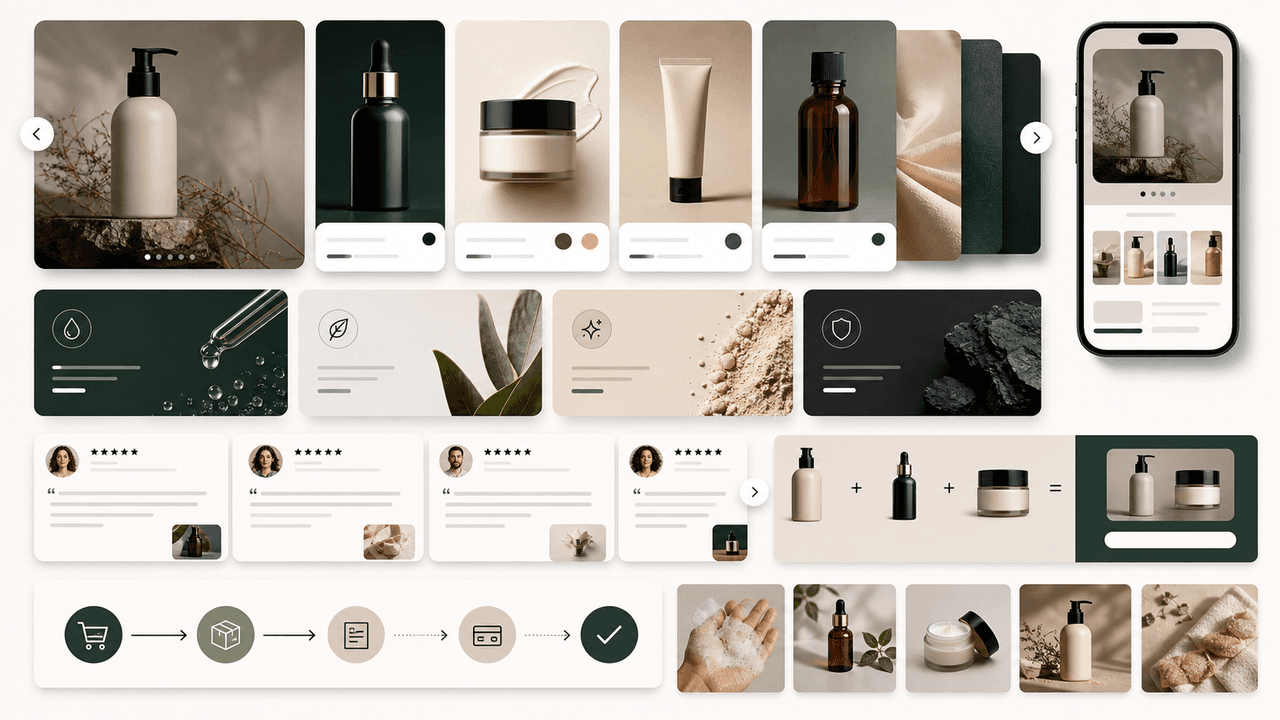
Four Product Carousel Formats Built Around Evidence
The best ecommerce carousel template depends on the buyer question and the evidence available. These four formats organize approved product details, media, comparison facts, bundle contents, and use cases into reviewable slide sequences without promising that a template will generate sales.
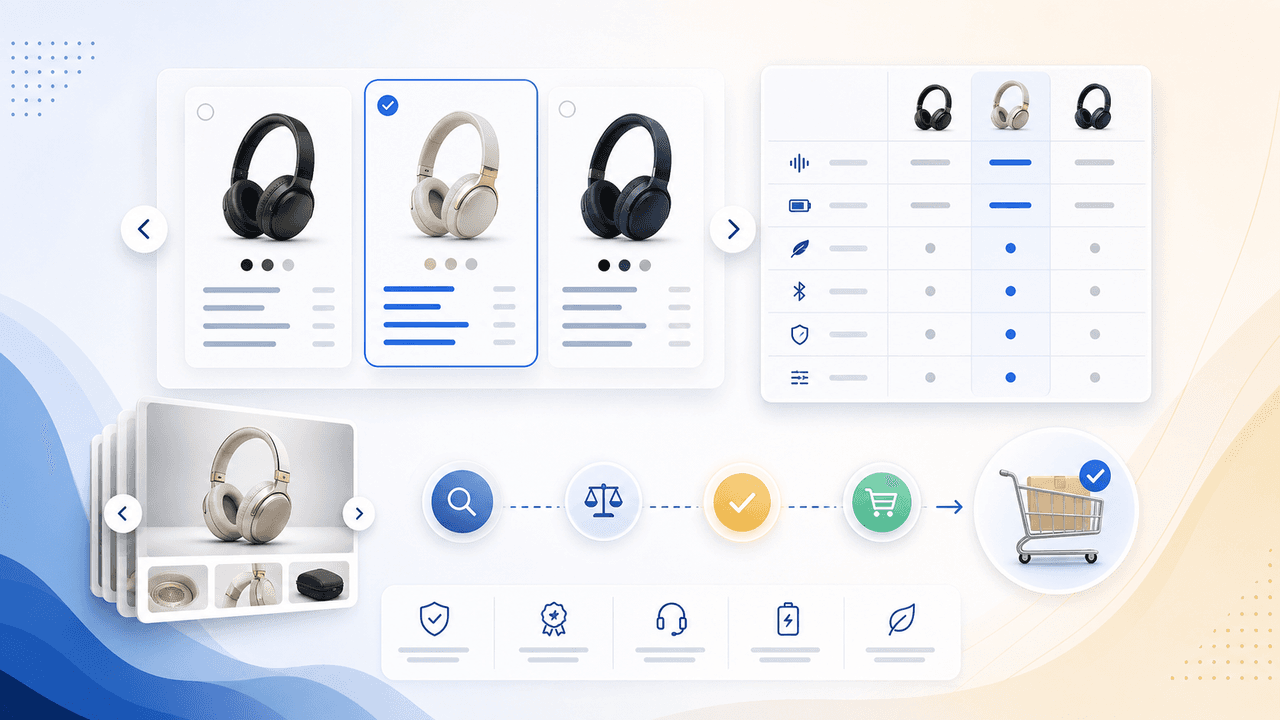
Product Comparison Carousels: Help Shoppers Choose (And Choose You)
Comparison carousels are some of the highest-converting content in e-commerce because they meet shoppers at the exact moment they are deciding between options. Done right, they make your product the obvious choice without feeling like a biased sales pitch.
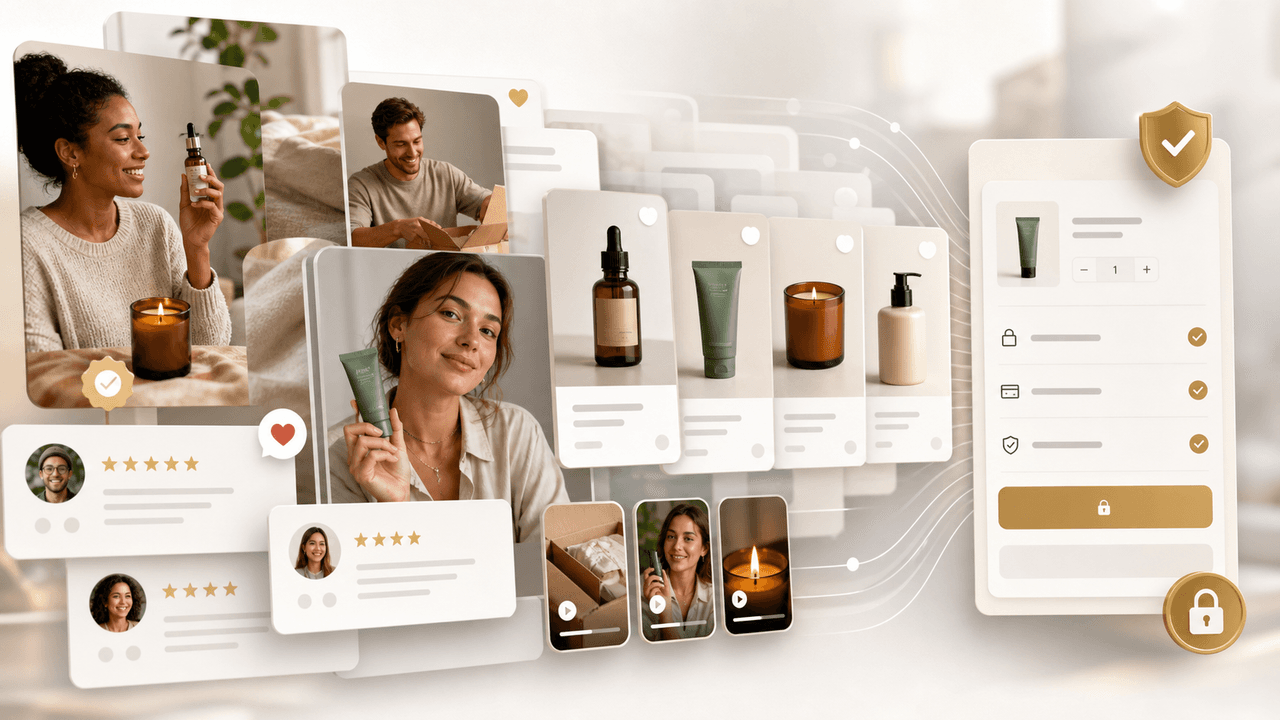
UGC Carousels for E-Commerce: Turn Customer Photos Into Your Best Sales Tool
User-generated content converts at 4-5 times the rate of brand-produced content, but most e-commerce brands either ignore UGC or use it poorly. Repurposing customer photos into structured carousel formats turns scattered social proof into your highest-performing sales asset.
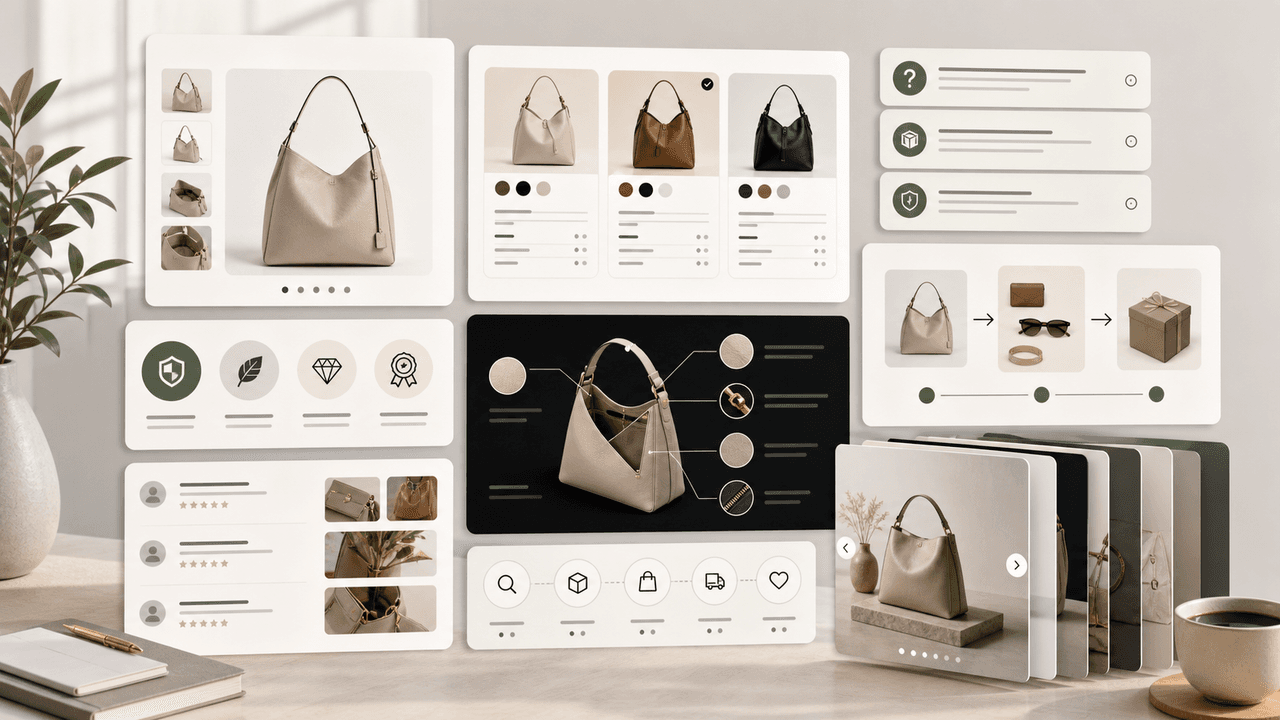
Product Education Carousel Frameworks for Shopify Stores
Product education carousels work when they translate product-page facts into buyer decisions. Use a framework for each job: explain the problem, compare variants, teach use, prove quality, or build a bundle. The goal is not more slides; it is fewer unanswered buying questions.
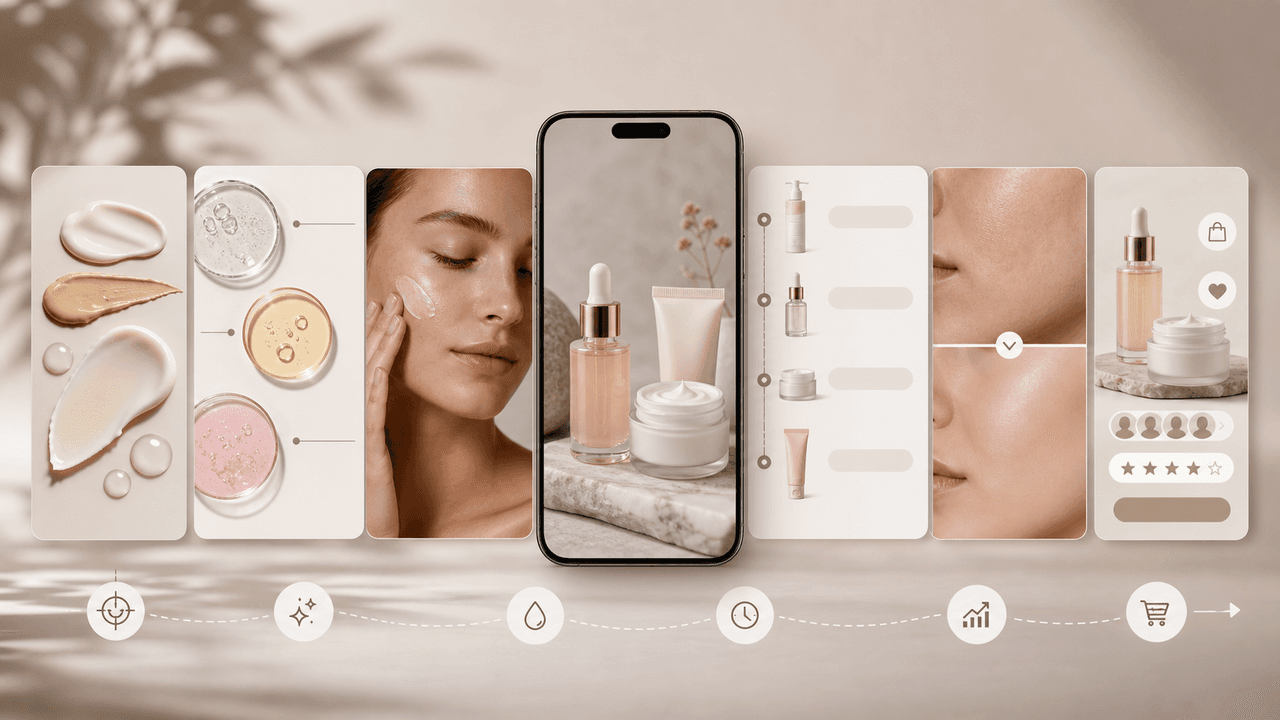
A Beauty Brand Carousel Strategy Built Around Evidence
A responsible beauty carousel starts with the exact claim and its support, not a dramatic visual promise. Use current product facts, review express and implied messages, disclose material connections, and preserve the limits of the evidence on the slide where readers need them.
Sources
- How to Determine Ring Size: Tips and Ring Size Chart — GIA 4Cs
- Buying a Diamond Engagement Ring? Questions a Jeweler Will Ask — GIA 4Cs
- Accurate Determination of Finger and Ring Sizes — Gemological Institute of America
- Guides for the Jewelry, Precious Metals, and Pewter Industries — Federal Trade Commission
- About Carousel Ads — Meta Business Help Center
Written by
AttentionClaw
Editorial Team
Editorial context
Part of the Carousel Creation topic cluster. Last updated June 22, 2026.