Chapter 1
An AMA is a search-intent map
Ask-me-anything sessions are valuable because the audience chooses the questions. That makes the raw material different from a planned webinar or scripted video. It shows what people ask when they have permission to be specific.
The mistake is letting AMA answers disappear after the session. A single event can become a durable FAQ library, several social posts, a newsletter issue, and future course or video topics.
Google's people-first content guidance is relevant because FAQ content should answer real questions clearly. AMA-derived content starts with real questions, but it still needs editing, source checking, and structure before publication.
Repeated questions become FAQ sections.
Beginner questions become explainers.
Tactical questions become checklists.
Objections become trust posts.
Future-looking questions become content roadmap inputs.
Chapter 2
Capture questions before writing answers
- 1
Export or copy all questions
Keep the exact wording before editing. Audience language often contains the phrase that makes the final answer discoverable.
- 2
Remove personal details
Anonymize names, companies, health details, finances, or private context before questions enter the content queue.
- 3
Cluster by intent
Group questions by what the asker really needs: definition, first step, tool choice, objection, example, or next action.
- 4
Mark answer confidence
Some answers are ready. Others need source checking, expert review, or a more careful caveat before publication.
- 5
Assign format
Decide whether the cluster becomes FAQ, carousel, newsletter, YouTube post, short script, or product-support content.
Chapter 3
Write FAQ answers in direct-answer format
A good FAQ answer starts directly, then explains the conditions. Do not start with a story if the user asked a practical question. Answer first, nuance second, CTA last.
For answer-engine and search usefulness, keep each FAQ focused on one intent. If a question contains three questions, split it. If five questions ask the same thing with different wording, merge them into one better answer.
Where the answer relies on factual claims, platform rules, analytics, accessibility, or legal-sensitive advice, add sources or narrow the claim.
Callout
FAQ test
A reader should get a useful answer from the first two sentences, even if they do not read the longer explanation.
Chapter 4
Turn question clusters into carousels
Question clusters make strong carousels because they represent repeated demand. Use one carousel per cluster, not one slide per random question.
Meta's carousel guidance is useful as a constraint. Use slide one for the question, slide two for the short answer, slides three through six for steps or examples, slide seven for the caveat, and slide eight for the next action.
This structure works for coaches, educators, and expert businesses because it preserves the teaching value of the AMA while making the content easy to save.
Chapter 6
Build an answer hub from repeated AMAs
If you run AMAs regularly, build an answer hub. Each session adds new questions. Repeated questions become canonical answers. New questions become sections or future articles.
Google's SEO Starter Guide emphasizes helping users and search engines understand site content. An answer hub does that by organizing related questions under clear topics and linking to deeper guides.
For AttentionClaw-style repurposing, the hub can link to articles about transcripts, podcasts, newsletters, course lessons, and YouTube comments, while each social asset points readers back to the relevant answer.
Chapter 7
Measure which questions deserve deeper assets
AMA-derived content should be measured by question demand. Which answers get saves, replies, clicks, or new questions? Those deserve deeper articles, templates, or videos.
Use campaign parameters when linking from AMA assets to a resource, answer hub, newsletter, or product workflow. Google Analytics URL builder guidance explains how custom URLs identify campaign traffic. Use labels such as ama_faq, ama_carousel, ama_newsletter, ama_poll, and ama_cta.
The best AMA systems become smarter every time because the content team records which questions keep coming back.
Chapter 8
Where AttentionClaw fits
AttentionClaw fits after the AMA questions have been clustered and answered. The expert decides the answer, caveat, source needs, and CTA. AttentionClaw can then turn answer clusters into branded carousels and social drafts.
This helps creators and expert businesses turn live audience demand into durable, reusable answer assets.
Callout
Use your AMA answer clusters
Use AttentionClaw to turn AMA question clusters into polished carousels, answer posts, and follow-up social sequences.
Chapter 9
A practical process for clustering AMA questions before writing
Raw AMA questions rarely arrive in a useful order. A live session might generate fifty questions spread across a dozen topics, asked in the sequence the audience happened to think of them rather than in any logical grouping. Before writing a single answer, cluster the questions so that related topics become visible.
Copy all questions into a plain document or spreadsheet. Read through them once without writing anything. Then go through again and assign a topic label to each question — keep the labels short and consistent, like 'pricing,' 'timeline,' 'beginner mistakes,' 'tools,' or 'mindset.' Once labeled, sort by topic. You will quickly see which clusters have three or more questions (strong content candidates) and which topics received only one question (may not warrant a full asset).
Within each cluster, look for the question that is phrased most directly and most searchably. That becomes the title of your FAQ answer. The other questions in the cluster become the supporting examples, edge cases, and follow-up points within the answer body.
Chapter 10
A worked example: turning one question cluster into a carousel
Suppose an AMA generates eight questions around the topic of pricing a creative service. The questions range from 'how do I know if I am charging too little?' to 'should I list my prices publicly?' to 'how do I handle a client who pushes back on my rate?' These are all part of the same cluster: pricing confidence and communication.
The carousel built from this cluster should not try to answer all eight questions. Instead, pick the central tension — most independent creators charge less than the market will bear — and build the carousel around that single insight. Slide one names the tension. Slide two explains the most common reason it happens (underestimating the value of reliability, not just skill). Slides three through six each address one aspect of the pricing conversation: how to assess market rate, how to present a number confidently, how to respond to pushback, and when to walk away. Slide seven is the summary takeaway. Slide eight is the CTA — subscribe, follow, or DM for more.
This carousel becomes its own asset. It can be saved by followers, shared to Stories, and linked from a newsletter. The original AMA session is the research; the carousel is the deliverable that compound-earns attention over time.
Chapter 11
A quality checklist before publishing AMA-derived content
AMA-derived content carries the credibility of real audience questions, but it can also inherit the imprecision of live answers. Before publishing, apply a short quality pass to each piece of content derived from an AMA session.
Check that the answer is complete on its own — a reader who did not attend the AMA should be able to understand and use it. Check that any conditional claims include their conditions. An answer that was technically correct in the context of a specific follow-up question may read as an overgeneralization when stripped of that context. Check that the answer does not inadvertently expose the person who asked the original question — if the question was specific enough to identify someone, rephrase it into a general form before publishing.
Finally, check that the answer still reflects your current position. AMAs often surface topics where your thinking has evolved. An answer you gave a year ago may need a brief update note rather than full republication.
Is the answer complete without the AMA context? A new reader should not need to have attended to understand it.
Are conditions and caveats stated clearly? Conditional answers from live sessions often read as absolutes in static content.
Does the question reveal anything identifying about the person who asked it? Rephrase to a general form if so.
Does the answer still reflect your current thinking? Add an update note if your position has changed.
Does the answer link to a deeper resource if the topic warrants one?
Next step
Turn AMA questions into durable answer content
AttentionClaw helps convert question clusters into branded carousels, FAQ posts, and social sequences.
Common Questions
FAQ
More Reading
Keep reading
9-chapter read
User Feedback Social Content Loop for Apps
A user feedback social content loop turns real questions, objections, requests, and support moments into useful posts. Capture feedback, group it by theme, create a public answer or workflow, show what changed, and link to the next action. This builds trust because users see the product improving in public.
7-chapter read
Give the host an approval-ready promotion packet
A podcast guest appearance needs a coordinated handoff, not just a link post. Agree on asset rights and timing, package approved quotes and visuals, make host approval easy, and keep a correction path open after launch.
10-chapter read
How to Repurpose an Expert Roundtable Into High-Trust Social Content
An expert roundtable becomes strong social content when you separate consensus, disagreement, frameworks, proof, unanswered questions, and next-step CTAs.
10-chapter read
How to Turn Office Hours Replays Into a Content System
Office hours replays become a content system when questions, blockers, examples, corrections, and action steps are captured, anonymized, and mapped to public or member-only assets.

How to Turn One Good Idea Into 7 Different Instagram Carousels
You do not need 30 unique ideas to post every day. You need one strong idea and a system that turns it into 7 carousels with different angles, formats, and depths.
10-chapter read
How to Turn One Blog Post Into a Full Social Content System
A strong blog post can become a full social content system when you extract the direct answer, framework, examples, sources, objections, and CTA separately instead of summarizing the whole article.
10-chapter read
How to Turn YouTube Comments Into Content Ideas
YouTube comments become a content engine when you sort them by question, objection, correction, story, and request. Each group maps to a different post type and shows what the audience actually wants next.
8-chapter read
How to Turn Workshop Q&A Into a Month of Social Content
Workshop Q&A is one of the highest-intent sources for content ideas. Sort questions into beginner confusion, implementation blockers, objections, examples, and next-step requests to build a month of posts.
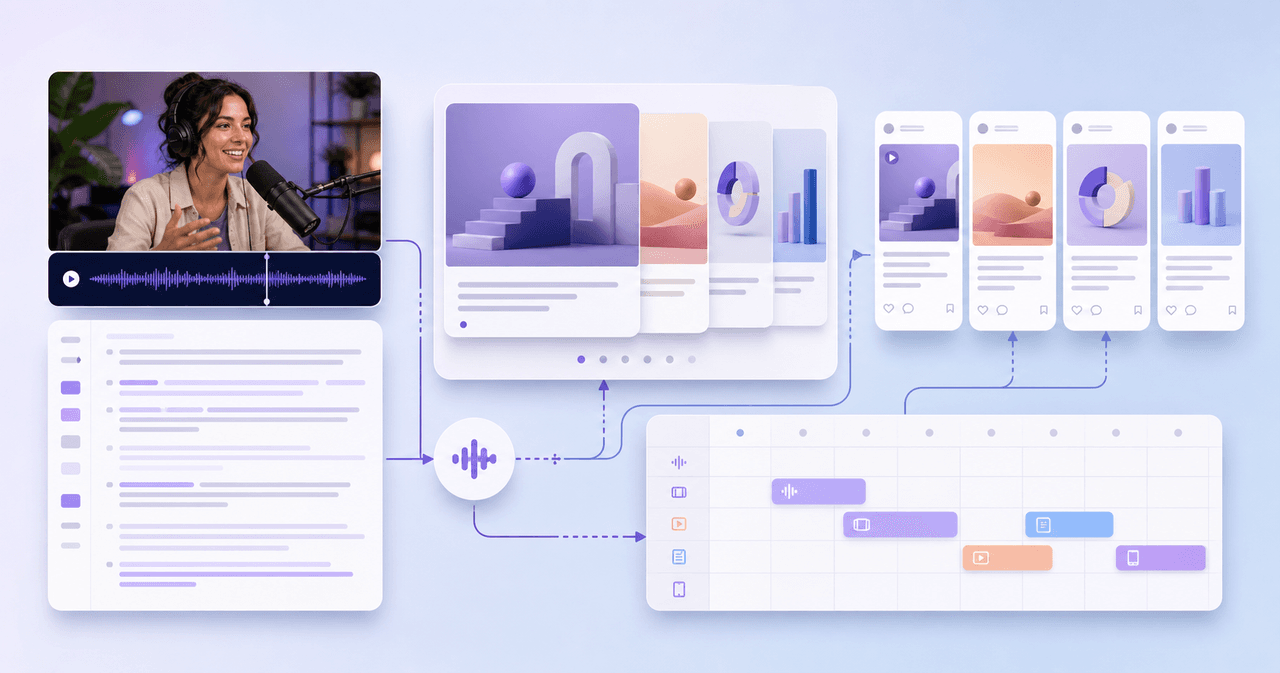
Podcast Interview Content Repurposing System: One Guest Conversation Into a Week of Assets
A podcast interview should become more than audiograms. Extract the guest thesis, strongest story, quotable lines, objection answers, listener questions, and resource CTA into a week of native assets.
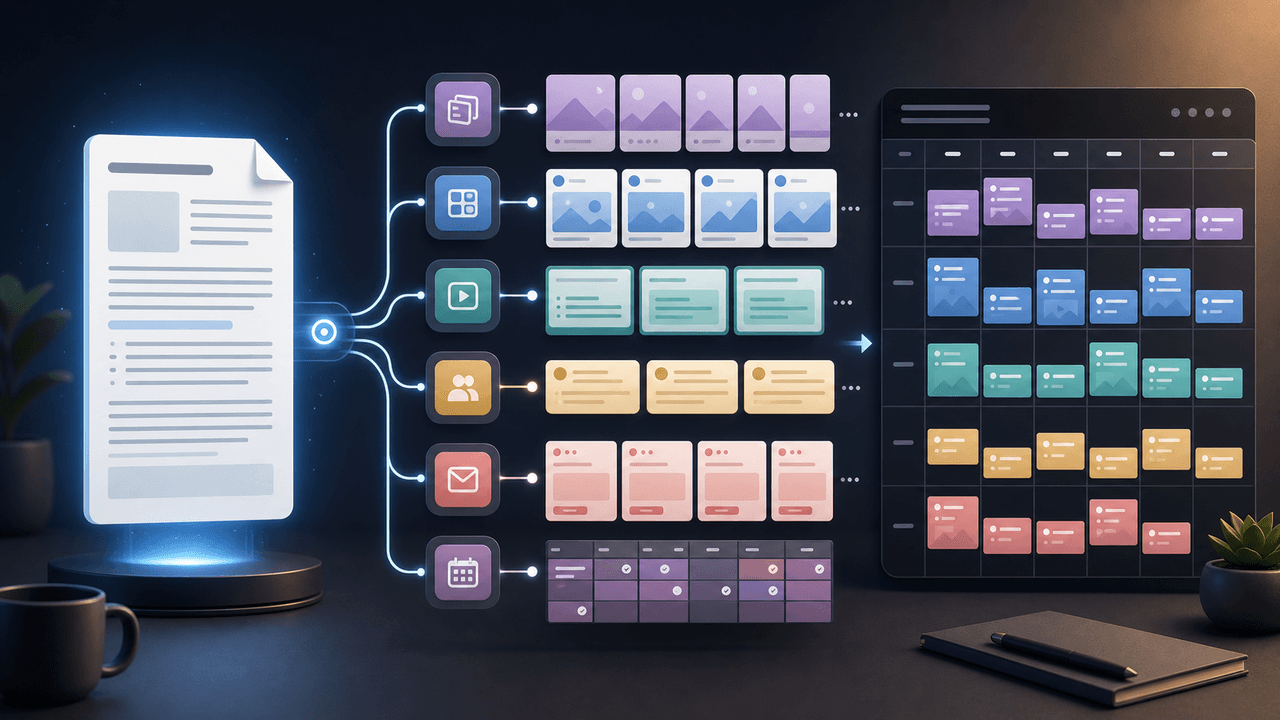
How to Turn One Newsletter Into a Week of Social Content
A strong newsletter is not one finished asset. It is the source file for a week of social posts, carousels, short scripts, community posts, and follow-up emails when you extract the argument, proof, examples, and reader questions separately.
Sources
- Creating Helpful, Reliable, People-First Content — Google Search Central
- Search Engine Optimization Starter Guide — Google Search Central
- Design Specifications for Carousel Ads — Meta Business Help Center
- Learn About Posts — YouTube Help
- URL Builders: Collect Campaign Data With Custom URLs — Google Analytics Help
Written by
AttentionClaw
Editorial Team
Editorial context
Part of the Repurposing topic cluster. Last updated June 22, 2026.