Chapter 1
The direct answer: sell the assessment, not a guaranteed body outcome
A personal trainer assessment TikTok slideshow should explain what a coach asks before building a program: goals, schedule, training history, injuries or limitations to discuss with a qualified professional, equipment, preferences, and next steps.
CDC adult activity guidance and HHS physical activity guidelines both support aerobic and muscle-strengthening activity for adults. A trainer can cite general activity context while avoiding medical claims, fat-loss guarantees, or identical transformation promises.
The slideshow should direct people with pain, medical conditions, or injury concerns to appropriate professional care before training.
Callout
Trainer content rule
Market coaching process, consistency, and fit; do not guarantee weight loss, injury fixes, or medical outcomes.
Chapter 2
Turn assessment questions into slideshow topics
Prospects want to know what happens on a first call, whether they need a gym, how often they should train, whether beginners are welcome, and what a realistic plan includes.
Each TikTok slideshow should answer one query with one CTA. A post about first assessment questions should not also become a full meal plan, pricing sheet, and transformation gallery.
Use approved exercise demos, coach notes, simple checklists, and client proof that follows endorsement and privacy rules.
Questions a trainer asks before programming.
What beginners should prepare before a first session.
How to choose training frequency.
What to disclose about injuries or limitations.
How online training assessments work.
What equipment a client needs.
How progress is tracked.
What a good coaching fit feels like.
Chapter 3
Use an eight-slide assessment slideshow
The slideshow should qualify prospects and reduce vague DMs.
Review transformation language, health claims, testimonials, and before-after visuals before publishing.
- 1
Slide 1: prospect hook
Open with 'Before you hire a trainer, answer these 7 questions.'
- 2
Slide 2: goal clarity
Ask what the client wants training to change and why now.
- 3
Slide 3: current routine
Ask about current activity, schedule, and consistency barriers.
- 4
Slide 4: training history
Ask what they have tried, what worked, and what caused drop-off.
- 5
Slide 5: safety boundaries
Tell prospects to disclose pain, injuries, medications, or medical limits to the right professionals.
- 6
Slide 6: equipment and format
Clarify gym, home, online, app-based, or hybrid coaching needs.
- 7
Slide 7: progress tracking
Show habits, strength, energy, measurements, or performance markers without promising outcomes.
- 8
Slide 8: CTA
Invite the viewer to book an assessment or send their goal.
Chapter 4
Use proof without overclaiming
Fitness content becomes weak or risky when every post promises a dramatic result. Stronger proof explains the coaching process, client effort, and context.
Testimonials should reflect the client experience accurately and should not imply that every person will lose the same amount of weight, lift the same numbers, or change at the same pace.
No guaranteed fat-loss result.
No injury-treatment promise.
No meal-plan claim outside scope.
No client image without permission.
Clear consultation CTA.
Chapter 5
How AttentionClaw packages trainer assessments
AttentionClaw helps personal trainers turn intake forms, coaching notes, testimonials, workout clips, and FAQ answers into TikTok slideshow drafts.
Templates can cover beginner assessment questions, online coaching fit, strength goals, consistency barriers, gym anxiety, and program check-ins.
Callout
Trainer workflow
Choose one prospect question, add claim-safe coaching language, select approved visuals, generate slideshow, review, publish with assessment CTA.
Chapter 6
Measure qualified assessments
Track assessment bookings, saved checklists, qualified DMs, form completion, no-show rate, and how often prospects understand the offer before the call.
The goal is not just views. It is a better first conversation.
Assessment booking clicks.
Goal-form starts.
Qualified DMs.
Checklist saves.
Assessment-to-client conversion.
Chapter 7
Use movement history slides to pre-qualify and protect both parties
A slide that explains what movement history means — and why it matters more than fitness level — does two things at once. It helps prospects understand why you ask the questions you ask, and it protects you from clients who arrive expecting a program that ignores relevant physical history. Movement history includes past injuries, surgeries, chronic conditions, physical therapy, and activity gaps. It is different from 'fitness level,' which prospects interpret as how out of shape they feel.
Framing the movement history conversation as a care step rather than a screening step improves how it lands. The message is not 'I need to know if you are too complicated to work with' — it is 'I need to know your history so I do not build a program that works against your body.' That framing attracts conscientious clients and pre-empts the prospect who wants to skip the intake and jump straight to training.
Callout
What to include in a movement history prompt slide
Ask about: any joints or areas that have had surgery or significant injury; any ongoing pain or limitation that affects movement; any physical therapy in the past two years; the most recent period of regular exercise; and any physician clearance requirements. Avoid asking for medical diagnoses — that is outside scope.
Chapter 8
Match your goal slides to what prospects actually search for
Vague goal language ('get fit,' 'lose weight,' 'get stronger') creates vague prospects. Slideshows that help prospects name specific, concrete goals — 'carry groceries up stairs without breathing hard,' 'complete a 5K without stopping,' 'keep up with my kids at the park,' 'deadlift my bodyweight' — give the assessment conversation something real to work from and position you as a coach who thinks in outcomes.
A goal-sorting slide that walks through four goal categories — endurance-based, strength-based, mobility and pain reduction, and performance or skill-based — and asks which one fits best helps you match the assessment format to the prospect. A strength-focused prospect needs different baseline measurements than someone working on mobility after a long sedentary period. Showing this distinction in the content signals expertise without lecturing.
- 1
Show four goal categories with examples
Give one or two concrete examples in each category. Avoid abstract language. 'Endurance' becomes 'hike a full trail without stopping.' 'Strength' becomes 'be able to lift and carry things I currently can't.'
- 2
Ask which category resonates most
A question slide ('Which of these sounds most like you right now?') turns a passive scroll into active engagement. It also gives you comment data that reveals how your audience is skewing.
- 3
Tie the goal category to the assessment format
Add a brief note explaining that the assessment will be shaped around their goal category: 'If strength is your focus, we'll look at movement quality and baseline capacity. If endurance is your focus, we'll look at breathing, gait, and current activity levels.'
Chapter 9
End every assessment slideshow with a clear next step
Many trainer slideshows build strong interest and then lose the prospect at the CTA. 'DM me to get started' is vague and places the friction entirely on the prospect. A specific CTA — 'Book a free 20-minute assessment call using the link in my bio' or 'Fill out the short intake form linked in my bio and I'll follow up within 24 hours' — removes ambiguity and sets an expectation for what happens next.
If you offer a trial session or a consultation call, the CTA slide should explain what the prospect will walk away with after that session: a written assessment summary, a sample week of programming, or a clear recommendation on whether your service is a good fit. This small addition converts the CTA from 'maybe I'll reach out' to 'that sounds worth thirty minutes of my time.'
Next step
Turn trainer assessment questions into slideshows
Use AttentionClaw to package intake questions and coaching proof into reviewed TikTok slideshow drafts.
Common Questions
FAQ
More Reading
Keep reading
9-chapter read
Music Teacher Recital Prep Instagram Carousels: Turn Practice Into Parent Confidence
Music teacher recital prep carousels should help parents and students understand practice routines, performance anxiety, logistics, privacy, and lesson booking without promising flawless performances.
9-chapter read
Franchise Gym Challenge TikTok Slideshows: Turn Local Energy Into Trial Signups
Franchise gym challenge slideshows should explain the challenge format, local schedule, support, safety expectations, and trial signup CTA without promising unrealistic transformations.
9-chapter read
Gym Intro Offer TikTok Slideshows: Sell Trial Weeks Without Overpromising Results
Gym intro-offer TikTok slideshows should explain who the trial is for, what happens during the first week, how coaches scale workouts, and how to join without promising body transformations.
9-chapter read
Personal Training Lead Social Content: Posts That Turn Fitness Interest Into Consults
Personal training lead content should help prospects understand assessment, goals, safety, consistency, coaching fit, and how to book a consultation. The best posts are specific, realistic, evidence-aware, and careful with transformation claims.
7-chapter read
Gym Challenge Launch Social Content: Fill Signups Without Overpromising Results
Gym challenge content should sell structure, community, and consistency rather than guaranteed transformation. Use readiness posts, weekly prompts, safety-aware guidance, honest testimonials, and clear signup CTAs to fill challenges with better-fit participants.
8-chapter read
Carousel Slide Order That Converts: Hook, Proof, Offer, CTA
A converting carousel usually follows a clear order: hook, context, problem, solution or product, proof, objection handling, offer, and CTA. The exact slide count can change, but the reader should never wonder why the next slide exists.
8-chapter read
Gym Class Social Content Calendar: Fill Classes With Local Posts
A gym class content calendar should sell confidence before it sells intensity. Use class previews, beginner guidance, trainer education, member proof, seasonal challenges, and local booking reminders to turn social attention into trial classes and repeat attendance.
10-chapter read
TikTok Slideshow Quality Checklist Before You Publish
A TikTok slideshow quality checklist should review the hook, slide sequence, mobile readability, product or screenshot accuracy, claim support, disclosure needs, CTA match, destination link, and campaign tracking before publishing. The checklist protects quality when teams are producing fast.
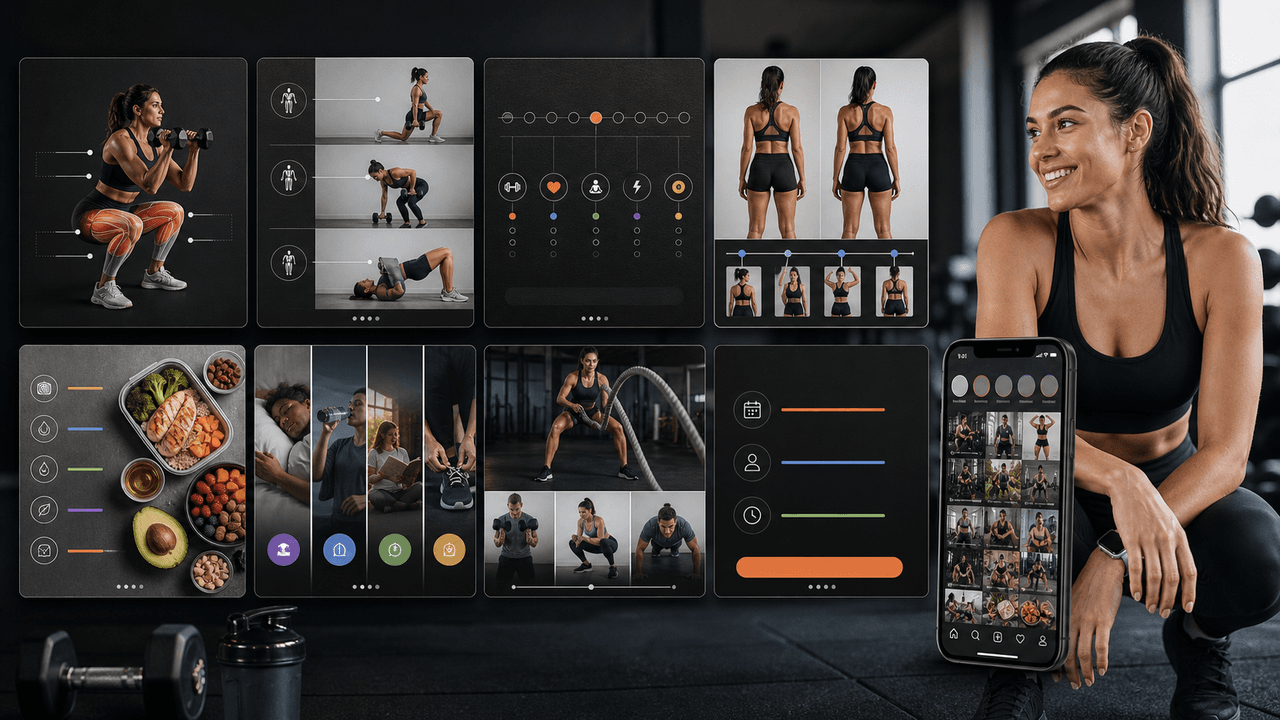
Fitness Trainer Instagram Carousels: The Content Guide That Fills Your Classes
Fitness trainers have the most visual, action-oriented content on Instagram, but most of them are posting the wrong types of carousels. This guide shows you the content mix, carousel structures, and posting strategy that actually fills classes and books clients.

Local Business Instagram Carousels: Drive Foot Traffic Without Paid Ads
Local businesses do not need viral content. They need carousels that reach the right 5,000 people within a ten-mile radius. A local carousel strategy turns your expertise, your team, and your community presence into foot traffic without spending a dollar on ads.
Sources
- Adult Activity: An Overview — Centers for Disease Control and Prevention
- Physical Activity Guidelines for Americans — Office of Disease Prevention and Health Promotion
- About Carousel Ads — Meta Business Help Center
- FTC's Endorsement Guides: What People Are Asking — Federal Trade Commission
Written by
AttentionClaw
Editorial Team
Editorial context
Part of the Carousel Creation topic cluster. Last updated June 22, 2026.