Chapter 1
The direct answer: explain the first-week experience
A gym intro offer TikTok slideshow should explain the offer, who it is for, what the first class or week looks like, what to bring, how coaches modify exercises, and how a prospect becomes a member.
CDC and ODPHP physical activity guidance supports the general value of regular activity, but a gym's ad should not guarantee weight loss, injury prevention, or medical outcomes.
The strongest slideshow reduces intimidation. It shows the front door, check-in, coach greeting, workout scaling, community moment, and CTA.
Callout
Fitness offer rule
Sell the supported first step, not a guaranteed body outcome.
Chapter 2
Answer the questions that block a trial
Intro-offer prospects ask whether they need to be fit already, whether they can attend alone, what equipment is used, how hard the class will be, and whether they will be pressured into a contract.
Use slides to replace vague hype with practical clarity. The more a beginner can picture the first visit, the easier it is to book.
If the studio uses testimonials, keep them honest and avoid implying typical results unless the claim is substantiated.
What the intro offer includes.
Which classes are beginner-friendly.
What to bring and wear.
How coaches scale movements.
How membership options are explained.
How to book the first session.
Chapter 3
Use a six-frame intro offer slideshow
TikTok slideshow frames should be vertical, visually clear, and made for quick mobile scanning.
Use real studio photos, coach faces, equipment, and beginner-safe examples rather than stock transformation imagery.
- 1
Frame 1: beginner hook
Name the intimidation: 'Want to try the gym but not sure where to start?'
- 2
Frame 2: offer
State the trial week or intro session clearly.
- 3
Frame 3: arrival
Show check-in, coach greeting, and where to put belongings.
- 4
Frame 4: workout scaling
Explain that coaches adjust movements to the person.
- 5
Frame 5: next step
Show how membership or class packs are discussed after the trial.
- 6
Frame 6: CTA
Book the intro offer or message with first-class questions.
Chapter 4
Set health and testimonial guardrails
Fitness claims can become health claims quickly. FTC health guidance says health-related claims need support, so avoid guaranteed fat loss, pain relief, disease prevention, or injury-proof language.
Before-and-after content needs consent, accuracy, and context. Testimonials should reflect real experiences and avoid implying everyone gets the same result.
For prospects with medical conditions, pregnancy, injury, or pain, route them to appropriate professional advice before joining.
No guaranteed transformation language.
No medical advice in comments.
No pressure-only scarcity claims.
Coach review for workout claims.
Clear offer terms and expiration.
Chapter 5
How AttentionClaw helps gyms package intro offers
AttentionClaw can turn a gym's offer terms, class photos, coach FAQs, and beginner objections into a TikTok slideshow sequence.
Studios can create variants for strength training, small group classes, yoga intro weeks, challenge launches, open gyms, and personal training consults.
The gym controls health claims and membership terms. AttentionClaw keeps the story focused on the first supported step.
Callout
Gym workflow
Pick one beginner objection, show the first visit, review offer and health claims, publish with a booking CTA.
Chapter 6
Measure trial bookings and class attendance
Measure intro-offer bookings, first-class attendance, trial-to-member conversion, comments from beginners, and saves on what-to-bring posts.
If views are high but show-up rate is weak, the slideshow may be overselling hype instead of preparing prospects for the real class.
Intro offer booking clicks.
First-class attendance rate.
Trial-to-member conversion.
Beginner questions answered before class.
Offer-specific revenue.
Chapter 7
A slide-by-slide first-class walkthrough that converts hesitant prospects
The single biggest barrier to using a trial offer is not the price — it is the fear of walking into an unknown environment and feeling lost or out of place. A slideshow that walks through exactly what happens during the first class, in sequence, addresses this fear directly and converts more trial bookings than any offer-focused post.
The walkthrough should cover: where to park and enter, what to do when arriving early (most gyms recommend 10-15 minutes early for intake paperwork), how the coach introduces themselves and the class format, what the warm-up structure looks like, how workout modifications are demonstrated, and what happens after class (cool-down, next steps, membership conversation timeline). This level of specificity signals that the gym is organized and coach-led, not intimidating.
End the walkthrough with a single sentence that addresses the most common fear directly: 'You do not need to be in shape to start. Every class has a modification for every movement.' This statement, placed at the end of a concrete process walkthrough, lands with much more credibility than the same sentence placed on a generic 'everyone is welcome' cover slide.
- 1
Slide 1: The offer, in one sentence
State the trial offer clearly — duration, what's included, any restrictions. Do not make the viewer decode it.
- 2
Slide 2: Who this is for
Name the person this offer is designed for. 'If you've never tried a group class before' or 'If you've been wanting to restart' speaks directly to the hesitant prospect, not the already-committed gym member.
- 3
Slide 3-5: Step-by-step first class
Walk through the experience in order: arrival, warm-up, workout, cool-down. One step per slide.
- 4
Slide 6: One clear booking action
A link in bio, a DM keyword, or a phone number. One action only. Multiple options reduce follow-through.
Chapter 8
Handling the four objections that kill trial conversions
Most prospects who see a gym intro offer and do not act are blocked by one of four objections: 'I'm not fit enough yet,' 'I don't know anyone there,' 'I don't know if the schedule works for my life,' or 'I'm worried I'll be pressured into a membership.' Each of these can be addressed in a single carousel slide without making the post feel defensive.
The fitness level objection is best handled with a concrete example rather than reassurance. 'Our intro classes include a modification demo for every movement, so you can complete the full workout at your own level' is more persuasive than 'all fitness levels welcome' because it shows a process, not a claim.
The membership pressure objection requires the most direct response because it is rooted in past negative experience at other facilities. A slide that explains the actual post-trial conversation ('At the end of your trial, a coach will check in about your experience. There's no hard sell — if you want to continue, here are the options. If not, no follow-up pressure.') addresses the fear with a process description that builds trust.
Address schedule flexibility by showing class time variety — a screenshot of the weekly class schedule works better than 'flexible hours'
Respond to the 'I won't know anyone' concern by describing how coaches facilitate introductions at the start of each class
State clearly that the trial is standalone — it does not auto-convert to a paid membership
If there is a membership conversation at the end of the trial, describe when and how it happens so it does not feel like a surprise
Chapter 9
Using social content to nurture trial members toward membership
A trial member who completes the first class but does not immediately sign up is not a lost conversion — they are in a decision phase. Social content can support this phase with posts that help them imagine membership rather than posts that repeat the original trial offer.
Effective post-trial nurture content shows what regular members experience: community milestones (member anniversaries, personal records), a behind-the-scenes look at how programming is designed, or a member-written testimonial that addresses a before-and-after mindset shift rather than a physical transformation. This content helps the trial member see what continued membership looks like without any explicit sales pressure.
Posting a 'frequently asked membership questions' carousel after the trial period is a low-friction way to address price, commitment length, class credits, and pause policies — the practical questions that delay membership decisions. A trial member who saves this post is signaling continued interest and can be followed up with a direct message.
Callout
Testimonials and health claims
Member testimonials should focus on experience, community, and consistency rather than weight loss, body composition, or specific fitness outcomes. Health-outcome claims in advertising require substantiation. 'I finally feel like exercise is something I look forward to' is always safer and often more persuasive than a specific physical metric.
Next step
Turn intro offers into clearer slideshow funnels
AttentionClaw helps gyms turn beginner objections, coach-approved language, and class photos into TikTok slideshows that drive trial bookings.
Common Questions
FAQ
More Reading
Keep reading
11-chapter read
Yoga Studio Beginner Class Instagram Carousels
Yoga studio beginner class carousels should explain class fit, what to bring, intensity, modification options, health boundaries, and booking CTA without making medical promises.
9-chapter read
Personal Trainer Assessment TikTok Slideshows
Personal trainer assessment TikTok slideshows should explain goals, movement history, readiness, safety boundaries, program fit, and how to book a consultation without promising results.
9-chapter read
Dance Studio Trial Class Instagram Carousels: Help New Students Show Up
Dance studio trial class carousels should help new students and parents understand what to wear, what to bring, class level, expectations, privacy, and how to book.
9-chapter read
Franchise Gym Challenge TikTok Slideshows: Turn Local Energy Into Trial Signups
Franchise gym challenge slideshows should explain the challenge format, local schedule, support, safety expectations, and trial signup CTA without promising unrealistic transformations.
9-chapter read
Personal Training Lead Social Content: Posts That Turn Fitness Interest Into Consults
Personal training lead content should help prospects understand assessment, goals, safety, consistency, coaching fit, and how to book a consultation. The best posts are specific, realistic, evidence-aware, and careful with transformation claims.
9-chapter read
Yoga Studio Class Pass TikTok Slideshows: Sell the First Visit
Yoga studio slideshows should reduce first-visit anxiety: what class to choose, what to bring, who teaches it, what the room feels like, and how the intro pass works. The right content sells comfort and clarity, not just poses.
7-chapter read
Gym Challenge Launch Social Content: Fill Signups Without Overpromising Results
Gym challenge content should sell structure, community, and consistency rather than guaranteed transformation. Use readiness posts, weekly prompts, safety-aware guidance, honest testimonials, and clear signup CTAs to fill challenges with better-fit participants.
8-chapter read
Gym Class Social Content Calendar: Fill Classes With Local Posts
A gym class content calendar should sell confidence before it sells intensity. Use class previews, beginner guidance, trainer education, member proof, seasonal challenges, and local booking reminders to turn social attention into trial classes and repeat attendance.
5-chapter read
40 TikTok Slideshow Ideas for Local Service Businesses
Local service businesses should use TikTok slideshows to answer the practical questions customers ask before booking: what the service solves, what it costs, what the process looks like, what results are realistic, and why this local provider is trustworthy.
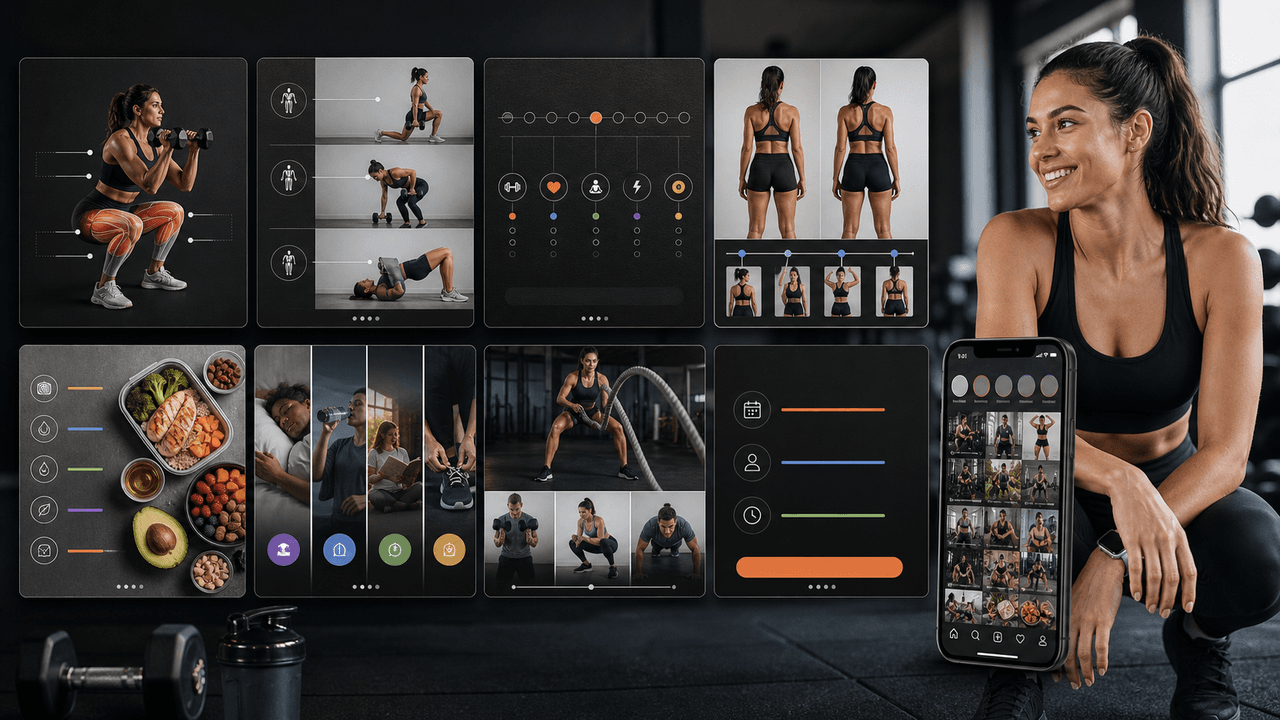
Fitness Trainer Instagram Carousels: The Content Guide That Fills Your Classes
Fitness trainers have the most visual, action-oriented content on Instagram, but most of them are posting the wrong types of carousels. This guide shows you the content mix, carousel structures, and posting strategy that actually fills classes and books clients.
Sources
- Physical Activity Guidelines for Americans — Office of Disease Prevention and Health Promotion
- Adult Activity: An Overview — Centers for Disease Control and Prevention
- Health Products Compliance Guidance — Federal Trade Commission
- Creative best practices for performance ads — TikTok Business Help Center
Written by
AttentionClaw
Editorial Team
Editorial context
Part of the Carousel Creation topic cluster. Last updated June 22, 2026.