Chapter 1
The direct answer: promote the system, not a guaranteed transformation
Gym challenge launch social content should explain the challenge length, training format, coaching support, schedule, readiness expectations, community element, signup deadline, and what participants can reasonably expect. Avoid promising weight loss, muscle gain, medical outcomes, or dramatic before-and-after results.
Fitness challenges convert when they make action feel achievable. A 21-day or 6-week challenge should be framed around showing up, learning habits, trying classes, building consistency, and getting coaching feedback. That is more credible than promising every participant a transformation.
CDC physical activity guidance and ACSM resources can support broad claims about regular movement and screening awareness, while FTC endorsement guidance should shape how the gym uses testimonials and transformation stories.
Callout
Challenge marketing rule
Sell structure, coaching, and community. Do not sell guaranteed body outcomes.
Chapter 2
A four-week challenge launch sequence
A challenge needs a runway. People need to understand the offer, check schedules, invite friends, ask questions, and decide whether the challenge fits their fitness level.
Use four content phases: announce, educate, prove, and close. Announce the challenge and date. Educate around format and readiness. Prove the coaching and community experience. Close with deadline and practical signup details.
Each phase should include a clear CTA. Early posts can ask people to join the waitlist. Later posts should send them to registration.
- 1
Week 4: announcement
Name the challenge, dates, who it is for, and waitlist or early signup path.
- 2
Week 3: format education
Explain classes, check-ins, workouts, habit prompts, coaching support, and schedule.
- 3
Week 2: proof and FAQ
Show community moments, coach explanations, readiness questions, and honest participant experiences.
- 4
Week 1: deadline and objections
Answer schedule, beginner, injury, travel, and cost questions, then push final signup.
Chapter 3
Gym challenge posts to create before launch
The strongest challenge posts answer objections before they become DMs. People want to know if they are fit enough, whether they can miss a class, what happens if they are new, and whether the challenge is about punishment or support.
Use TikTok slideshows for fast, saveable explanations. A slideshow titled 'What happens during our 6-week strength challenge' can show training days, coach check-ins, beginner options, recovery, and signup deadline.
Keep testimonials honest. If using a participant story, include context and avoid implying a result is typical unless supported and properly qualified.
Who this challenge is for and who should ask before joining.
What a challenge week looks like.
Beginner options and modifications.
What coaches track besides weight.
How check-ins work.
What to bring to the first session.
How community accountability works.
What happens if you miss a class.
How to choose weights safely.
Why recovery days are included.
Participant experience quote with context.
Final 72-hour signup reminder.
Chapter 4
Build safety and readiness into the content
Fitness challenges can attract people who are returning after a long break. Content should include readiness and modification language rather than assuming every participant can immediately increase intensity.
ACSM preparticipation screening resources emphasize considering current activity, health history, symptoms, and intended intensity when deciding whether medical clearance may be needed. A local gym does not need to explain the full algorithm in a carousel, but it should tell participants to talk with a qualified professional or healthcare provider when appropriate.
This kind of content does not weaken the sale. It attracts better-fit participants and reduces the gap between marketing promise and class reality.
Explain beginner options clearly.
Tell people to ask about modifications before joining.
Avoid shaming language around missed workouts or body size.
Route health-history questions to appropriate professionals.
Frame progress around consistency, skill, energy, confidence, and attendance.
Chapter 5
How AttentionClaw helps gyms launch challenges
AttentionClaw helps gyms turn a challenge brief into a campaign: announcement carousel, weekly schedule slideshow, FAQ post, coach tip series, testimonial proof, and deadline reminders.
The studio defines the challenge rules, safety notes, and signup path. AttentionClaw helps keep all posts visually consistent so the challenge looks like a real program, not a random set of flyers.
After the challenge starts, the same templates can be used for weekly recaps, participant milestones, coach notes, and next-challenge waitlist posts.
Callout
Challenge workflow
Write challenge brief, review claims, generate launch assets, schedule reminders, collect participant-approved proof, and turn recaps into next-cycle content.
Chapter 6
A four-week pre-launch content calendar for gym challenges
Challenges that sell out are rarely launched with a single announcement post. They build awareness, answer objections, create social proof, and establish urgency over a defined runway. A four-week pre-launch calendar gives the gym enough space to warm up the audience without dragging the campaign out.
Week one is awareness: introduce the challenge name, format, and dates. Focus on what the challenge is, not why to sign up. Week two is education: explain the schedule, coaching support, nutrition component scope, and what to expect from the first session. Week three is social proof and objection handling: share a testimonial from a previous challenge participant, address the most common hesitation (fitness level, time commitment, cost), and show a behind-the-scenes look at how the challenge runs. Week four is urgency and logistics: confirm the deadline, show remaining spots if applicable, and make the signup process frictionless with a clear link and a staff member's name as the contact.
Each week should include at least one post formatted for TikTok or Reels and one static carousel for Instagram. These serve different algorithmic contexts and reach different parts of the audience.
- 1
Week 1 — Announce and introduce
Post the challenge name, dates, and format. Keep the focus on what it is rather than pushing signup immediately.
- 2
Week 2 — Educate on the structure
Cover schedule, coaching included, what the first week looks like, and how the challenge is supported. Answer the 'is this for me?' question.
- 3
Week 3 — Proof and objection handling
Share a previous participant testimonial and address the two or three most common reasons people do not sign up.
- 4
Week 4 — Urgency and final call
Confirm the deadline, note any limited spots, and make the signup path completely clear. Include a direct staff contact.
Chapter 7
Metrics that show whether challenge content is working
Challenge content should be measured beyond follower counts and likes. The metrics that matter for a gym challenge are directly tied to the business outcome: signups, first-class attendance, and conversion to ongoing membership after the challenge ends.
Track link-in-bio clicks from challenge posts separately from general traffic by using a unique link or UTM parameter for each campaign. This tells you which specific posts drove the most signup intent. Track DM volume and note which posts generated the most questions — those questions are your next content topics. Track show-up rate for the first challenge session relative to signups, as a large gap between signups and attendance usually signals that the challenge was positioned as lower-commitment than it actually is.
After the challenge ends, track how many participants converted to a monthly membership, a class pack, or a personal training relationship. This is the metric that justifies the production cost of challenge content over multiple campaigns.
Unique link clicks per post — shows which content actually drove signup intent
DM volume and question topics — identifies gaps in the content that need addressing next cycle
Signup-to-first-session show-up rate — signals whether the challenge was positioned accurately
Challenge completion rate — indicates whether the structure and support matched the signup promise
Post-challenge membership conversion — the metric that justifies the campaign cost
Next step
Turn one fitness challenge into a full signup campaign
AttentionClaw helps gyms transform challenge rules, coach notes, FAQs, and participant-approved proof into branded carousels and TikTok slideshows.
Common Questions
FAQ
More Reading
Keep reading
9-chapter read
Personal Trainer Assessment TikTok Slideshows
Personal trainer assessment TikTok slideshows should explain goals, movement history, readiness, safety boundaries, program fit, and how to book a consultation without promising results.
9-chapter read
Martial Arts Beginner Class TikTok Slideshows: Turn Curiosity Into Trial Visits
Martial arts beginner class slideshows should explain what to wear, class etiquette, safety, goals, parent questions, and trial booking without promising discipline or self-defense outcomes.
9-chapter read
Franchise Gym Challenge TikTok Slideshows: Turn Local Energy Into Trial Signups
Franchise gym challenge slideshows should explain the challenge format, local schedule, support, safety expectations, and trial signup CTA without promising unrealistic transformations.
9-chapter read
Course Cohort Launch Instagram Carousels: Sell the Group Experience Without Overpromising
Course cohort launch carousels should explain who the cohort is for, what the schedule includes, how support works, what proof is available, and what enrollment deadline matters.
9-chapter read
Gym Intro Offer TikTok Slideshows: Sell Trial Weeks Without Overpromising Results
Gym intro-offer TikTok slideshows should explain who the trial is for, what happens during the first week, how coaches scale workouts, and how to join without promising body transformations.
9-chapter read
Personal Training Lead Social Content: Posts That Turn Fitness Interest Into Consults
Personal training lead content should help prospects understand assessment, goals, safety, consistency, coaching fit, and how to book a consultation. The best posts are specific, realistic, evidence-aware, and careful with transformation claims.
8-chapter read
Carousel Slide Order That Converts: Hook, Proof, Offer, CTA
A converting carousel usually follows a clear order: hook, context, problem, solution or product, proof, objection handling, offer, and CTA. The exact slide count can change, but the reader should never wonder why the next slide exists.
8-chapter read
Gym Class Social Content Calendar: Fill Classes With Local Posts
A gym class content calendar should sell confidence before it sells intensity. Use class previews, beginner guidance, trainer education, member proof, seasonal challenges, and local booking reminders to turn social attention into trial classes and repeat attendance.
7-chapter read
Social Content Strategy for Waitlist Growth
Waitlist social content works when it gives people a reason to join before the product is fully available. Teach the problem, show proof of the workflow, preview the first user experience, explain what early members get, and keep the launch sequence specific. A waitlist is not a CTA by itself; it needs a promise.
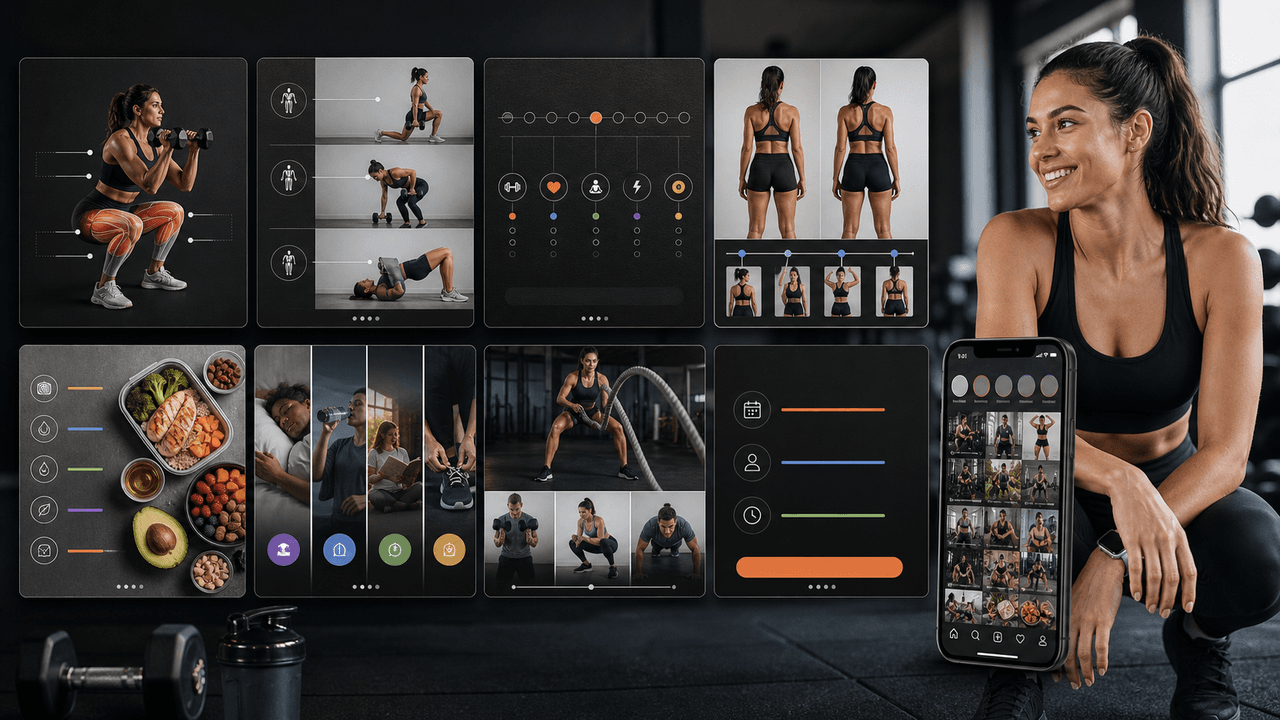
Fitness Trainer Instagram Carousels: The Content Guide That Fills Your Classes
Fitness trainers have the most visual, action-oriented content on Instagram, but most of them are posting the wrong types of carousels. This guide shows you the content mix, carousel structures, and posting strategy that actually fills classes and books clients.
Sources
- What You Can Do to Meet Physical Activity Recommendations — Centers for Disease Control and Prevention
- Physical Activity Guidelines — American College of Sports Medicine
- ACSM Preparticipation Screening Guidelines — Exercise is Medicine / ACSM
- FTC's Endorsement Guides: What People Are Asking — Federal Trade Commission
- TikTok Image Ads: Visual Marketing Solutions to Engage Customers — TikTok For Business
Written by
AttentionClaw
Editorial Team
Editorial context
Part of the Content Planning topic cluster. Last updated June 22, 2026.