Chapter 1
The direct answer: show the trial class before they book
A dance studio trial class Instagram carousel should explain who the class fits, what to wear, what to bring, how the teacher welcomes new students, how placement works, and how to book.
CDC physical activity guidance includes vigorous dancing as a youth activity example, while HHS physical activity guidance supports general movement education. Studio content can cite general movement benefits without making medical, body-change, or skill guarantees.
The post should not promise competition placement, rapid flexibility, weight loss, or identical progress for every student.
Callout
Dance studio content rule
Sell the class experience, teacher support, and next step; do not sell guaranteed outcomes.
Chapter 2
Build carousels around first-class questions
Prospective students ask about shoes, clothes, age groups, beginner level, parent viewing, recital expectations, make-up classes, and whether a trial student will feel behind.
Each carousel should answer one intent. A ballet trial class post should not also become a full recital policy and tuition page.
Use studio-room photos, shoe details, class-flow cards, teacher introductions, and privacy-reviewed student images.
What to wear to a trial dance class.
How beginner placement works.
Parent questions before booking.
What happens in the first 10 minutes.
Class etiquette and arrival time.
Shoes and hair checklist.
Trial class versus enrollment.
How to choose style and level.
Chapter 3
Use a seven-slide trial class carousel
The sequence lowers anxiety and converts social attention into trial bookings.
Review youth privacy, pricing, recital, and placement claims before publication.
- 1
Slide 1: beginner worry
Open with the exact worry, such as 'Will I be the only new student?'
- 2
Slide 2: class fit
Name style, age, level, and trial-friendly expectations.
- 3
Slide 3: what to wear
List shoes, clothes, hair, and studio-specific needs.
- 4
Slide 4: class flow
Explain warmup, basics, combination, teacher feedback, and cool down.
- 5
Slide 5: parent or adult questions
Answer viewing, pickup, parking, or adult beginner concerns.
- 6
Slide 6: privacy and expectations
Clarify photos, progress pace, and placement review.
- 7
Slide 7: CTA
Book a trial class, save the checklist, or message the studio.
Chapter 4
Use studio proof without exposing students
Student images, names, schedules, uniforms, and recital details need permission and privacy review.
Testimonials should be accurate and should not imply every student will perform, compete, or progress at the same pace.
Strong proof can come from teacher intros, class flow, clean facilities, and parent-friendly logistics.
Consent-managed student visuals.
No private schedules or names.
No guaranteed skill outcomes.
Class fit and placement reviewed.
Clear trial class CTA.
Chapter 5
How AttentionClaw helps dance studios package trial classes
AttentionClaw helps dance studios turn class FAQs, teacher notes, room photos, and enrollment details into Instagram carousels and TikTok slideshows.
Templates can cover trial classes, beginner questions, recital prep, shoe guides, teacher introductions, and enrollment deadlines.
Callout
Dance studio workflow
Choose class type, add trial checklist, select approved visuals, generate carousel, privacy-check, publish with booking CTA.
Chapter 6
Measure trial bookings and enrollment fit
Track trial bookings, saves on class checklists, parent questions, show-up rate, and trial-to-enrollment conversion.
If families arrive with the right clothes and fewer basic questions, the carousel is improving the first-class experience.
Track trial class bookings.
Track saves on first-class checklists.
Track parent messages.
Track show-up rate.
Track trial-to-enrollment conversion.
Chapter 7
Addressing the anxieties that stop people from booking
Most people who follow a dance studio on Instagram but never book a trial class are not unconvinced about dance — they are anxious about walking into a room where everyone else seems to know what they are doing. The most effective trial class carousels are the ones that directly name and neutralize the specific fears that prevent booking: fear of not keeping up, fear of being the oldest or the least coordinated, fear of not knowing what to wear or where to stand.
Name those fears explicitly in the carousel. A slide that says 'Worried you have two left feet?' and then explains that beginners are placed in beginner sections does more to convert a trial booking than a slide that lists class benefits. The direct acknowledgment signals that the studio understands its audience and has thought about the experience from the student's perspective.
Adult beginners and parents booking for children have different anxiety profiles. Adults worry about looking foolish and about fitting exercise into a busy schedule. Parents worry about whether their child will be placed correctly, whether they will be able to watch, and whether the studio handles kids with varying attention spans. A carousel can address both audiences with different slides if the studio offers both adult and youth programs.
Name the 'I've never danced before' fear in a dedicated slide
Explain how skill levels are assessed before or during the first class
Address parking, building entry, and where to check in — the logistical unknowns that add friction
Tell parents explicitly whether observation is allowed during trial classes
Include a warm, direct sentence about what to do if the trial class does not feel like the right fit
Chapter 8
Structuring the carousel to carry students from curiosity to registration
A trial class carousel that simply describes the class does half the job. The stronger version carries the reader through a decision arc: here is what you will experience, here is what you need to do before you come, here is what to expect during the class, and here is how to register. Each of those phases answers a different question, and together they remove every practical barrier between interest and action.
The booking CTA should appear in two places in the carousel: once in the middle as an invitation for readers who are already convinced, and once on the final slide for readers who read through to the end. Including it only at the end means that readers who swipe partway through — which is the majority — miss the conversion moment entirely.
After the trial, the enrollment conversation benefits from a follow-up content system. A carousel posted the week after a trial period (for example, the week that trial students receive enrollment decisions or spot offers) reinforces the studio's value and gives enrolled students content to share. Even a simple 'what to expect in your first full month' post serves the new student and doubles as social proof for the next cohort of trial prospects.
- 1
Hook with the outcome, not the studio name
Open with what the trial student will be able to do or feel after class, not with the studio's history or credentials. 'Feel the difference one class makes' outperforms 'Welcome to [Studio Name] trial registration.'
- 2
Use the middle slides for logistics
Slides three through five should handle the practical questions: what to wear, what to bring, where to park, when to arrive. These are the questions that kill bookings when they go unanswered.
- 3
Close with a frictionless booking path
The final slide should contain a single, specific action: link in bio, DM the word 'TRIAL', or a direct booking link. More than one option creates hesitation.
Chapter 9
What to measure beyond trial bookings
Trial bookings are the obvious goal, but they are a lagging indicator. The leading indicators that tell you whether the carousel is working are saves and shares. A high save rate on a trial class carousel suggests the content is useful enough that viewers want to return to it — often because they are planning to book but are not quite ready. A high share rate suggests parents are sending the post to a partner or friend before making a decision.
Track the ratio of trial bookings to carousel profile visits. If a post drives a surge in profile visits but few trial bookings, the carousel may be generating curiosity without providing enough information to convert. The gap usually points to a missing logistics slide or an unclear booking path, both of which are easy to fix.
After a trial period, track the trial-to-enrollment rate separately from the booking rate. If many people book trials but few enroll, the issue may be a mismatch between what the carousel promises and what the class delivers — which is a product-experience question, not a content question. If the enrollment rate is strong but bookings are low, the carousel is the bottleneck.
Next step
Turn trial class questions into dance studio carousels
AttentionClaw helps studios package first-class FAQs and enrollment CTAs into Instagram carousels and TikTok slideshows.
Common Questions
FAQ
More Reading
Keep reading
11-chapter read
Yoga Studio Beginner Class Instagram Carousels
Yoga studio beginner class carousels should explain class fit, what to bring, intensity, modification options, health boundaries, and booking CTA without making medical promises.
9-chapter read
Martial Arts Beginner Class TikTok Slideshows: Turn Curiosity Into Trial Visits
Martial arts beginner class slideshows should explain what to wear, class etiquette, safety, goals, parent questions, and trial booking without promising discipline or self-defense outcomes.
9-chapter read
Pilates Studio Intro Class TikTok Slideshows: Reduce First-Class Anxiety
Pilates intro class slideshows should explain what to wear, what to bring, class flow, modifications, health boundaries, and booking steps without promising medical or transformation outcomes.
9-chapter read
Math Tutor Exam Prep Instagram Carousels: Turn Study Stress Into Trial Lessons
Math tutor exam prep carousels should help students and parents understand practice routines, topic diagnosis, confidence-building, and trial lesson CTAs without promising guaranteed scores.
9-chapter read
Gym Intro Offer TikTok Slideshows: Sell Trial Weeks Without Overpromising Results
Gym intro-offer TikTok slideshows should explain who the trial is for, what happens during the first week, how coaches scale workouts, and how to join without promising body transformations.
9-chapter read
Yoga Studio Class Pass TikTok Slideshows: Sell the First Visit
Yoga studio slideshows should reduce first-visit anxiety: what class to choose, what to bring, who teaches it, what the room feels like, and how the intro pass works. The right content sells comfort and clarity, not just poses.
8-chapter read
Gym Class Social Content Calendar: Fill Classes With Local Posts
A gym class content calendar should sell confidence before it sells intensity. Use class previews, beginner guidance, trainer education, member proof, seasonal challenges, and local booking reminders to turn social attention into trial classes and repeat attendance.
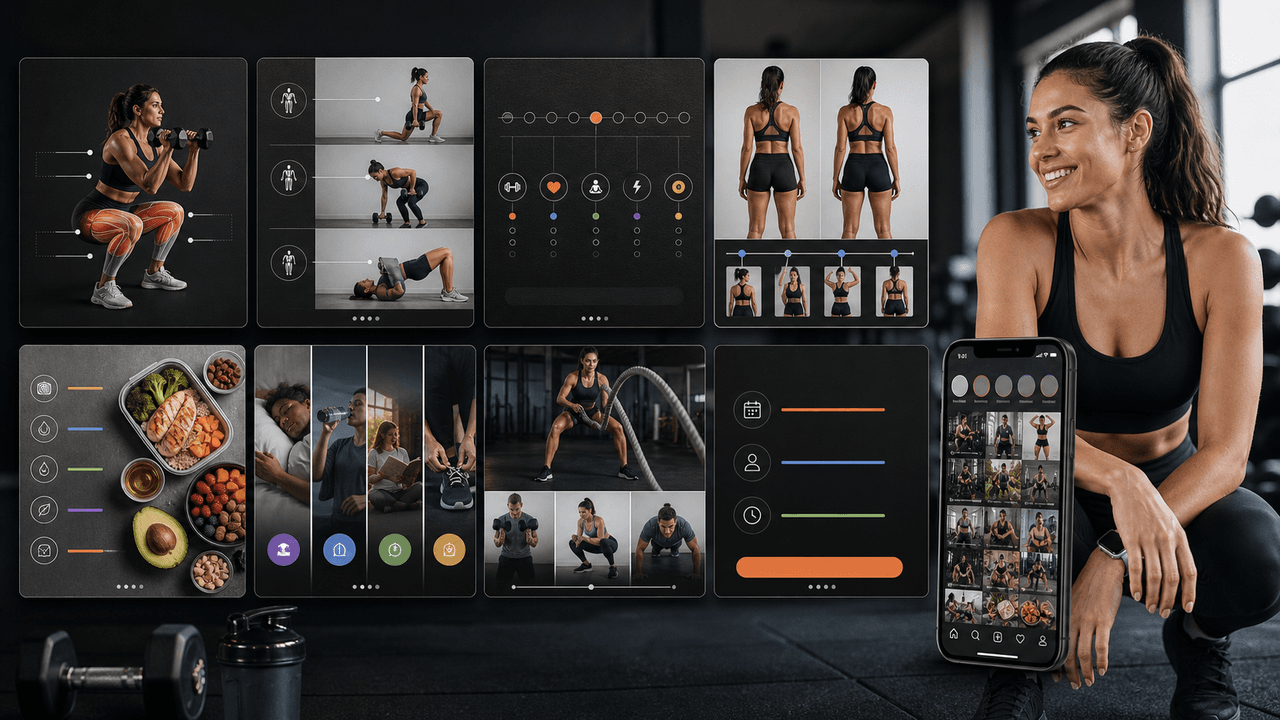
Fitness Trainer Instagram Carousels: The Content Guide That Fills Your Classes
Fitness trainers have the most visual, action-oriented content on Instagram, but most of them are posting the wrong types of carousels. This guide shows you the content mix, carousel structures, and posting strategy that actually fills classes and books clients.

Local Business Instagram Carousels: Drive Foot Traffic Without Paid Ads
Local businesses do not need viral content. They need carousels that reach the right 5,000 people within a ten-mile radius. A local carousel strategy turns your expertise, your team, and your community presence into foot traffic without spending a dollar on ads.

Carousel Design Principles: The Visual Rules That Get More Swipes
Great carousel design is not about being a graphic designer. It is about following a set of visual rules that make your content readable, recognizable, and swipeable. This guide breaks down each rule with concrete specifications you can apply immediately.
Sources
- What Counts for Children and Teens — Centers for Disease Control and Prevention
- Physical Activity Guidelines for Americans — Office of Disease Prevention and Health Promotion
- About Carousel Ads — Meta Business Help Center
- FTC's Endorsement Guides: What People Are Asking — Federal Trade Commission
Written by
AttentionClaw
Editorial Team
Editorial context
Part of the Carousel Creation topic cluster. Last updated June 22, 2026.