Chapter 1
The direct answer: remove first-class uncertainty
A yoga studio beginner class Instagram carousel should explain who the class is for, what the pace is, what students should bring, how modifications work, when to arrive, and how to book.
CDC physical activity guidance says some activity is better than none and summarizes weekly adult activity recommendations. A studio can reference movement benefits broadly while avoiding medical treatment claims.
The carousel should not promise pain relief, injury recovery, weight loss, mental health outcomes, or suitability for every condition.
Callout
Yoga studio rule
Promote class confidence and booking, but keep health, injury, pregnancy, and chronic-condition language reviewed.
Chapter 2
Build the post from beginner questions
Beginners ask whether they need flexibility, what mat to bring, what to wear, whether the class is heated, whether poses are modified, and whether they will feel behind.
Keep one intent per carousel. Do not combine beginner classes, teacher training, retreats, retail mats, private sessions, and membership discounts in one asset.
Class level and pace.
What to bring.
What to wear.
Arrival time.
Modification approach.
Health question prompt.
Booking CTA.
Chapter 3
Use an eight-slide beginner class carousel
- 1
Slide 1: beginner hook
Open with a first-class question beginners actually ask.
- 2
Slide 2: class fit
Explain who the class is designed for.
- 3
Slide 3: pace
Describe intensity, heat, props, and teacher guidance.
- 4
Slide 4: what to bring
List mat, water, towel, or rental options.
- 5
Slide 5: modifications
Explain how students can ask for options.
- 6
Slide 6: health boundaries
Prompt students with medical questions to ask a healthcare professional.
- 7
Slide 7: arrival
Share check-in timing and studio etiquette.
- 8
Slide 8: CTA
Invite viewers to book the beginner class.
Chapter 4
How AttentionClaw packages yoga studio content
AttentionClaw helps studios turn class descriptions, teacher notes, schedule links, waiver reminders, and beginner FAQs into review-ready carousel drafts.
Templates can cover beginner classes, class passes, workshops, private sessions, teacher spotlights, and seasonal challenges.
Chapter 5
Measure beginner conversion
Track first-class bookings, saves, schedule clicks, intro offer starts, and questions about class fit.
A strong beginner carousel should reduce intimidation and move new students toward booking.
First-class bookings.
Schedule clicks.
Save rate.
Intro offer starts.
Class-fit DMs.
Chapter 6
A slide-by-slide caption template for your first beginner class post
Writing the first draft of a beginner carousel is easier when you work from a fill-in structure rather than a blank screen. The goal is to move a nervous prospect from 'I have no idea what to expect' to 'I can picture myself showing up.' Every caption should be one or two short sentences — enough to support the visual without explaining it twice.
Use this template as a starting point, then replace the bracketed text with your studio's specifics: Slide 1 — 'Never done yoga? [Class name] is designed for exactly that.' Slide 2 — 'No flexibility required. Seriously.' Slide 3 — 'Here's the pace: [describe one typical sequence, e.g., seated stretches, standing balance, floor rest].' Slide 4 — 'What to bring: a mat (or borrow ours), water, and comfortable clothes you can move in.' Slide 5 — 'Every pose has a modification. Your teacher will show you both.' Slide 6 — 'Class is [X] minutes. The last [X] minutes are guided rest.' Slide 7 — '[Any health or injury note, e.g., let your teacher know before class if you have a recent injury.]' Slide 8 — 'Book your first class at the link in bio. Your first week is [offer].'
After posting, read the comments and DMs for the first 48 hours. The questions that come in are your next carousel. If three people ask whether there is parking, a slide about parking belongs in your next post.
Chapter 7
Common mistakes that push beginners away before they book
The most frequent mistake in beginner yoga carousels is leading with philosophy or lineage before the prospect knows whether the class even fits their schedule and fitness level. A slide about the studio's approach to breathwork belongs later in the funnel — not on slide one of a post aimed at someone who has never unrolled a mat.
Starting with instructor credentials rather than what the student will experience.
Using Sanskrit pose names without a plain-language translation on the same slide.
Describing intensity vaguely ('gentle but effective') without a concrete reference point like pace, standing versus floor ratio, or a comparison most people understand.
Omitting any mention of modifications, which is the single biggest anxiety for inflexible or injured beginners.
Closing with a generic 'sign up today' CTA when a specific offer, a class time, or a link removes more friction.
Posting class photos that only show advanced practitioners in difficult poses — the visual undercuts the 'anyone can do this' message.
Chapter 8
How to write about modifications and health without making medical claims
Yoga carousels sometimes drift into medical territory — claiming the practice relieves specific conditions, heals injuries, or is 'safe for everyone.' These claims invite regulatory and legal risk and can also mislead a student who should check with a doctor first. The safer and more useful framing is to describe what a student will be asked to do physically, note what to tell the teacher before class, and let outcomes come from the student's own experience.
A slide like 'Let your teacher know before class if you have a recent injury, surgery, or condition that affects movement' is both helpful and appropriate. A slide like 'Yoga relieves chronic back pain' is neither — it overpromises and sidesteps individual variation. If your studio has specific experience with particular student populations, describe the accommodations you make rather than the outcomes you guarantee.
A brief disclaimer line in the caption — 'This class is not medical advice; consult your healthcare provider if you have concerns' — costs nothing to include and signals professionalism to prospective students who are weighing their options carefully.
Callout
Safe framing to use
Instead of 'great for bad backs,' try 'every pose has a seated or lying-down modification — let your teacher know before class if there is anything you want to work around.'
Chapter 9
Match your carousel to the specific beginner format you offer
Not all beginner yoga content is the same, and a carousel that treats 'beginner yoga' as a single category can fail to convert the exact students who would thrive in your class. A studio offering a four-week beginner series has a different selling point than one offering a drop-in basics class or a private intro session. The carousel should name the format specifically — series, drop-in, workshop, or private — because each solves a different kind of beginner anxiety.
A four-week series tells a nervous beginner that they will learn alongside the same group of people, build progressively, and not feel like the only person who cannot touch their toes. A drop-in basics class tells a beginner with an unpredictable schedule that they can start without committing to a series. A private intro session tells someone who is intimidated by a group setting that they can learn the basics before joining a class. Each of these requires a different carousel hook and a different call to action.
If your studio offers more than one beginner entry point, consider a carousel that helps the viewer choose the right one rather than promoting all of them equally. A slide that poses the question 'Not sure which to start with?' followed by two or three short descriptions with distinct audience labels — 'If your schedule is unpredictable... / If you want to build with a group... / If you want one-on-one guidance first...' — converts more effectively than a list of class names with dates.
Chapter 10
Common reasons beginners do not book — and how to address each in a carousel
The most frequent reason a beginner follows a yoga studio account but does not book is not price — it is anxiety about being underprepared or judged in a group setting. A carousel that acknowledges this directly, without being condescending, builds more trust than a carousel that only highlights benefits. One slide with the headline 'What if I can not do the poses?' followed by a short, specific answer — 'Every pose has a simpler option. The teacher will show it before you need to ask.' — removes a barrier without requiring a DM.
A second common objection is not knowing what to bring or wear. This sounds minor, but showing up to a first class without the right mat or wearing the wrong clothes is embarrassing enough to prevent some people from booking at all. A practical 'what to bring' slide is not just logistics — it is reassurance. Keep it to five items or fewer. If the studio provides mats, say so prominently, because it removes one of the most common booking hesitations.
A third objection, less often named but frequently present, is the worry that beginner yoga is not a real workout or that the student will be bored. For this audience, the carousel should describe the class honestly — is it gentle and restorative, or does it build heat and strength even at a slower pace? Studios that try to appeal to everyone by staying vague lose the students who want a more active experience and do not attract additional students in their place.
Objection: 'I am not flexible enough.' Address: flexibility is developed in class, not required for entry.
Objection: 'I do not own a mat.' Address: studio mats are available, or name a budget option.
Objection: 'I will be the worst in the class.' Address: describe the range of first-class students honestly.
Objection: 'I do not know if it will be too easy.' Address: describe actual effort level and what students feel after class.
Objection: 'I am not sure I can commit to a series.' Address: explain whether drop-ins are an option.
Chapter 11
Build a separate carousel around your introductory offer
Most yoga studios have an introductory offer — a discounted first month, a trial class, or an intro pack — and this offer deserves its own carousel rather than a mention at the end of a general beginner post. An introductory offer carousel converts better when it explains the offer terms specifically: price, duration, how many classes are included, whether it auto-renews, and what the standard rate is after the intro period ends.
The most effective format for an intro offer carousel is: one slide naming the offer, one slide describing who it is for, one slide explaining what the student gets (number of classes, time window), one slide addressing the most common objection ('Can I extend if I am traveling?'), and one slide with a clear single action — click the link in bio to redeem or book the first class. Five slides is often enough; do not pad to eight if the extra slides dilute the message.
Avoid urgency language that is not true. If the intro offer is available year-round, do not write 'limited time.' If there is a genuine expiration — the offer ends on a specific date, or only new students are eligible — state those conditions plainly. Readers who feel misled by false scarcity are unlikely to become long-term members even if they book the intro class.
Next step
Turn beginner class questions into booking carousels
Use AttentionClaw to package class notes, beginner FAQs, health guardrails, and booking CTAs into review-ready carousel drafts.
Common Questions
FAQ
More Reading
Keep reading
11-chapter read
Daycare Open House Instagram Carousels
Daycare open house carousels should help parents understand the tour, classroom questions, safety topics, enrollment steps, and booking CTA without overclaiming quality.
9-chapter read
Dance Studio Trial Class Instagram Carousels: Help New Students Show Up
Dance studio trial class carousels should help new students and parents understand what to wear, what to bring, class level, expectations, privacy, and how to book.
9-chapter read
Pilates Studio Intro Class TikTok Slideshows: Reduce First-Class Anxiety
Pilates intro class slideshows should explain what to wear, what to bring, class flow, modifications, health boundaries, and booking steps without promising medical or transformation outcomes.
9-chapter read
Gym Intro Offer TikTok Slideshows: Sell Trial Weeks Without Overpromising Results
Gym intro-offer TikTok slideshows should explain who the trial is for, what happens during the first week, how coaches scale workouts, and how to join without promising body transformations.
9-chapter read
Yoga Studio Class Pass TikTok Slideshows: Sell the First Visit
Yoga studio slideshows should reduce first-visit anxiety: what class to choose, what to bring, who teaches it, what the room feels like, and how the intro pass works. The right content sells comfort and clarity, not just poses.
8-chapter read
Carousel Slide Order That Converts: Hook, Proof, Offer, CTA
A converting carousel usually follows a clear order: hook, context, problem, solution or product, proof, objection handling, offer, and CTA. The exact slide count can change, but the reader should never wonder why the next slide exists.
8-chapter read
Gym Class Social Content Calendar: Fill Classes With Local Posts
A gym class content calendar should sell confidence before it sells intensity. Use class previews, beginner guidance, trainer education, member proof, seasonal challenges, and local booking reminders to turn social attention into trial classes and repeat attendance.

Build a Personal Brand With Instagram Carousels: The Authority System
Personal branding on Instagram is not about being everywhere. It is about being unmistakable. This system uses carousels to build authority, memorability, and trust so that when your audience needs what you offer, you are the only name that comes to mind.
Fitness Trainer Instagram Carousels: The Content Guide That Fills Your Classes
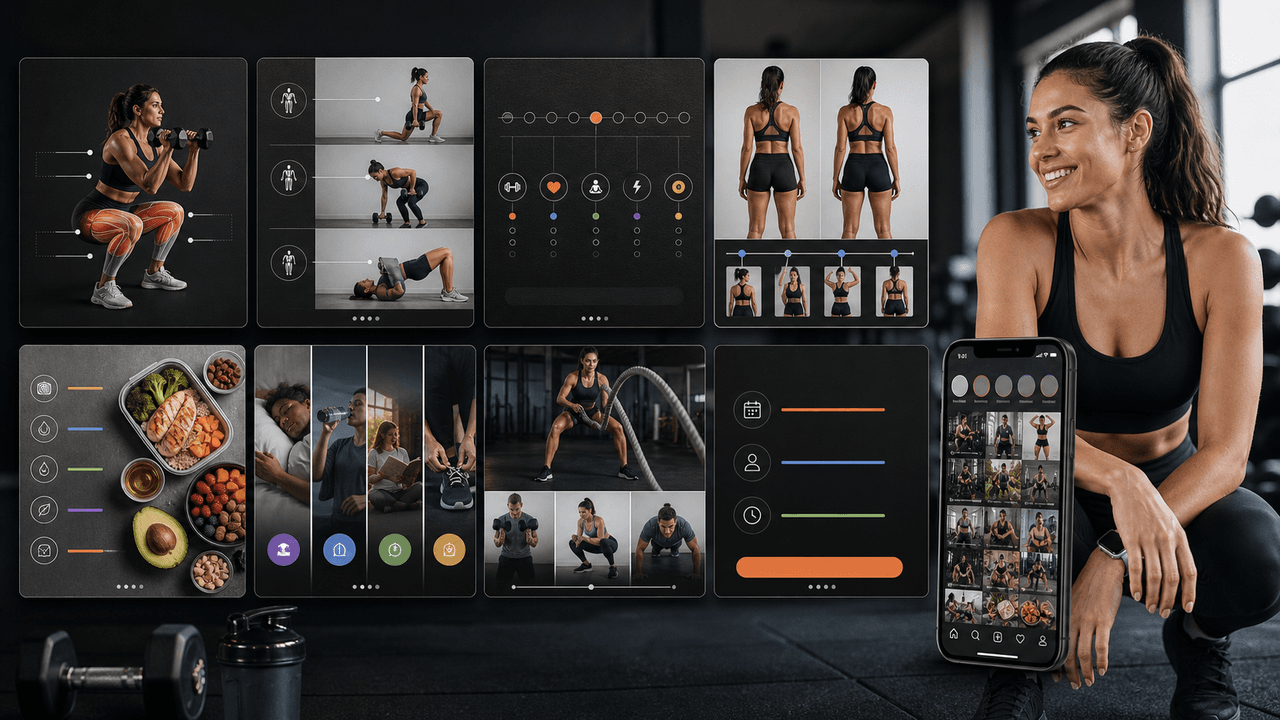
Fitness trainers have the most visual, action-oriented content on Instagram, but most of them are posting the wrong types of carousels. This guide shows you the content mix, carousel structures, and posting strategy that actually fills classes and books clients.

Local Business Instagram Carousels: Drive Foot Traffic Without Paid Ads
Local businesses do not need viral content. They need carousels that reach the right 5,000 people within a ten-mile radius. A local carousel strategy turns your expertise, your team, and your community presence into foot traffic without spending a dollar on ads.
Sources
- Adult Activity: An Overview — Centers for Disease Control and Prevention
- What You Can Do to Meet Physical Activity Recommendations — Centers for Disease Control and Prevention
- The FTC's Endorsement Guides: What People Are Asking — Federal Trade Commission
- About Carousel Ads — Meta Business Help Center
Written by
AttentionClaw
Editorial Team
Editorial context
Part of the Carousel Creation topic cluster. Last updated June 22, 2026.