Chapter 1
The direct answer: help shoppers arrive with measurements and questions
A furniture showroom room-planning Instagram carousel should explain what measurements to bring, how to compare scale, what delivery and assembly questions matter, what safety details to ask about, and how to book a room-planning appointment.
CPSC's Anchor It guidance tells consumers to secure furniture and televisions to help prevent tip-over injuries. FTC Green Guides guidance is relevant when stores make environmental claims about materials, sourcing, or sustainability.
The carousel should not make unsubstantiated eco claims, ignore tip-over safety, or promise that a piece fits without room measurements.
Callout
Furniture content rule
Sell style with practical buying details: measurements, delivery, safety, materials, and consultation next steps.
Chapter 2
Build carousels from room-planning friction
Shoppers ask whether a sofa fits, whether a dining table leaves enough clearance, how delivery works, what fabrics are durable, whether furniture should be anchored, and whether claims like eco-friendly are meaningful.
Each carousel should focus on one buying moment. A room-planning guide should not also become a full catalog, financing pitch, and clearance sale.
Use floor-plan snippets, showroom photos, tape-measure cards, material closeups, delivery diagrams, and consultation booking prompts.
What measurements to bring to the showroom.
How to think about room scale and clearance.
What to ask about delivery and assembly.
When anchoring furniture or TVs matters.
What material and care questions to ask.
How to compare showroom pieces with home lighting.
What sustainability claims need detail.
How to book a room-planning consult.
Chapter 3
Use an eight-slide room-planning carousel
The carousel should turn inspiration into a better prepared store visit.
Review material, sustainability, warranty, safety, delivery, and financing claims before publishing.
- 1
Slide 1: shopper hook
Open with 'Before you buy the sofa, measure these 5 things.'
- 2
Slide 2: room dimensions
Ask for wall lengths, ceiling height, windows, doors, and traffic paths.
- 3
Slide 3: existing pieces
Prompt photos and measurements of rugs, tables, chairs, and media units.
- 4
Slide 4: delivery path
Mention stairs, elevators, hallways, doors, and parking access.
- 5
Slide 5: safety note
Include anchoring and tip-over questions for storage furniture and TVs.
- 6
Slide 6: material claims
Explain fabric, wood, care, and reviewed environmental claims.
- 7
Slide 7: showroom visit
Tell shoppers what a room-planning consultation can cover.
- 8
Slide 8: CTA
Invite shoppers to book a consultation or save the measurement checklist.
Chapter 4
How AttentionClaw packages furniture showroom content
AttentionClaw helps furniture stores turn showroom notes, product specs, delivery FAQs, safety reminders, and room-planning scripts into Instagram carousels.
Templates can cover sofa fit, dining table clearance, bedroom storage, media unit safety, fabric choice, delivery prep, and seasonal room refreshes.
Callout
Furniture workflow
Choose one room-planning question, add reviewed product and safety details, select showroom visuals, generate carousel, review, publish with consultation CTA.
Chapter 5
Measure consultation quality and fewer returns
Track consultation bookings, saved measurement checklists, delivery-path questions, fit-related DMs, and return or exchange reasons.
The best room-planning carousel helps shoppers buy with fewer surprises.
Consultation booking clicks.
Measurement checklist saves.
Delivery-path questions.
Fit-related DMs.
Return reason patterns.
Chapter 6
The four measurements every shopper needs before visiting
Most furniture returns and failed deliveries trace back to one missed measurement. A room-planning carousel can prevent that by giving shoppers a clear, brief checklist to complete before they leave home. Four measurements cover the majority of problems: room footprint (length and width), ceiling height for tall items and lighting, doorway and stairway clearance for delivery, and the wall span where a sofa or console will sit.
The carousel can walk shoppers through each measurement with a visual — a simple overhead floor-plan diagram for room footprint, a doorway silhouette for clearance. Visuals help because many shoppers do not own a tape measure and need to improvise with a phone ruler app, which the slide can suggest.
Adding a fifth measurement for dining-table clearance (roughly 36 inches between table edge and wall for comfortable chair movement) helps shoppers evaluate dining sets specifically. Presenting this as a decision rule — 'If your dining area is under 10 feet wide, compare our round table options first' — turns a measurement into a shopping path.
Callout
Save-worthy format
Measurement checklists are among the highest-saved post types for furniture retailers. Format the checklist as a clean, scannable list on a light background so the saved image stays readable when a shopper pulls it up in the store.
Chapter 7
Using the carousel to move shoppers from browsing to consultation
Room-planning carousels have two jobs: immediate utility (helping the shopper prepare) and a downstream conversion (booking a design consultation or store visit). The mistake is making the CTA too early. Shoppers who are still in the inspiration phase will ignore a 'Book now' button. A more effective closing slide offers a lower-commitment next step: 'Bring your measurements in-store and a designer will pull room options for you at no charge.'
The words 'no charge' matter because many shoppers assume design consultations cost money. Making this explicit removes a friction point that prevents otherwise-interested shoppers from asking.
A secondary CTA for shoppers not ready to visit is a downloadable or DM-able measurement guide. 'DM us the word PLAN and we'll send you the full room-planning checklist' captures contact information and segments buyers who are actively measuring, which is a strong purchase-intent signal.
- 1
Lead with utility
The first slide should be immediately useful: a clear headline like 'Before you shop: 4 measurements that save your move-in day.' This earns the swipe-through.
- 2
Layer in product context mid-carousel
After two or three measurement slides, introduce a product example: 'Our 88-inch sofa needs 120 inches of wall clearance — here's how to check yours.' This bridges the educational content to the showroom.
- 3
Close with the lowest-friction next step
Match the CTA to the shopper's stage. First-time viewers respond better to 'Save this checklist' than 'Book a consultation.' Retargeted viewers or followers who have already saved can receive a warmer CTA.
Chapter 8
Addressing delivery and fit concerns before they become return reasons
A significant share of furniture returns happen because a piece does not fit through a doorway or into the intended room. Carousels that address this proactively do two things: they reduce post-purchase frustration and they signal that the showroom is trustworthy and practical, not just aspirational.
One effective carousel format focuses entirely on delivery readiness: what dimensions to measure at the front door, stairwell, and elevator (if applicable), how white-glove delivery differs from threshold delivery, and what to do if a piece needs to be disassembled for entry. This kind of post attracts saves from people who have already decided to buy and are preparing for delivery.
Delivery content also opens the door to post-purchase follow-up. A shopper who saved the delivery checklist is more likely to respond to a later carousel on furniture care, seasonal styling updates, or complementary pieces — all of which extend the customer relationship beyond the initial transaction.
State delivery window ranges honestly rather than best-case estimates — surprises here damage trust more than longer accurate timelines
Clarify whether in-home placement and packaging removal are included or available as an add-on
Address elevator and stairwell limitations directly for urban shoppers, who face these problems most often
Offer a 'dimensions on request' DM prompt for custom or large pieces where shoppers may need exact specs before visiting
Next step
Turn room-planning questions into furniture carousels
Use AttentionClaw to package measurements, showroom visuals, safety notes, and consultation CTAs into review-ready carousel drafts.
Common Questions
FAQ
More Reading
Keep reading
9-chapter read
Interior Designer Consultation Instagram Carousels: Turn Inspiration Into Scope
Interior designer consultation carousels should help prospects move from inspiration images to a scoped design conversation: room, goals, budget range, timeline, decision-makers, safety needs, and next step.
9-chapter read
Home Organizer Before-and-After Instagram Carousels: Show Systems, Not Just Bins
Home organizer before-and-after carousels should show the system, the client problem, the maintenance plan, and the consultation path while protecting household privacy and avoiding unrealistic transformation claims.
8-chapter read
Carousel Slide Order That Converts: Hook, Proof, Offer, CTA
A converting carousel usually follows a clear order: hook, context, problem, solution or product, proof, objection handling, offer, and CTA. The exact slide count can change, but the reader should never wonder why the next slide exists.
7-chapter read
How to Turn a Product Detail Page Into Social Content
A product detail page can become a full social campaign when you extract buyer questions, benefits, proof, variants, objections, reviews, and offers. The goal is not to copy the page into posts; it is to turn each product-page section into one useful social asset.
5-chapter read
40 TikTok Slideshow Ideas for Local Service Businesses
Local service businesses should use TikTok slideshows to answer the practical questions customers ask before booking: what the service solves, what it costs, what the process looks like, what results are realistic, and why this local provider is trustworthy.
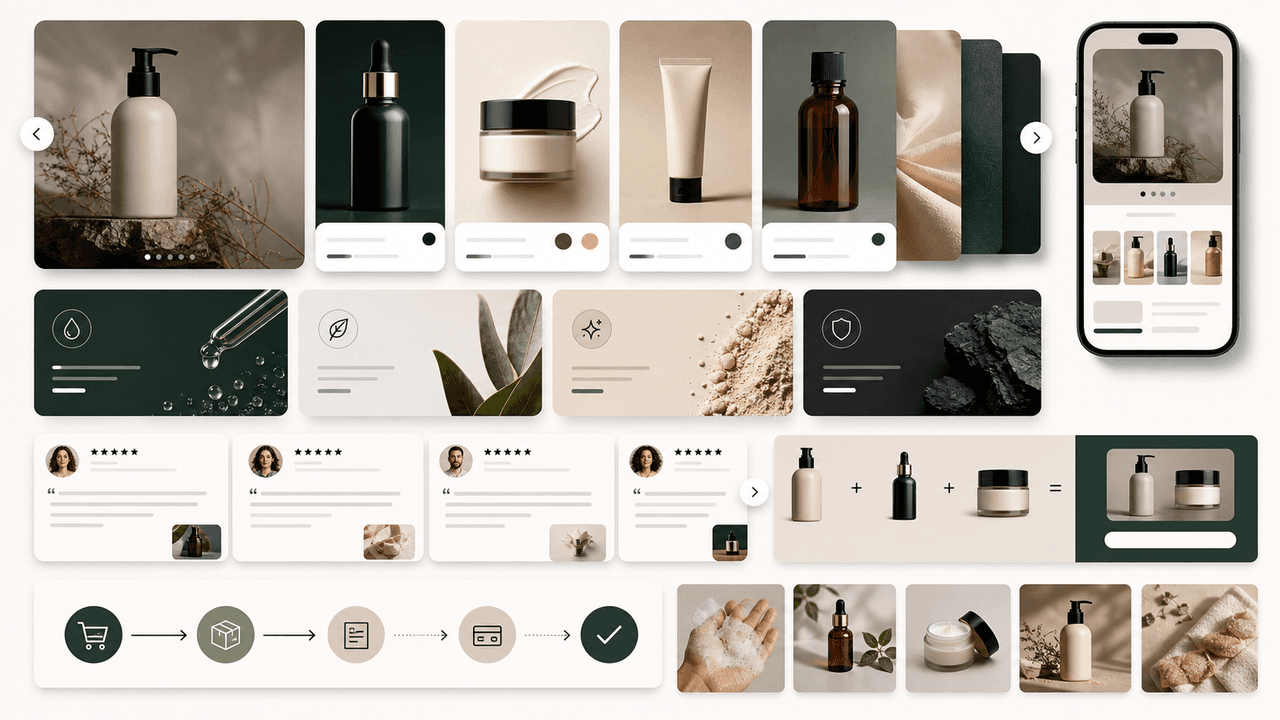
Four Product Carousel Formats Built Around Evidence
The best ecommerce carousel template depends on the buyer question and the evidence available. These four formats organize approved product details, media, comparison facts, bundle contents, and use cases into reviewable slide sequences without promising that a template will generate sales.

Write carousel copy as one connected argument
Good carousel copy lets a reader understand one argument without guessing what connects the slides. This guide covers hooks, claim-proof editing, continuity, legibility, and a complete before-and-after example.

Carousel Design Principles: The Visual Rules That Get More Swipes
Great carousel design is not about being a graphic designer. It is about following a set of visual rules that make your content readable, recognizable, and swipeable. This guide breaks down each rule with concrete specifications you can apply immediately.
Sources
- AnchorIt.gov — U.S. Consumer Product Safety Commission
- Green Guides — Federal Trade Commission
- The Consumer Reviews and Testimonials Rule: Questions and Answers — Federal Trade Commission
- About Carousel Ads — Meta Business Help Center
Written by
AttentionClaw
Editorial Team
Editorial context
Part of the Carousel Creation topic cluster. Last updated June 22, 2026.