Chapter 1
The direct answer: turn visual taste into a usable brief
An interior designer consultation Instagram carousel should explain what photos, measurements, goals, budget range, timeline, decision-makers, safety needs, and inspiration references a client should bring before the first call.
ASID describes interior design as a profession that affects places where people live, work, play, heal, and learn. That makes consultation content stronger when it covers function and constraints, not just style.
For family spaces, nurseries, rentals, and renovations, safety and contractor boundaries matter. CPSC nursery and furniture safety resources, HUD healthy homes resources, and FTC contractor guidance all support careful wording around home projects.
Callout
Design content rule
Sell the design process and scope clarity, not a guaranteed room transformation from a mood board.
Chapter 2
Build carousels around client readiness
Design prospects ask what a consultation includes, what photos to send, how budgets work, whether the designer handles purchasing, how contractors are coordinated, and what happens after the first call.
Each question can become a carousel. A post about consultation prep should not also try to explain every design service tier.
Use project photos with permission and avoid exposing client addresses, children's rooms, valuables, family photos, or floor plans that create privacy issues.
What to bring to a design consultation.
How to photograph your room for a designer.
How to explain your style beyond a mood board.
What affects project timeline.
How budget ranges shape design options.
What to ask before hiring a designer.
How nursery or family-room safety questions are handled.
What happens after the first call.
Chapter 3
Use a seven-slide consultation prep carousel
Keep portfolio carousels tied to process. Show what changed, why, and what constraints mattered.
If a post mentions contractors, licensing, or installation, review local requirements and partner responsibilities.
- 1
Slide 1: room goal
Name the room or project type.
- 2
Slide 2: current photos
Ask for wide photos, details, natural light, and problem areas.
- 3
Slide 3: measurements and constraints
Mention dimensions, existing furniture, rental limits, pets, children, or accessibility needs.
- 4
Slide 4: inspiration
Explain how to share mood boards and what to say about them.
- 5
Slide 5: budget and timeline
Explain why range and deadlines shape recommendations.
- 6
Slide 6: decision process
Ask who approves style, purchases, and contractor choices.
- 7
Slide 7: CTA
Book a consultation, save the prep list, or send the room brief.
Chapter 4
Use portfolio proof without oversimplifying the project
A reveal photo can hide months of scope, sourcing, contractor work, and client decisions. A good carousel explains the process behind the reveal.
FTC contractor guidance is useful when posts cross into home improvement work. Designers should be clear about what they provide and which licensed professionals may be needed.
For nursery and child spaces, CPSC resources remind readers that furniture and product safety matter. Designers should not imply that a room is child-safe without appropriate product and installation review.
Use permissioned project photos.
Explain scope, timeline, and constraints.
Avoid guaranteed budget or timeline claims.
Route construction and installation questions to qualified professionals.
Be careful with nursery and child-safety language.
Chapter 5
How AttentionClaw helps designers package consultation content
AttentionClaw helps designers turn portfolio photos, consultation questions, room-prep checklists, and service descriptions into Instagram carousels and TikTok slideshows.
Templates can cover consultation prep, portfolio case study, mood board to brief, room photo guide, budget conversation, renovation scope, and reveal post.
Callout
Design workflow
Choose client question, select permissioned project photos, add scope explanation, review safety and contractor boundaries, publish.
Chapter 6
Measure consultation quality, saves, and scoped inquiries
Measure booked consultations, complete room briefs, saves, website clicks, and fewer vague mood-board-only inquiries.
If clients send better photos, clearer budgets, and realistic timelines after a carousel, the content is doing useful sales work.
Track consultation bookings by carousel topic.
Track complete room brief submissions.
Track saves on prep checklists.
Track DMs about budget and timeline.
Track portfolio posts that lead to qualified inquiries.
Chapter 7
Using Carousels to Prevent Scope Creep Before the Consultation
Scope creep in interior design typically starts before the contract is signed. A client comes in with a living room refresh in mind, then mentions the dining room adjacent to it, then wonders aloud about the hallway, and by the second meeting has a full-floor renovation in the room. None of this is bad if the designer can scope and price it. The problem is when the client assumed the original consultation fee covered all of it.
A pre-consultation carousel that explains how design scope works — what a single-room project typically includes, how additional rooms are added and priced, what 'consultation only' versus 'full service' means for deliverables — does the expectation-setting work before the first meeting. The client who watches this carousel arrives already knowing that the hallway is a separate conversation. That makes the consultation more productive and the proposal easier to accept.
This type of educational content also attracts better-fit clients. Prospects who watch a scope explainer and still inquire are signaling that they understand design is a service with defined boundaries, not an unlimited creative resource. Those inquiries convert at higher rates and produce fewer scope disputes during the project.
Chapter 8
Teaching Clients How to Share Inspiration Images That Are Actually Useful
Inspiration images are central to every design consultation, but most clients collect them without any structure. They arrive with a folder of pinned images that include high-gloss editorial photography, furniture they cannot afford, rooms in climates nothing like their own, and two or three styles that directly contradict each other. The consultation then spends 30 minutes sorting through images instead of establishing a brief.
A carousel that teaches clients how to curate useful inspiration images before the consultation is a time-saving gift. The framework is simple: include at least one image for each room or zone you want to address; include at least one image where you love the feeling but would change the specific items; include one image of a room you dislike so the designer understands your edges; and annotate at least a few images with what you specifically like — the color, the light, the furniture arrangement, the texture.
When clients do this prep work, the first consultation moves from sorting images to interpreting them. The designer learns more in less time, and the client feels heard. The carousel positions the designer as someone who runs a structured process, not just an aesthetic conversation.
Curate 10 to 20 images rather than 100 — too many images signals unclear vision and makes the consultation less useful
Include at least one image of a room you actively dislike — negative space is as useful as positive inspiration
Note whether you love the whole room or just one element (the ceiling treatment, the rug color, the window placement)
Separate 'aspirational' images from 'realistic for my space' images before sharing
Send images in advance if the designer offers a pre-consultation review
Chapter 9
The Carousel That Bridges Consultation to Signed Proposal
Many designers publish content that attracts consultation inquiries but then let the proposal stage go silent. The gap between consultation and signed proposal is where most prospects get cold. A post-consultation follow-up carousel — shared as a story or a static post the day after consultations typically happen — can re-warm that gap for followers who are in the decision window.
The content of this carousel does not need to address any specific client. It can simply walk through what happens after a consultation: what the designer creates, what a proposal typically includes, how long the design process takes from signed agreement to completed room, and what the first week of the project looks like. For a prospect sitting on a proposal, this content arrives at exactly the right moment and makes the next step feel tangible rather than abstract.
Time this post for Thursday or Friday, when prospects are likely to be thinking about weekend decisions. A prospect who sees 'here is what the next six weeks look like after you sign' on a Thursday afternoon is more likely to move forward than one who has only seen portfolio carousels. Process visibility converts undecided prospects into clients.
Next step
Turn design inquiries into scoped consultation content
AttentionClaw helps designers package portfolio photos, room-prep checklists, and consultation CTAs into Instagram carousels and TikTok slideshows.
Common Questions
FAQ
More Reading
Keep reading
8-chapter read
Furniture Showroom Room Planning Instagram Carousels
Furniture showroom room-planning carousels should help shoppers measure, compare pieces, ask about delivery, understand safety notes, and book a design consultation.
9-chapter read
Home Remodel Consultation Instagram Carousels
Home remodel consultation carousels should explain scope, budget, timeline, contractor questions, lead-safe renovation issues, and how to book a consultation without hiding risk or cost questions.
9-chapter read
Architect Consultation Instagram Carousels: Help Clients Start the Design Process
Architect consultation carousels should help clients prepare goals, budget, site constraints, inspiration, and questions before the first design conversation.
9-chapter read
Home Organizer Before-and-After Instagram Carousels: Show Systems, Not Just Bins
Home organizer before-and-after carousels should show the system, the client problem, the maintenance plan, and the consultation path while protecting household privacy and avoiding unrealistic transformation claims.
8-chapter read
Carousel Slide Order That Converts: Hook, Proof, Offer, CTA
A converting carousel usually follows a clear order: hook, context, problem, solution or product, proof, objection handling, offer, and CTA. The exact slide count can change, but the reader should never wonder why the next slide exists.
8-chapter read
Home Services Seasonal Maintenance Content Calendar: Book Preventive Work
Seasonal maintenance content helps home service companies book preventive work before emergencies happen. Use weather-aware checklists, HVAC filter reminders, water and mold prevention posts, storm prep, and local booking CTAs to turn useful education into service demand.

Client Transformation Carousels: The Before-After Framework That Sells Coaching
Client transformation carousels are the highest-converting content a coach can post. This framework shows you how to tell client stories in a way that builds trust, demonstrates results, and attracts ideal prospects.

High-Ticket Offer Funnels Using Instagram Carousels: From Free Value to $5K Clients
High-ticket clients do not buy from a single post. They buy after experiencing a sequence of content that builds belief, addresses objections, and makes the investment feel inevitable. This guide shows you how to engineer that sequence using Instagram carousels.
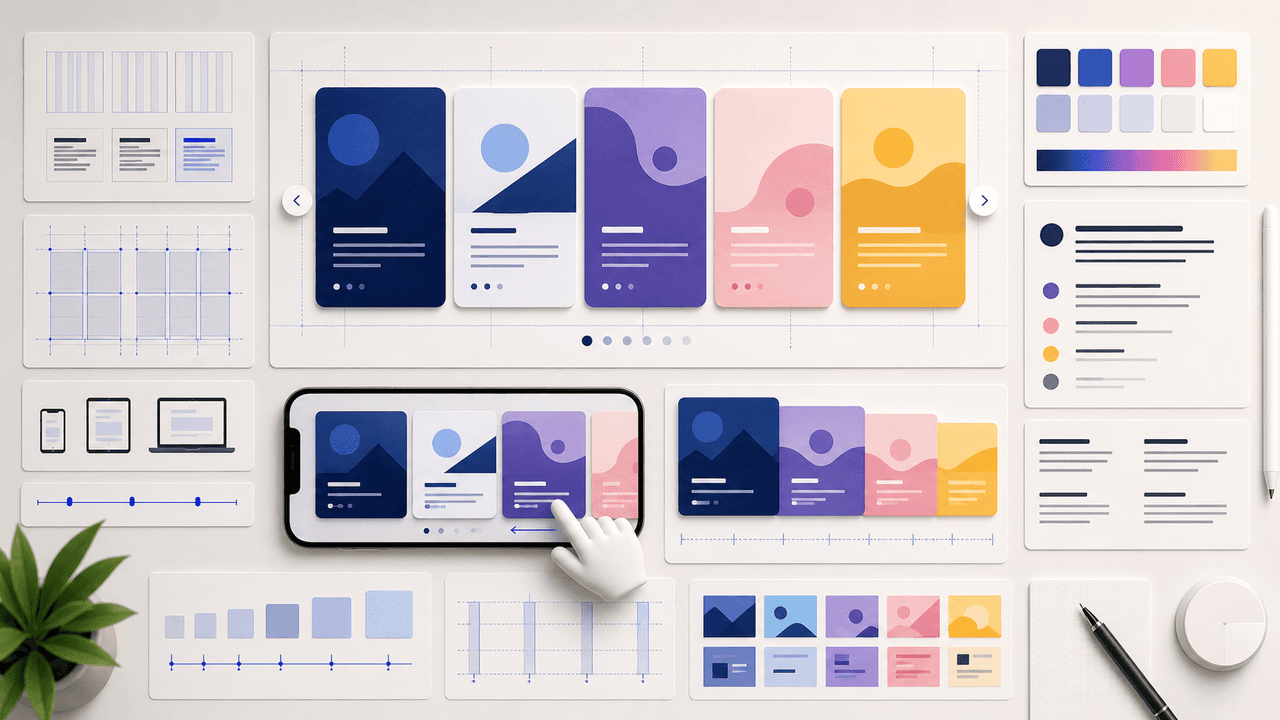
Carousel Design Principles: The Visual Rules That Get More Swipes
Great carousel design is not about being a graphic designer. It is about following a set of visual rules that make your content readable, recognizable, and swipeable. This guide breaks down each rule with concrete specifications you can apply immediately.
Sources
- American Society of Interior Designers — ASID
- Hiring a Contractor — Federal Trade Commission
- The Safe Nursery — U.S. Consumer Product Safety Commission
- Office of Lead Hazard Control and Healthy Homes — U.S. Department of Housing and Urban Development
Written by
AttentionClaw
Editorial Team
Editorial context
Part of the Carousel Creation topic cluster. Last updated June 22, 2026.