Chapter 1
Paid community content has a trust boundary
A paid community is not a public content farm. Members pay for access, context, support, and often privacy. Repurposing should respect that boundary before it optimizes for reach.
YouTube describes channel memberships as paid programs where members may receive exclusive perks such as posts and content. That exclusivity is the key idea for any paid community, even outside YouTube. Public content should preview value and teach patterns, not leak member-only discussions.
The safest approach is to extract recurring themes and anonymized lessons. If a specific member story, screenshot, or quote is needed, get explicit permission.
Public: patterns, generalized lessons, anonymized questions.
Member-only: private threads, full recordings, templates, feedback, sensitive examples.
Permission-based: specific wins, quotes, screenshots, and named stories.
Chapter 2
Sort community material into five lanes
- 1
Recurring question
If multiple members ask the same thing, it can become a public FAQ, carousel, or post.
- 2
Implementation blocker
Common blockers can become public checklists while the full solution stays inside the community.
- 3
Member win
Use wins only with permission if details are specific. Otherwise teach the pattern behind the win.
- 4
Discussion insight
A thoughtful thread can become a newsletter or opinion post after removing private context.
- 5
Exclusive asset preview
A page, checklist, or workshop clip can become a public teaser if it does not give away the whole member asset.
Chapter 3
Create public assets that protect member value
The public asset should help non-members understand the problem and the first step. The paid community should hold the deeper implementation, feedback, templates, and member support.
A recurring member question can become a public direct-answer carousel. A member-only template can become a public checklist preview. A discussion thread can become a newsletter about the broader decision, without quoting members.
Google's people-first content guidance is useful here because public content should be genuinely helpful, not a vague tease. The boundary is depth and support, not usefulness.
Question carousel: public answer to a repeated theme.
Checklist preview: first part of a member-only resource.
Newsletter: generalized lesson from a thread.
Poll: ask the public audience if they share the blocker.
CTA: invite readers to the community or related workflow.
Chapter 4
Use YouTube posts to test public demand
YouTube posts can include polls, quizzes, text, images, and video. Creators with memberships can use posts carefully to test public interest in themes that come up inside the paid community.
For example, a members-only discussion about building a content system can become a public poll asking which part is hardest. The poll does not reveal member content, but it confirms whether the topic matters beyond the paid group.
This helps decide which community themes deserve public articles, carousels, or lead magnets.
Chapter 6
Use a permission checklist for member stories
Member stories are powerful but sensitive. Before using one publicly, confirm the exact quote, name, context, screenshot, and numbers the member approves. If any part is uncertain, generalize the story.
For expert communities, the public trust cost of mishandling a member story is larger than the content benefit. Treat permission as a production requirement, not a courtesy.
When in doubt, publish the lesson without the member story.
Callout
Permission test
If the content only works because of a specific member's private details, it needs explicit permission or should stay private.
Chapter 7
Measure public interest without cannibalizing member value
Measure community-derived content by public resonance and member impact. Public saves, replies, and clicks show demand. Member retention and satisfaction show whether the boundary is healthy.
Use campaign tracking for public assets that point to a community, waitlist, workshop, or product workflow. Google Analytics URL builder guidance explains how campaign parameters identify referral campaigns. Use labels such as community_question_carousel, community_theme_newsletter, community_preview_post, and community_cta.
If public content creates questions that the community is uniquely equipped to answer, the repurposing loop is working.
Chapter 8
Where AttentionClaw fits
AttentionClaw fits after community themes have been anonymized and approved for public use. The creator chooses the boundary and the public lesson. AttentionClaw can turn that into branded social assets.
This helps community-led businesses teach from real patterns without exposing member-only value.
Callout
Turn anonymized community themes into branded social assets
Use AttentionClaw to turn anonymized community themes into social assets that preserve trust and preview your expertise.
Chapter 9
A repeatable process for extracting themes without exposing members
The challenge in repurposing paid community content is that the most valuable material is usually tied to specific member situations. A question that a paying member asked in a support thread might represent a universal problem, but copying it directly into a public post violates the trust that made the member willing to ask openly in the first place.
A safe and repeatable extraction process starts at the pattern level, not the post level. Instead of asking 'can I share this post publicly?', ask 'what recurring question or problem does this represent?' Once you have named the pattern — for example, 'members consistently struggle with pricing their first offer' — you can create public content around the pattern using your own frameworks and language, entirely independent of any specific member's words or situation.
Keeping an ongoing 'theme log' inside your community management workflow makes this process easier over time. When you notice the same question arising three or more times in a week, log it as a potential public content theme. Review the log monthly to identify which themes have enough depth to become public carousels, newsletter sections, or short-form slideshows.
- 1
Step 1 — Log recurring questions and topics weekly
Create a simple running document. When the same problem surfaces multiple times, add it. Do not copy member language, just name the theme.
- 2
Step 2 — Assess whether the theme contains private context
Some themes are universal (pricing, mindset, technical how-tos). Others are too tied to member-specific situations to extract cleanly. Discard the latter.
- 3
Step 3 — Write the public content from your own expertise
The public post should come from your knowledge, not from member words. You are using the community as a signal for what the public also needs, not as a source of quotes.
- 4
Step 4 — Note what the public post leaves out
The detailed implementation, community feedback, and member examples stay inside the paid tier. The public post should be genuinely useful but stop before the depth that paid members receive.
Chapter 10
Use your repurposing approach as a trust signal for potential members
How you handle paid community content publicly says something concrete about how you treat members. Creators who are clearly thoughtful about the boundary between private and public content — who demonstrably do not blast member conversations all over their public channels — build the kind of trust that encourages prospective members to join. The privacy norms you demonstrate publicly are a form of pre-sale reassurance.
When you do create public content derived from community themes, a brief acknowledgment such as 'this question came up a lot in our community lately' signals that you are responsive to your members without identifying who asked or exposing what they shared. This framing also functions as a mild social proof element: it tells potential members that the community is active and that the questions being discussed are real, practical, and worth paying for.
Avoid describing the internal workings of your community in enough detail that non-members feel they are getting the benefit of membership without paying. The public post should create appetite, not satisfy it.
Next step
Turn member patterns into trust-safe social content
AttentionClaw helps community-led creators convert anonymized questions and themes into branded social assets.
Common Questions
FAQ
More Reading
Keep reading
10-chapter read
How to Turn Paid Workshop Recordings Into Social Content
Paid workshop recordings can become public social content when the creator extracts general lessons, anonymized patterns, approved clips, and implementation prompts without leaking the paid experience.
10-chapter read
How to Turn an Expert Book Chapter Into Social Content
An expert book chapter can become a social content system when the author extracts the chapter promise, argument, examples, objections, diagrams, and next step instead of posting isolated quotes.
10-chapter read
How to Turn Newsletter Sponsorships Into Social Content
Newsletter sponsorships can become useful social content when the public assets explain the audience problem, disclose the relationship clearly, and point readers to the sponsor offer without copying the email ad verbatim.
10-chapter read
How to Turn Office Hours Replays Into a Content System
Office hours replays become a content system when questions, blockers, examples, corrections, and action steps are captured, anonymized, and mapped to public or member-only assets.
11-chapter read
How to Turn an AMA Session Into FAQ Content
An AMA session becomes durable FAQ content when you cluster repeated questions, write direct answers, add caveats and sources, and repurpose each cluster into social assets.

How to Turn One Good Idea Into 7 Different Instagram Carousels
You do not need 30 unique ideas to post every day. You need one strong idea and a system that turns it into 7 carousels with different angles, formats, and depths.
10-chapter read
How to Repurpose Coaching Calls Without Violating Client Trust
Coaching calls can create excellent content when you extract patterns, anonymize details, and turn recurring client questions into teaching assets without exposing private information.
8-chapter read
How to Turn Workshop Q&A Into a Month of Social Content
Workshop Q&A is one of the highest-intent sources for content ideas. Sort questions into beginner confusion, implementation blockers, objections, examples, and next-step requests to build a month of posts.
How to Turn One Newsletter Into a Week of Social Content
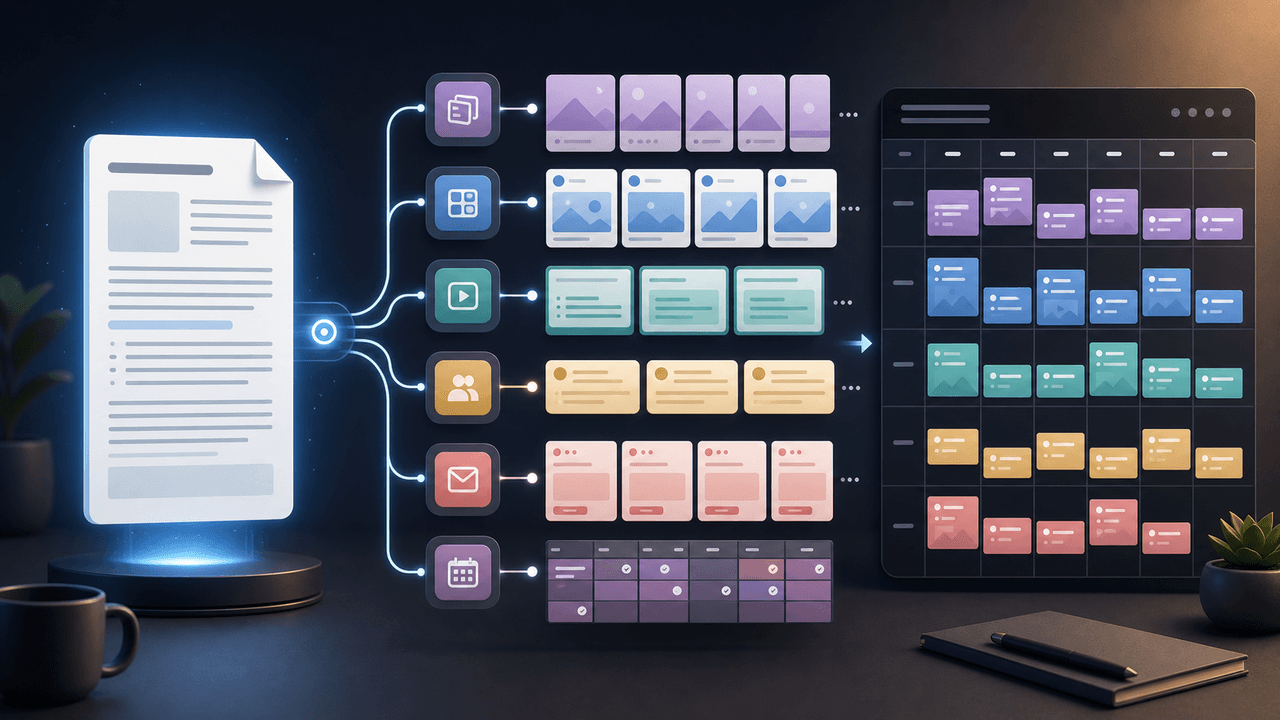
A strong newsletter is not one finished asset. It is the source file for a week of social posts, carousels, short scripts, community posts, and follow-up emails when you extract the argument, proof, examples, and reader questions separately.
Sources
- Join, Change, or Cancel a Membership — YouTube Help
- Succeeding With Channel Memberships — YouTube Creators
- Creating Helpful, Reliable, People-First Content — Google Search Central
- Learn About Posts — YouTube Help
- LinkedIn Newsletters Best Practices — LinkedIn Help
- URL Builders: Collect Campaign Data With Custom URLs — Google Analytics Help
Written by
AttentionClaw
Editorial Team
Editorial context
Part of the Repurposing topic cluster. Last updated June 22, 2026.