Chapter 1
The direct answer: publish access information before guests have to ask
Event planner accessibility social content should explain arrival, parking or transit, accessible routes, entrances, seating, restrooms, communication support, food and allergy process, service animal policy, quiet areas if available, and how to request accommodations.
The ADA National Network's guide for temporary events emphasizes planning so events can encourage participation by all people. ADA.gov guidance on effective communication is also relevant when events need to communicate effectively with people who have disabilities.
Social content cannot replace a full access plan, but it can make the event easier to evaluate and reduce last-minute confusion.
Callout
Accessibility content rule
Publish practical access details early, keep them updated, and give guests a direct contact path for specific accommodation needs.
Chapter 2
Six accessibility content pillars for events
Accessibility content needs to be practical, not performative. Guests want to know whether they can arrive, enter, move, communicate, eat, participate, and get help if something changes.
Use six pillars: arrival, movement, communication, seating, sensory and health needs, and contact. Each pillar can become a carousel, story highlight, website FAQ, and pre-event email block.
This is useful for conferences, fundraisers, weddings, venue open houses, festivals, corporate events, and community events.
Arrival: parking, drop-off, transit, rideshare, entrance, check-in.
Movement: accessible routes, elevators, ramps, surfaces, distances, restrooms.
Communication: captions, interpreters, assistive listening, signage, contact method.
Seating: wheelchair spaces, companion seating, reserved areas, sightlines.
Sensory and health: quiet space, lighting, sound, food allergies, medical storage where offered.
Contact: who handles accommodation questions and by what deadline.
Chapter 3
A pre-event accessibility post sequence
Do not wait until the day before the event to publish access information. Some guests need time to arrange transportation, attendants, interpreters, seating, or dietary accommodations.
A useful sequence starts when tickets or RSVPs open, repeats before major deadlines, and updates close to event day. The same content can live in story highlights or pinned posts.
Be specific. 'We are accessible' is not enough. Show entrance photos, route notes, accommodation request process, and contact information.
- 1
Post 1: Access overview
Share arrival, entrance, seating, restrooms, and accommodation contact at the start of registration.
- 2
Post 2: Route and venue visuals
Show the entrance, check-in, elevator or ramp, seating area, and restroom location where appropriate.
- 3
Post 3: Communication support
Explain captions, interpreters, assistive listening, printed materials, or how to request support.
- 4
Post 4: Food and sensory notes
Explain dietary process, allergy contact, quiet space, lighting, sound, or crowd expectations.
- 5
Post 5: Final event-day reminder
Repeat contact path, arrival time, check-in location, and any updated access notes.
Chapter 4
Keep access claims accurate and updated
Event access details can change when venues, weather, construction, security, or attendance plans change. Social posts should be updated when access routes or services change.
Avoid vague or overbroad claims. Instead of saying 'fully ADA compliant' in a caption, describe the actual features and contact path. This helps guests decide whether they need to ask follow-up questions.
If the event is public, ticketed, employer-sponsored, school-sponsored, or hosted in a regulated venue, the planner should involve the appropriate compliance owner early.
Use current venue information and photos.
Confirm access routes after floor plans change.
Give accommodation request deadlines where appropriate.
Make the accessibility contact easy to find.
Update pinned posts if the event changes.
Chapter 5
Make accessibility content part of the guest experience
Accessibility information should not feel separate from the main event story. Include it in ticketing posts, schedule posts, venue walkthroughs, speaker posts, and day-of reminders.
A venue slideshow can include entrance and restroom information. A conference carousel can include captioning and quiet-room details. A wedding vendor post can include parking, terrain, and seating notes for guests.
This helps normalize access planning as part of a professional event, not a special add-on.
- 1
Add access details to core posts
Do not bury accessibility in a single old announcement.
- 2
Use visual proof
Show entrances, routes, seating, and signage when useful and privacy-safe.
- 3
Invite questions privately
Route individual accommodation needs to the event team, not public comments.
Chapter 6
How AttentionClaw helps event teams publish access information
AttentionClaw helps event planners turn access checklists, venue photos, accommodation instructions, and event-day updates into clear social assets.
Build templates for access overview, venue route, communication support, food and sensory notes, final reminder, and post-event feedback. Then update the details for each venue and event.
The result is more useful guest communication and fewer avoidable event-day surprises.
Callout
Accessibility workflow
Confirm event access details, draft guest-friendly posts, review with the compliance or venue owner, generate assets in AttentionClaw, and update them as logistics change.
Chapter 7
Using a Venue Walkthrough Post to Answer Access Questions Visually
Written accessibility descriptions are useful, but a visual walkthrough post that shows the actual path from arrival to seating answers questions that text alone cannot. Guests with mobility equipment, guests who navigate unfamiliar environments carefully, and guests managing anxiety about new spaces all benefit from knowing what the environment looks like before they arrive.
A venue walkthrough carousel covers the journey in sequence: where vehicles drop off, where accessible parking is relative to the entrance, the entrance itself (threshold, door width, automatic vs. manual), the path from entrance to the event space, the location of accessible restrooms relative to the event space, and the seating area with accessible sections identified. Each slide should show the actual space, not a floor plan, because real photos give guests a mental model they can navigate against.
This format also works as a story or reel with narrated steps. The key is that the sequence follows the physical journey from arrival to seated — not the order that feels logical to the planner, but the order a guest experiences it. When guests can mentally walk through the space before arriving, first-day navigation stress is significantly reduced.
Chapter 8
Communication and Sensory Accommodation Content
Accessibility content frequently focuses on physical access while underrepresenting communication and sensory accommodations. Guests who are Deaf or hard of hearing need to know whether ASL interpretation will be available, whether seating near the interpreters is reserved, and how event announcements will be communicated if not through audio. Guests with sensory sensitivities benefit from knowing the expected noise levels, lighting conditions, and whether a quieter space is available if needed.
A post dedicated to communication accommodations — 'Here's how we communicate with Deaf and hard-of-hearing guests at our events' — stands out because most event marketing never addresses this. It serves two functions: informing guests who need the accommodation and signaling to the broader community that the event was designed with them in mind.
Practical content in this category includes: whether captions are available for presentations, whether printed programs or digital alternatives are provided, how to request interpretation in advance, and who to contact on event day for real-time communication needs. Keep all of this information actionable rather than aspirational — 'we strive to' language is less useful than 'to request ASL interpretation, contact us at least 10 days before the event.'
ASL interpretation: availability, advance request process, seating near interpreters
Captioning: live captions for presentations, printed or digital program alternatives
Sensory information: expected noise levels, lighting conditions, quiet room availability
Communication contact: who to reach on event day for real-time communication accommodation needs
Chapter 9
Keeping Accessibility Posts Accurate When Event Details Change
Accessibility information that becomes inaccurate after posting can create serious problems for guests who planned their attendance around it. A venue change, a construction detour, a relocated accessible entrance, or a sold-out accommodation option are all scenarios where outdated social content creates a trust gap that is difficult to recover from.
The practical solution is an update protocol that treats accessibility information with the same urgency as ticket pricing or schedule changes. Designate one team member as the accessibility content owner who is included in any venue or logistics change communication. Any change that affects arrival, access routes, restroom location, seating, or accommodation availability triggers an immediate social update — not a note on the event FAQ page that guests must find themselves.
When an update is needed, publish it in the same format as the original post (not only in a story or a caption edit that existing savers will not see), tag it clearly as an update, and summarize exactly what changed and what the current information is. Guests who planned around the original post deserve a clear, visible correction — not a buried edit.
Callout
Accessibility content change protocol
1. Designate an accessibility content owner who is CC'd on venue and logistics changes. 2. Any change affecting access, routes, restrooms, or accommodations triggers a same-day social update. 3. Post the update in the same format as the original — not only in a story or caption edit. 4. Label it clearly: 'Update: [what changed and what the current information is]'.
Next step
Turn event access details into clear guest-facing posts
AttentionClaw helps event teams package venue access, accommodation instructions, route visuals, and final reminders into social assets guests can actually use.
Common Questions
FAQ
More Reading
Keep reading
8-chapter read
Wedding Venue Accessibility Instagram Carousels
Wedding venue accessibility carousels should show ceremony and reception access details, guest questions, service-animal boundaries, parking, restrooms, and tour CTAs without overclaiming compliance.
8-chapter read
Restaurant Banquet Menu Instagram Carousels
Restaurant banquet menu carousels should explain menu formats, guest-count fit, buffet or plated options, allergen questions, food-safety expectations, and inquiry CTAs.
9-chapter read
Event Vendor Collaboration Instagram Carousels: Sell the Full Experience
Event vendor collaboration carousels should show the full event experience, credit partners accurately, protect client privacy, and route viewers to the right booking CTA.
9-chapter read
Hotel Group Room Block Instagram Carousels: Explain Blocks, Cutoffs, and Guest Questions
Hotel group room block carousels should explain what a room block is, what guests need to book, when cutoff dates matter, and which questions belong with the planner or hotel sales team.
8-chapter read
Event Ticket Sales Social Content: Posts That Answer Before Guests Buy
Event ticket sales posts should answer timing, price, access, refund, schedule, age, food, accessibility, and arrival questions before guests buy. The best campaigns reduce uncertainty and make the ticket CTA obvious.
8-chapter read
Carousel Slide Order That Converts: Hook, Proof, Offer, CTA
A converting carousel usually follows a clear order: hook, context, problem, solution or product, proof, objection handling, offer, and CTA. The exact slide count can change, but the reader should never wonder why the next slide exists.
7-chapter read
Event Venue Open House Social Content: Fill Tours, Showcases, and Booking Nights
Event venue open-house content should show the space, explain who the event is for, answer logistics questions, highlight vendor partners, and drive RSVPs or tour bookings. The best sequence combines visual proof, accessibility-aware details, and a clear registration path.
7-chapter read
Social Content Strategy for Waitlist Growth
Waitlist social content works when it gives people a reason to join before the product is fully available. Teach the problem, show proof of the workflow, preview the first user experience, explain what early members get, and keep the launch sequence specific. A waitlist is not a CTA by itself; it needs a promise.
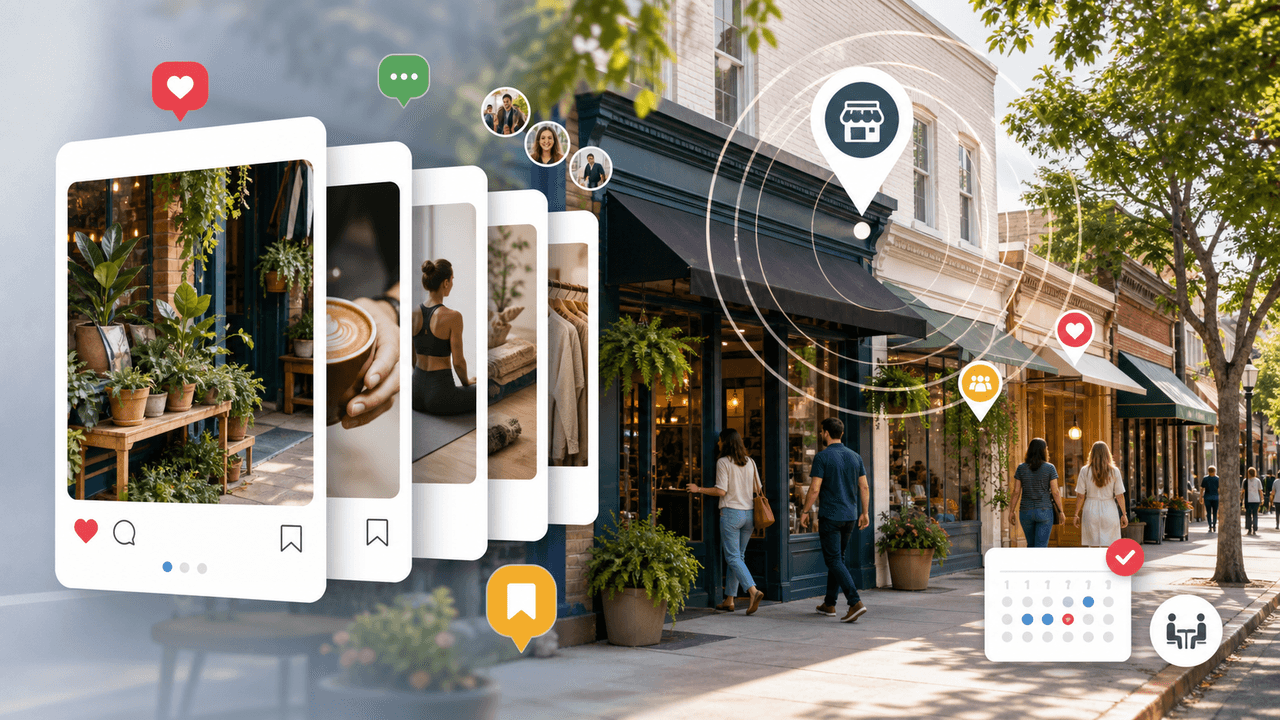
Local Business Instagram Carousels: Drive Foot Traffic Without Paid Ads
Local businesses do not need viral content. They need carousels that reach the right 5,000 people within a ten-mile radius. A local carousel strategy turns your expertise, your team, and your community presence into foot traffic without spending a dollar on ads.
Sources
- A Planning Guide for Making Temporary Events Accessible to People with Disabilities — ADA National Network
- ADA Requirements: Effective Communication — ADA.gov
- Best Practice Guidelines for Planning an Accessible Event — University of Kansas Accessibility Resource Center
- Accessible Meetings, Events & Conferences Guide — Great Lakes ADA Center
- The FTC's Endorsement Guides: What People Are Asking — Federal Trade Commission
Written by
AttentionClaw
Editorial Team
Editorial context
Part of the Content Planning topic cluster. Last updated June 22, 2026.