Chapter 1
The direct answer: show the menu decision before the inquiry
A restaurant banquet menu Instagram carousel should explain the event type, guest-count range, menu format, timing, buffet or plated service options, allergen questions, and how to request a proposal.
FDA buffet guidance gives consumer-facing food-safety reminders for buffet service, and FoodSafety.gov publishes event and seasonal food-safety guidance. FDA allergen resources explain major allergen labeling context, which is useful when restaurants discuss menu questions but does not replace local operational review.
The carousel should not promise allergen-free service, guarantee every dish is available, or imply that buffet food can sit out indefinitely.
Callout
Banquet menu rule
Sell menu fit and event clarity; keep allergen, food safety, pricing, and availability language reviewed and current.
Chapter 2
Build banquet carousels from planner questions
Planners ask about buffet versus plated service, guest count, dietary notes, timing, bar packages, deposits, room setup, service fees, and final guarantee deadlines.
Each carousel should answer one booking intent. A banquet menu post should not also become a full contract, allergy policy, and catering operations manual.
Use menu cards, room layouts, buffet setup photos, plated samples, and approved event proposal language.
How to choose buffet versus plated service.
What guest count the menu supports.
What dietary questions to collect early.
How menu deadlines and final counts work.
What service fees and deposits to ask about.
How setup, timing, and speeches affect menu flow.
What photos help planners imagine the event.
How to request a proposal.
Chapter 3
Use an eight-slide banquet menu carousel
The goal is to turn vague DMs into proposals with enough context to price and staff.
Review menu, allergen, price, service charge, availability, alcohol, and food-safety language before publishing.
- 1
Slide 1: event hook
Open with 'Planning dinner for 30+ guests? Start with the menu format.'
- 2
Slide 2: event type
Name weddings, corporate dinners, reunions, or celebrations the menu fits.
- 3
Slide 3: menu format
Compare buffet, plated, family-style, or stations where offered.
- 4
Slide 4: guest count
Explain reviewed minimums, maximums, and final-count deadlines.
- 5
Slide 5: dietary notes
Prompt planners to collect allergies and dietary needs early without promising allergen-free service.
- 6
Slide 6: timing
Show how cocktail hour, speeches, dessert, and dancing affect service flow.
- 7
Slide 7: proof
Use approved banquet photos, table layouts, and testimonials.
- 8
Slide 8: CTA
Invite planners to request dates, send guest count, or ask for a proposal.
Chapter 4
How AttentionClaw packages banquet menu content
AttentionClaw helps restaurants turn banquet packets, event photos, menu notes, room diagrams, and planner FAQs into review-ready Instagram carousels.
Templates can cover buffet menus, plated dinners, corporate banquets, wedding rehearsal dinners, final-count reminders, and proposal request prompts.
Callout
Banquet workflow
Choose one event menu question, add reviewed food and booking language, select approved visuals, generate carousel, review, publish with proposal CTA.
Chapter 5
Measure proposal-ready inquiries
Track proposal requests, guest-count clarity, menu-page clicks, dietary-note questions, and inquiry-to-deposit conversion.
A good banquet carousel reduces repetitive planner questions before the event manager replies.
Proposal request clicks.
Guest-count clarity.
Menu-page clicks.
Dietary-note question rate.
Inquiry-to-deposit conversion.
Chapter 6
A Decision Framework: Buffet vs. Plated for Your Event
One of the most common questions a banquet client asks before submitting an inquiry is whether to choose buffet or plated service. A carousel that walks through this decision — rather than just listing both options — gives the planner something actionable before the first phone call. The framework should anchor on four variables: guest count, event formality, meal timing, and dietary range.
For guest counts above 80, buffet service often reduces the per-plate cost and speeds service significantly when the timeline is tight. Plated service works well for seated dinners where timing and formality matter, or when the menu includes a signature dish best served fresh from the kitchen at a controlled temperature. If dietary restrictions span a wide range — vegan, gluten-free, nut-free all at the same table — buffet labeling and separation protocols become a deciding factor.
A carousel that maps these variables to a recommendation gives planners confidence that they are entering the inquiry already informed. This shifts the tone of the inquiry from 'I don't know what I want' to 'here's what I think fits — can you confirm?' Proposal conversations that start from an informed baseline close faster and with fewer revision rounds.
- 1
Guest count and service pace
Under 60 guests: plated is manageable and adds formality. 60–120: either works; consider timeline. Over 120: buffet typically speeds service and simplifies staffing.
- 2
Formality of the event
Galas, award dinners, and wedding receptions often call for plated service. Corporate lunches, celebrations, and casual gatherings suit buffet.
- 3
Dietary range
Wide dietary variation across guests is easier to serve buffet-style with clear labeling. Plated menus require advance dietary counts and may require multiple plate configurations.
- 4
Kitchen timing and distance
If the kitchen is far from the event space or the room turns over quickly, buffet reduces the risk of food arriving cold to distant tables.
Chapter 7
What Planners Need to See Before Submitting a Deposit
Many banquet inquiry drop-offs happen not because the prospect lost interest, but because they could not find answers to practical questions about the deposit and booking process. A carousel that addresses these questions directly — ideally before the planner even sends a message — removes the hesitation that leads them to contact another venue instead.
The key information planners need includes: what a deposit covers and whether it is applied to the final balance, what the cancellation or reschedule policy is in plain terms, and what the timeline looks like between inquiry and a confirmed proposal. Even a rough timeline like 'Inquiry on Monday, proposal by Wednesday, contract by Friday' gives planners something to set expectations with their own clients.
Consider dedicating one slide in every banquet carousel to a 'How to book' sequence with three to four steps. Keep it concrete: 'Fill out our inquiry form with your date, guest count, and menu interest. We'll send a custom proposal within 48 hours.' Planners who understand the process are more likely to complete the inquiry rather than abandon it because the next step felt unclear.
Callout
What to include in a booking-process slide
Step 1: Submit inquiry with date, guest count, and menu interest. Step 2: Receive a custom proposal within your stated turnaround. Step 3: Review, sign contract, and submit deposit to hold the date. Step 4: Final headcount and menu confirmation 2 weeks before the event.
Chapter 8
How to Communicate Allergen and Dietary Accommodation Policies Clearly
Banquet guests increasingly arrive with dietary needs that require advance communication — not assumptions. A carousel that addresses how your kitchen handles allergen requests, what you can and cannot accommodate, and how planners should submit dietary counts builds trust and reduces event-day surprises.
The clearest approach is a two-part disclosure: what the kitchen can accommodate with advance notice (common requests like vegetarian, vegan, gluten-aware, or nut-free plating) and what falls outside standard service but can be addressed if flagged early. Avoid vague language like 'we try to accommodate dietary needs.' Planners coordinating events for 150 guests need to know whether to collect dietary restrictions on their RSVP forms or not.
A short FAQ slide covering three to four dietary scenarios — 'Can you do a fully vegan table of 8?', 'What if a guest has a severe tree nut allergy?' — answers the questions planners are too polite to ask upfront. This kind of transparency demonstrates operational competence, which is one of the strongest trust signals for high-value banquet bookings.
State clearly which dietary accommodations require advance notice and how far in advance
Distinguish between allergen-friendly preparation and certified allergy-safe kitchens — these are different claims
Ask planners to collect dietary counts on their RSVP process, not during final confirmation
Offer a direct contact method for guests with severe allergies to discuss kitchen protocols before committing to the event
Next step
Turn banquet menu questions into proposal-ready carousels
Use AttentionClaw to package menus, room visuals, food-safety guardrails, and booking CTAs into review-ready carousel drafts.
Common Questions
FAQ
More Reading
Keep reading
11-chapter read
Restaurant Holiday Party Instagram Carousels
Restaurant holiday party carousels should explain private dining fit, group menus, event timing, allergen questions, food-safety expectations, and booking CTAs.
12-chapter read
Food Truck Catering Instagram Carousels: Turn Menus Into Event Leads
Food truck catering carousels should explain menu options, event fit, headcount, service timing, permits, food safety, and booking CTAs for private and corporate events.
9-chapter read
Restaurant Catering Proposal Instagram Carousels: Explain Menus, Allergens, and Event Fit
Restaurant catering proposal carousels should show event hosts how to request a quote, compare menu styles, ask allergy questions, and move from inspiration to a sales conversation.
9-chapter read
Hotel Group Room Block Instagram Carousels: Explain Blocks, Cutoffs, and Guest Questions
Hotel group room block carousels should explain what a room block is, what guests need to book, when cutoff dates matter, and which questions belong with the planner or hotel sales team.
9-chapter read
Meal Prep Service Weekly Menu TikTok Slideshows: Turn Menus Into Orders
Meal prep weekly menu slideshows should show the menu, ordering deadline, storage or pickup details, dietary tags, and clear CTA while keeping food safety and allergen language careful.
9-chapter read
Event Planner Accessibility Social Content: Show Guests What to Expect
Event accessibility content should help attendees understand arrival, routes, seating, communication, food, service animals, accommodations, and contact paths before they arrive. Good posts support inclusion while routing specific accommodation needs to the event team.
8-chapter read
Restaurant Private Dining Room Social Content: Posts That Book Events
Private dining social content should help guests imagine the room, understand event capacity, see menu options, know how booking works, and contact the restaurant with confidence. Strong posts combine room visuals, event use cases, food safety-aware menu language, FAQs, and a direct inquiry CTA.
8-chapter read
Carousel Slide Order That Converts: Hook, Proof, Offer, CTA
A converting carousel usually follows a clear order: hook, context, problem, solution or product, proof, objection handling, offer, and CTA. The exact slide count can change, but the reader should never wonder why the next slide exists.
7-chapter read
Restaurant Catering Event Social Content: Promote Private Dining and Catering
Restaurant catering content should show packages, event use cases, lead times, service options, food safety expectations, and booking steps. The best campaigns make it easy for planners to choose the right format and contact the restaurant before the event date.
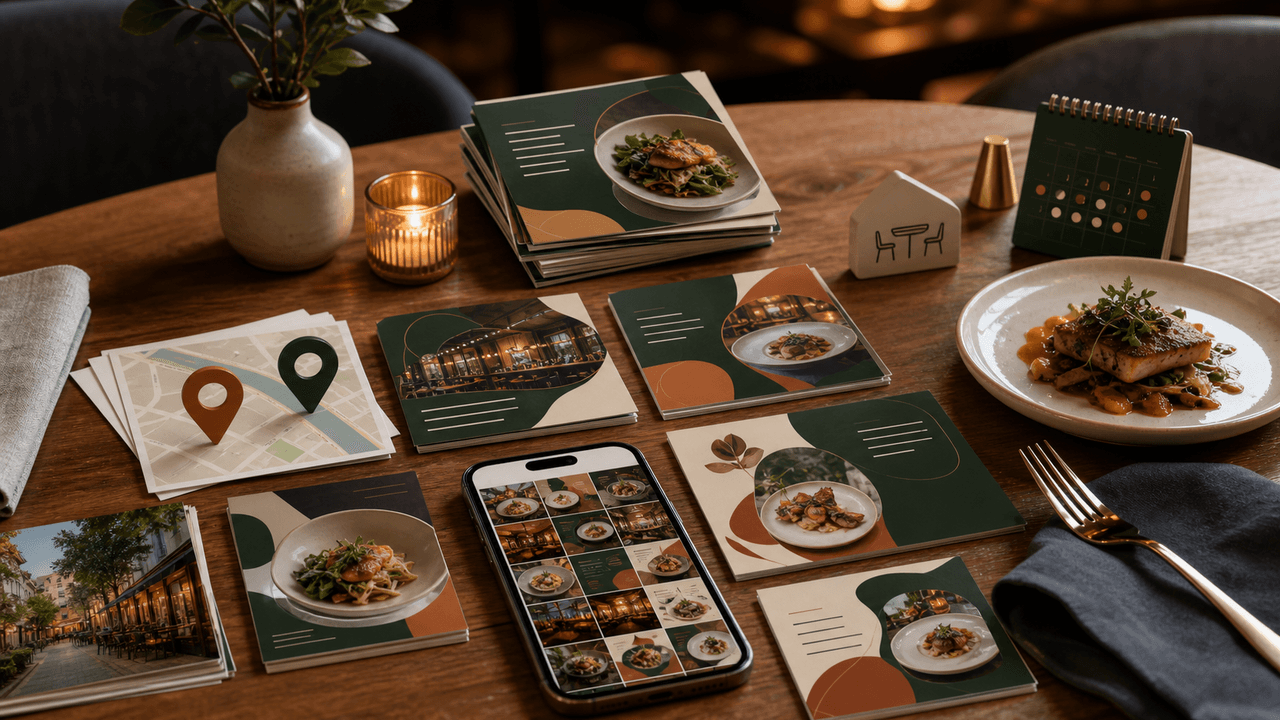
Restaurant Instagram Carousels: The Content Guide That Fills Empty Tables
Most restaurants post food photos and hope for the best. A carousel content system turns your menu, your kitchen, and your story into a reservation engine that works while you cook.
Sources
- Serving Up Safe Buffets — U.S. Food and Drug Administration
- Food Safety by Events and Seasons — FoodSafety.gov
- Food Allergies: What You Need to Know — U.S. Food and Drug Administration
- About Carousel Ads — Meta Business Help Center
Written by
AttentionClaw
Editorial Team
Editorial context
Part of the Carousel Creation topic cluster. Last updated June 22, 2026.