Chapter 1
The direct answer: show the tour, the questions, and the next step
A wedding venue tour Instagram carousel should show ceremony and reception spaces, guest-count fit, weather plans, catering or vendor rules, date availability process, contract questions, and how couples can inquire.
Consumer protection guidance on wedding planning commonly emphasizes reviewing contracts and understanding service details before signing. FTC endorsement guidance also matters when venues use couple testimonials, influencer content, or styled-shoot claims.
The carousel should not imply that dates, pricing, inclusions, or vendor rules are guaranteed unless the venue team keeps that information current.
Callout
Wedding venue content rule
Sell the tour experience and decision clarity; do not hide contract, availability, weather, or capacity questions.
Chapter 2
Build carousels from couples' tour questions
Couples ask about guest count, rain plans, photo locations, getting-ready rooms, catering, alcohol, parking, accessibility, vendor rules, deposits, and what is included.
Each carousel should answer one search intent. A tour checklist post should not become a full pricing page, preferred vendor guide, and real-wedding gallery in one.
Use venue photos, floor plan snippets, weather-plan visuals, room transitions, and couple-approved images.
What to ask on a wedding venue tour.
How to compare ceremony and reception spaces.
What to ask about rain plans.
How guest count affects layout.
What to clarify about catering and alcohol.
What contract questions couples should bring.
How deposits and date holds work.
What to photograph during a tour.
Chapter 3
Use an eight-slide venue tour carousel
The carousel should help couples arrive prepared and reduce repetitive sales questions.
Review date availability, inclusions, pricing references, and image permissions before publishing.
- 1
Slide 1: tour hook
Open with 'Touring wedding venues? Save these questions.'
- 2
Slide 2: guest count
Explain seated, cocktail, ceremony, and dance-floor fit.
- 3
Slide 3: spaces
Show ceremony, reception, getting-ready, cocktail, and photo locations.
- 4
Slide 4: weather plan
Explain indoor, tent, or backup options.
- 5
Slide 5: vendors
Clarify catering, bar, planner, music, and preferred vendor rules.
- 6
Slide 6: contract topics
Prompt questions about deposit, cancellation, timing, inclusions, and fees.
- 7
Slide 7: real proof
Use couple-approved testimonials, layouts, and real event imagery.
- 8
Slide 8: CTA
Invite couples to request available dates or book a tour.
Chapter 4
Use beautiful visuals without burying logistics
Venue marketing can be visually strong and still lose leads if couples cannot understand whether the space fits their event.
Real weddings, styled shoots, and testimonials should be clearly represented. Do not imply a styled shoot is a typical package or a testimonial is universal.
Current availability language.
Reviewed capacity and layout claims.
Permission-managed couple images.
Clear styled-shoot labeling where needed.
Tour or inquiry CTA.
Chapter 5
How AttentionClaw packages wedding venue tours
AttentionClaw helps wedding venues turn tour scripts, real wedding galleries, floor plans, package notes, and inquiry FAQs into Instagram carousel drafts.
Templates can cover tour checklists, rain plans, guest-count layouts, preferred vendors, getting-ready rooms, seasonal dates, and contract questions.
Callout
Wedding venue workflow
Choose one couple question, add reviewed venue rules, select approved visuals, generate carousel, review, publish with inquiry CTA.
Chapter 6
Measure inquiries with better context
Track tour bookings, date availability requests, saves, guest-count clarity, contract questions, and whether couples arrive with fewer basic logistics gaps.
The best tour carousel makes the sales call more specific and more qualified.
Tour booking clicks.
Date inquiry forms.
Checklist saves.
Guest count clarity.
Qualified lead rate.
Chapter 7
A decision framework couples use during and after the tour
Many couples leave a venue tour excited but uncertain how to compare it to the next venue on their list. A carousel can give them a lightweight scoring framework they will actually use. The framework does not need to be complex — five questions with a simple yes, no, or unsure answer covers most of what matters: Does the ceremony space hold our guest count comfortably? Does the reception space match our vision for tables and a dance floor? Is there a rain or heat plan we felt good about? Does the catering arrangement work with our preferences? Can we afford the package structure without stretching the budget uncomfortably?
Sharing this kind of framework in a carousel positions the venue as a partner in the decision, not just a seller. It also filters for couples who have thought through the basics, which means inquiries tend to arrive with more context and fewer mismatched expectations. A slide that says 'Here are five questions to ask at every venue you visit, including ours' earns more saves than a slide that lists the venue's own features.
The framework also opens a natural follow-up CTA: 'Bring your answers to our tour and we will walk through each one.' That framing turns the inquiry into a structured conversation rather than a cold pitch.
Callout
Five-question venue comparison card
1. Does this space hold our guest count without crowding? 2. Is there a backup plan for weather we feel comfortable with? 3. Does the catering arrangement fit our menu vision? 4. Are getting-ready spaces private and close? 5. Does the package pricing fit our full budget, not just the venue fee?
Chapter 8
Common mistakes that lose couples before the inquiry
The most frequent mistake in venue tour carousels is leading with the venue's features rather than the couple's questions. A carousel that opens with 'Our ballroom seats 350' answers a question no couple has yet asked. Couples at the browsing stage are not measuring capacity — they are imagining themselves in a space. The first slide should address something emotional or logistical that the couple is already wondering about, such as what happens on a hot summer day, or how far away parking really is.
A second common mistake is omitting pricing context entirely. Venues often worry that mentioning price ranges will deter leads. The opposite is usually true: couples who inquire without any price signal often drop out of the process after learning the investment, wasting time for both sides. A slide that says 'Packages start at X and scale based on guest count and services' gives couples enough context to self-qualify without revealing the full rate card.
A third mistake is using only wide-angle gallery shots without any human-scale reference. A room that looks beautiful in a professional photo may leave the couple unable to picture their own wedding in it. Including a photo of a set table arrangement, a ceremony aisle, or a bridal party in a getting-ready suite gives spatial context that wide-angle architectural shots cannot provide.
Chapter 9
Use seasonal timing to stay relevant through the booking cycle
Wedding venue bookings follow a predictable seasonal rhythm. Engagement announcements cluster around the winter holidays through early February, which means venue search activity peaks between December and March for couples planning a wedding twelve to eighteen months out. A venue that posts tour-focused content during this window is far more likely to appear in a prospective couple's feed at the right moment than one that posts only during summer wedding season.
Seasonal content also works for couples booking on a shorter timeline. A carousel in August that addresses 'What dates are still available this fall and how to book quickly' serves a different couple than a December post about planning a wedding fifteen months away. Varying the planning-horizon framing across posts ensures the venue reaches couples at different stages.
Consider posting one logistical carousel per quarter tied to the planning calendar: a winter post on booking and deposit timelines, a spring post on outdoor ceremony weather considerations, a summer post on how the venue handles heat and humidity, and a fall post on what makes a November or December wedding at the venue distinct. Each post gives search-intent saves a reason to return to your profile as they move through the planning process.
Next step
Turn venue tour questions into inquiry carousels
Use AttentionClaw to package tour scripts, real wedding visuals, and contract prompts into review-ready carousel drafts.
Common Questions
FAQ
More Reading
Keep reading
11-chapter read
Honeymoon Travel Advisor Instagram Carousels
Honeymoon travel advisor carousels should help couples compare destinations, timing, passports, travel advisories, health preparation, budget, and consultation CTAs without promising risk-free travel.
8-chapter read
Wedding Venue Accessibility Instagram Carousels
Wedding venue accessibility carousels should show ceremony and reception access details, guest questions, service-animal boundaries, parking, restrooms, and tour CTAs without overclaiming compliance.
9-chapter read
Wedding Photographer Package Instagram Carousels: Explain Value Before the Inquiry
Wedding photographer package carousels should explain coverage hours, gallery delivery, engagement sessions, timeline needs, usage rights, and inquiry CTAs with permissioned client imagery.
9-chapter read
Hotel Wedding Room Block Instagram Carousels: Help Couples and Guests Book Correctly
Hotel wedding room block carousels should explain block codes, cutoff dates, stay dates, room types, guest logistics, and support contacts without oversimplifying contracts or fees.
8-chapter read
Florist Wedding Consultation TikTok Slideshows: Turn Inspiration Into Inquiries
Wedding florist slideshows should help couples move from inspiration to inquiry by explaining style, seasonality, budget factors, consultation prep, and the exact details the florist needs before quoting.
8-chapter read
Event Vendor Collaboration Social Content: Grow Reach With Partner Posts
Event vendor collaboration content helps venues, planners, caterers, florists, photographers, and rental teams share audiences without confusing credit, logistics, or disclosure. Use partner previews, setup stories, accessibility-aware event details, and clear CTAs.
7-chapter read
Salon Bridal Hair Social Content Calendar: Book Trials, Weddings, and Event Styling
Bridal hair content should help clients understand style fit, trials, prep, timing, maintenance, and booking windows. A strong calendar combines portfolio proof, education, timeline posts, testimonials, and clear bridal inquiry CTAs.
8-chapter read
Carousel Slide Order That Converts: Hook, Proof, Offer, CTA
A converting carousel usually follows a clear order: hook, context, problem, solution or product, proof, objection handling, offer, and CTA. The exact slide count can change, but the reader should never wonder why the next slide exists.
7-chapter read
Event Venue Open House Social Content: Fill Tours, Showcases, and Booking Nights
Event venue open-house content should show the space, explain who the event is for, answer logistics questions, highlight vendor partners, and drive RSVPs or tour bookings. The best sequence combines visual proof, accessibility-aware details, and a clear registration path.
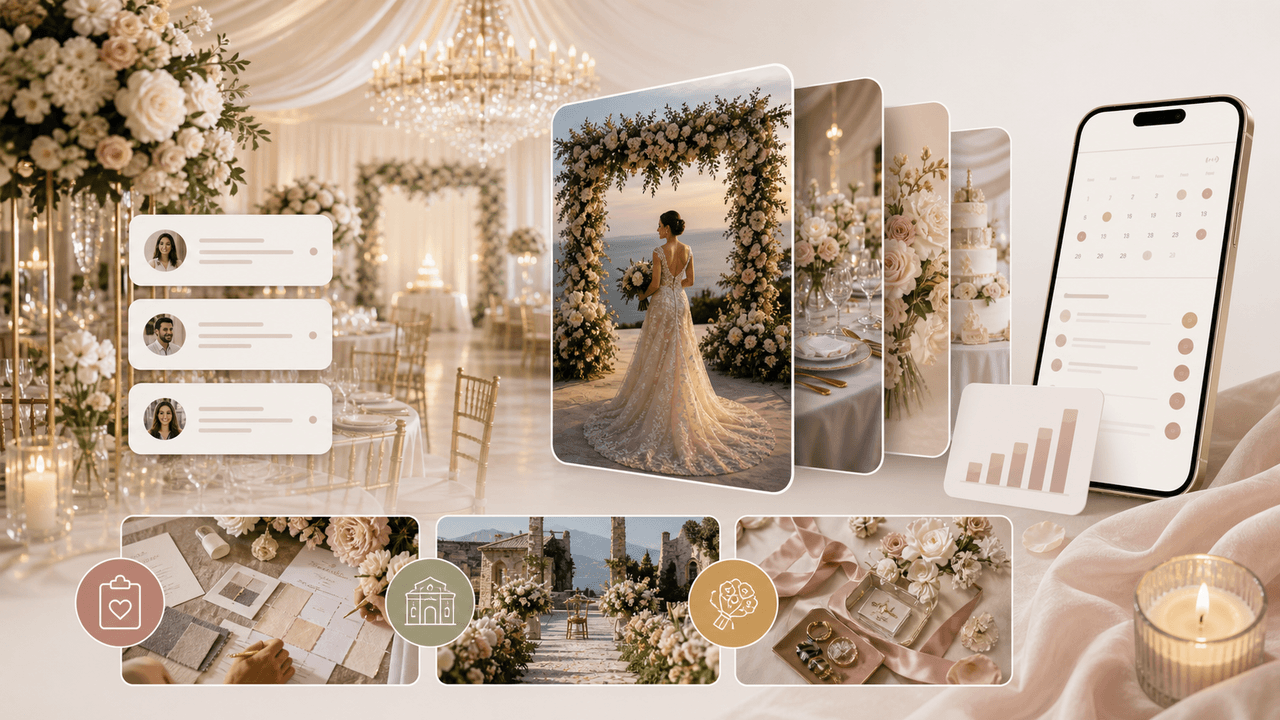
Wedding Business Carousel Marketing: The Instagram Strategy for Venues and Planners
Couples planning a wedding save hundreds of Instagram posts before contacting a single vendor. Wedding businesses that create saveable, shareable carousels position themselves at the top of that consideration list months before the inquiry arrives.
Sources
- Wedding Planning: Your Tips to Avoid Scams — New Jersey Division of Consumer Affairs
- About Carousel Ads — Meta Business Help Center
- FTC's Endorsement Guides: What People Are Asking — Federal Trade Commission
- What to know about planning a wedding — FTC Consumer Advice
Written by
AttentionClaw
Editorial Team
Editorial context
Part of the Carousel Creation topic cluster. Last updated June 22, 2026.