Chapter 1
The direct answer: build a short campaign around one listing event
Real estate open house social content should include a pre-event teaser, a property-feature carousel, a day-of reminder, a visitor FAQ, a short video or slideshow walkthrough, and a follow-up post that routes interested buyers to the agent.
The campaign should be accurate, fair-housing aware, and safety-conscious. NAR maintains resources on open houses and REALTOR safety, and HUD fair housing guidance is relevant whenever property marketing reaches the public.
Use social content to reduce uncertainty: when the open house happens, how to attend, whether appointments are needed, what features the property has, who to contact, and how to request a private showing if the timing does not work.
Callout
Open house rule
Describe the property and event logistics. Avoid language that suggests who the home is for or who belongs in the neighborhood.
Chapter 2
A five-post open house sequence
A single day-of post often arrives too late. Buyers and neighbors need enough time to plan, save, and share. A compact sequence gives the listing more chances to reach the right audience without repeating the same graphic.
Start two to four days before the event with a clean teaser. Follow with a feature post that shows the strongest rooms or property details. Add a logistics post the day before. Use a day-of reminder with exact time and address rules. After the event, publish a follow-up that invites private showing requests.
If the property has restrictions, listing status changes, weather issues, or access rules, update the content promptly. A stale open house post can waste buyer attention and create avoidable calls.
- 1
Post 1: Event teaser
Announce the listing, open house date, time window, and one clear reason to attend.
- 2
Post 2: Feature carousel
Show layout, kitchen, outdoor space, storage, parking, or other factual property details.
- 3
Post 3: Visitor FAQ
Answer parking, entry, timing, private showing, disclosure packet, and agent-contact questions.
- 4
Post 4: Day-of reminder
Repeat the time, address or location rules, and contact path. Keep it simple.
- 5
Post 5: Follow-up
Thank attendees and invite private showing requests or offer-deadline questions if accurate.
Chapter 3
Keep listing language factual and fair-housing aware
Open house posts can create fair-housing risk when they describe ideal buyers, families, lifestyles, safety, schools, or neighborhood identity in ways that imply preference. HUD and NAR fair housing resources make clear that housing advertising needs careful review.
Focus on property facts: bedrooms, baths, square footage where verified, layout, features, updates, lot details, transit or amenity proximity where accurate, and showing logistics. Avoid protected-class references and coded language.
Instead of 'perfect for young families,' write 'four bedrooms, fenced yard, and a flexible bonus room.' Instead of 'safe neighborhood,' use factual location details that can be supported and let buyers evaluate fit.
Use property features instead of ideal-buyer descriptions.
Verify all listing facts before posting.
Avoid demographic, religious, disability, familial-status, or national-origin implications.
Use inclusive event language.
Ask brokerage compliance to review templates before reuse.
Chapter 4
Plan open house content with safety in mind
Promotion should not compromise safety. NAR's safety resources exist because open houses involve public access, unknown visitors, property security, and agent visibility.
Social posts can explain attendance logistics without oversharing operational details. Avoid posting private access codes, vacant-property cues, lockbox details, or personal schedules beyond the public event window.
Coordinate with the seller and brokerage before publishing interior details, valuables, security features, or content that reveals more than the listing requires.
- 1
Confirm seller approval
Use only photos, video, and property details approved for public marketing.
- 2
Keep access details controlled
Do not publish codes, lockbox information, or private instructions.
- 3
Give visitors a safe contact path
Use the agent phone, listing page, or showing request link rather than public comment threads for sensitive questions.
Chapter 5
Turn one open house into reusable assets
A good open house content package can be reused after the event if the listing remains active. The property-feature carousel can become a listing highlight. The visitor FAQ can become a private showing FAQ. The walkthrough slideshow can become a retargeting post.
Keep creative clean and inspection-friendly. Buyers need to see the rooms and facts. Avoid heavy filters, tiny text, overly cropped photos, or generic music-first edits that hide what the property looks like.
Match the CTA to the listing status. Before the event, ask users to attend or save the date. During the event, ask them to stop by or call with questions. After the event, route them to a private showing, disclosure packet, or listing page.
Open house date graphic.
Five-feature carousel.
Room-by-room TikTok slideshow.
Visitor FAQ carousel.
Day-of story frames.
Post-event private showing CTA.
Neighborhood amenities post with factual sourcing and fair-housing review.
Listing update post if status changes.
Chapter 6
How AttentionClaw helps agents produce open house campaigns
AttentionClaw helps agents convert listing data, approved photos, and brokerage-reviewed copy into a full open house content sequence. The agent controls listing accuracy, compliance, and seller approval.
Create templates for teaser, feature carousel, visitor FAQ, day-of reminder, and follow-up. Then reuse the same structure for each listing while replacing property-specific facts and images.
This keeps open house promotion fast without making every listing look identical. The format is repeatable, but the property details remain specific.
Callout
Open house workflow
Confirm listing facts and approvals, draft the five-post sequence, review fair housing and safety, generate assets in AttentionClaw, and update posts if the event changes.
Chapter 7
A pre-event content checklist for the week before the open house
The week before an open house is when most of the social content work should be completed, not the morning of the event. Agents who wait until open house day to post find that their content reaches the existing follower base too late for followers to rearrange plans, and the post does not have time to circulate among saved-home audiences or neighborhood groups.
A practical pre-event content checklist helps keep the campaign on track without requiring a social media manager.
Seven days before: confirm listing photos are approved and ready; prepare the property-feature carousel
Five days before: publish the teaser post with address, date, time, and a single standout feature
Three days before: publish the property-feature carousel; include price, square footage, beds, baths, and the one feature that makes this listing distinctive
One day before: publish a reminder post — date, time, any parking or entry notes, and the agent's contact for questions
Day of, morning: publish a short 'doors open today' post with exact time and directions if the neighborhood is confusing to navigate
Day of, post-event: publish a thank-you post or a 'still available — private tour available' post if the listing remains active
Chapter 8
Specific language choices that keep listing posts fair-housing compliant
Fair housing risk in listing content often appears in language that sounds neutral but describes a buyer profile rather than a property. Understanding where the line falls is practical knowledge for any agent managing their own social content.
Describing the property's attributes is appropriate: 'open-plan main floor,' 'first-floor bedroom,' 'walk-in shower in both full baths,' 'garage with EV charging.' Describing who the property is suited for is where the risk begins. 'Perfect for families' implies that households without children are less welcome. 'Great for someone who works from home' is less problematic but still describes a lifestyle rather than a feature. The compliant version describes the room: 'dedicated office with door and natural light.'
School references are a particularly common source of fair housing questions. An agent can name the school district as a factual attribute of the property. Using the school district as a reason to buy — 'in the highly sought-after X district' — is common in listing copy but has drawn scrutiny in some markets. When in doubt, describe the proximity as a fact — 'one mile from X Elementary' — and let buyers draw their own conclusions about whether the schools suit their needs.
Chapter 9
What to do with open house content after the event
An open house content campaign that ends when the doors close leaves value on the table. The property-feature carousel, the listing photo assets, and the engagement data from the campaign all have uses beyond a single weekend.
If the listing remains active after the open house, the property-feature carousel can be reposted — not modified — as a new post one to two weeks later with an updated caption noting that the property is still available and private tours are welcome. This surfaces the content to followers who missed it the first time without the agent having to rebuild the carousel from scratch.
The engagement data from open house content — saves, profile visits, DM inquiries — also informs future listing campaigns. If a particular feature drove disproportionate saves, that is signal to lead with similar features in the next comparable listing. If the day-of reminder post outperformed the teaser by a significant margin, the sequence timing may need adjustment. Tracking that data across three or four listings builds a campaign template that improves over time.
Next step
Build open house campaigns from approved listing facts
AttentionClaw helps agents turn listing photos, property facts, and open house logistics into consistent social campaigns that stay focused on the buyer next step.
Common Questions
FAQ
More Reading
Keep reading
8-chapter read
Real Estate Investor Education Instagram Carousels
Real estate investor education carousels should explain due diligence, risk questions, property math, scam warning signs, and consultation CTAs without promising passive income or guaranteed returns.
9-chapter read
Home Remodel Consultation Instagram Carousels
Home remodel consultation carousels should explain scope, budget, timeline, contractor questions, lead-safe renovation issues, and how to book a consultation without hiding risk or cost questions.
9-chapter read
Home Inspector Buyer Prep Instagram Carousels: Explain the Inspection Before the Appointment
Home inspector buyer-prep carousels should explain what an inspection is, what buyers should attend to, what the report can and cannot do, and how to book without overpromising findings.
9-chapter read
Home Inspector Repair Request Instagram Carousels: Explain Findings Without Giving Negotiation Advice
Home inspector repair-request carousels should help buyers understand inspection findings, documentation, contractor follow-up, and agent or attorney boundaries without negotiating on the viewer's behalf.
8-chapter read
Real Estate Neighborhood Guide Social Content: Local Posts With Fair Housing Review
Real estate neighborhood guide content should help buyers understand local amenities, commute options, housing types, market process, and questions to research without steering or making unsupported claims. Fair-housing review is essential for every local guide post.
8-chapter read
Carousel Slide Order That Converts: Hook, Proof, Offer, CTA
A converting carousel usually follows a clear order: hook, context, problem, solution or product, proof, objection handling, offer, and CTA. The exact slide count can change, but the reader should never wonder why the next slide exists.
9-chapter read
Real Estate Seller Lead Social Content: Posts That Earn Listing Consultations
Seller lead social content should help homeowners understand preparation, pricing conversations, timing, local market context, and listing consultation next steps. The best posts are accurate, fair-housing aware, locally useful, and designed to turn curiosity into valuation or consultation requests.
8-chapter read
Real Estate Listing Social Media Checklist: Carousels, Reels, and Local Trust
A real estate listing social media checklist should package the property, neighborhood, buyer questions, showing path, and compliance review into a clear launch sequence. The best listing content attracts qualified interest without using discriminatory language or unsupported claims.
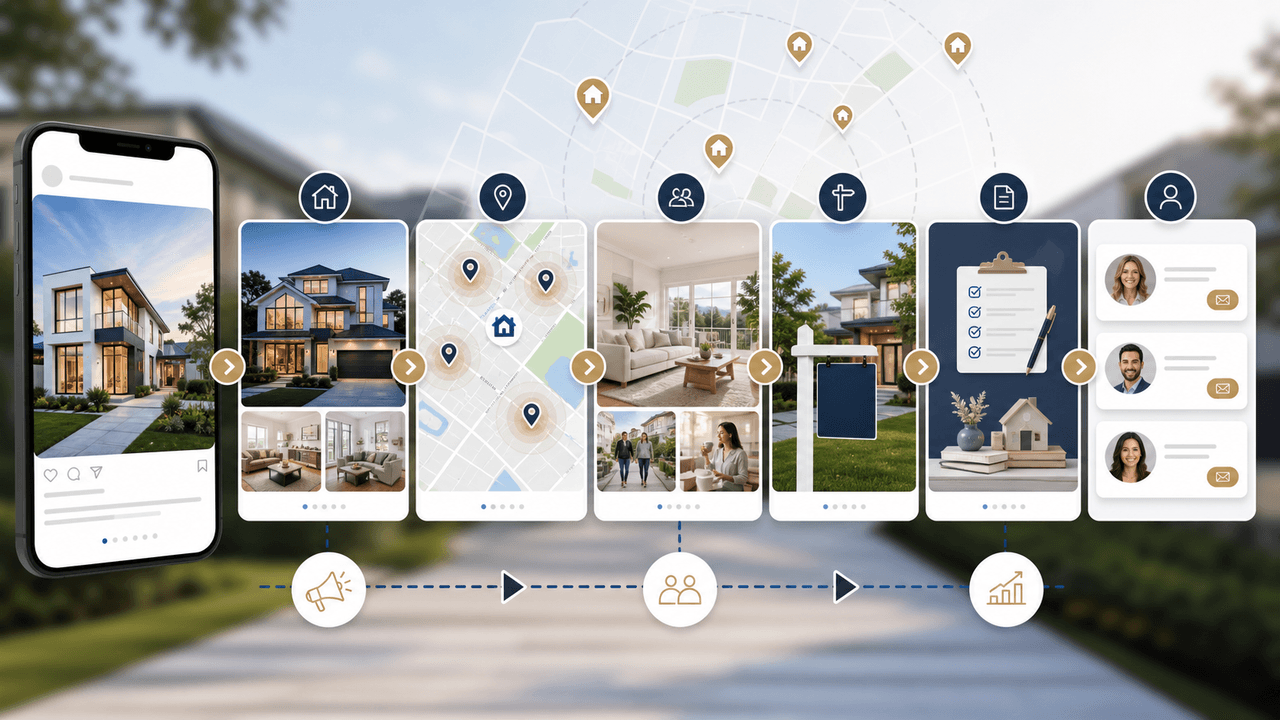
Real Estate Carousel Marketing With Facts, Context, and Fair-Housing Guardrails
Real estate carousel marketing works best as a documented publishing process: verify authority and facts, describe the property rather than a preferred resident, disclose the professional source, and give every slide one useful job.
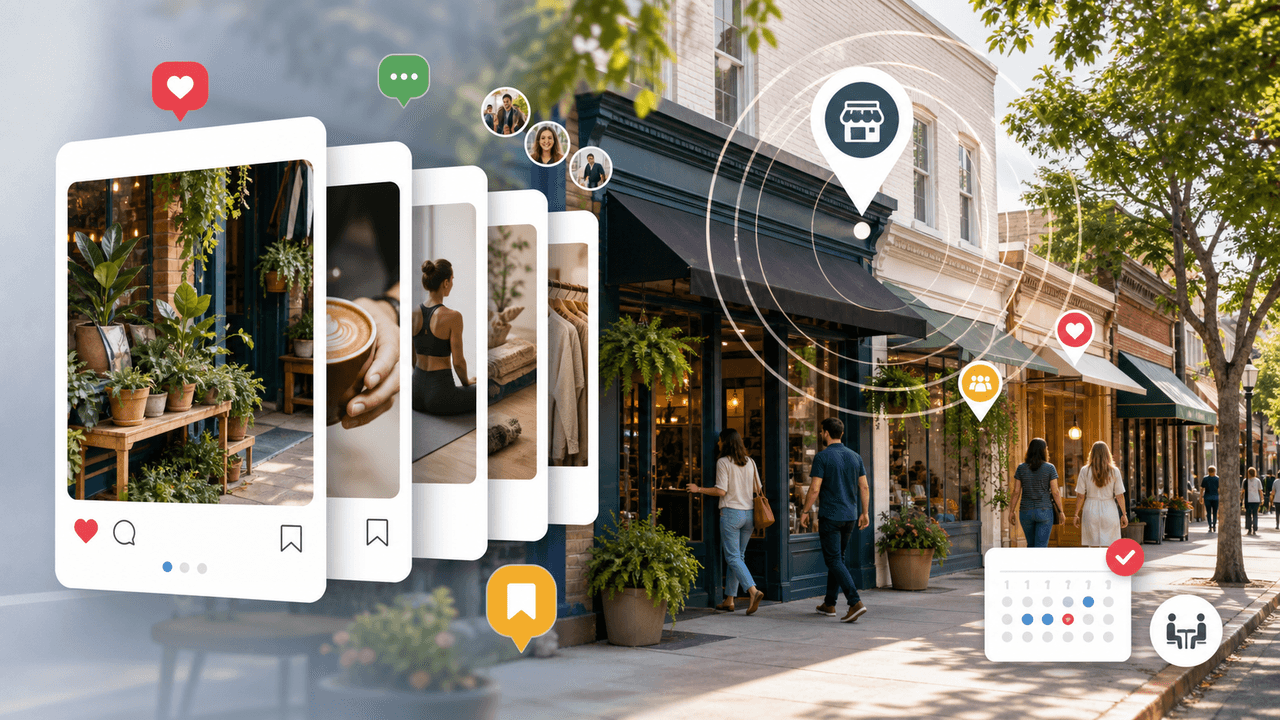
Local Business Instagram Carousels: Drive Foot Traffic Without Paid Ads
Local businesses do not need viral content. They need carousels that reach the right 5,000 people within a ten-mile radius. A local carousel strategy turns your expertise, your team, and your community presence into foot traffic without spending a dollar on ads.
Sources
- Open Houses — National Association of REALTORS
- REALTOR Safety — National Association of REALTORS
- Fair Housing — National Association of REALTORS
- Fair Housing Rights and Obligations — U.S. Department of Housing and Urban Development
- Social Media Best Practices for Real Estate Professionals — National Association of REALTORS
Written by
AttentionClaw
Editorial Team
Editorial context
Part of the Content Planning topic cluster. Last updated June 22, 2026.