Chapter 1
The direct answer: launch the listing as a sequence, not one post
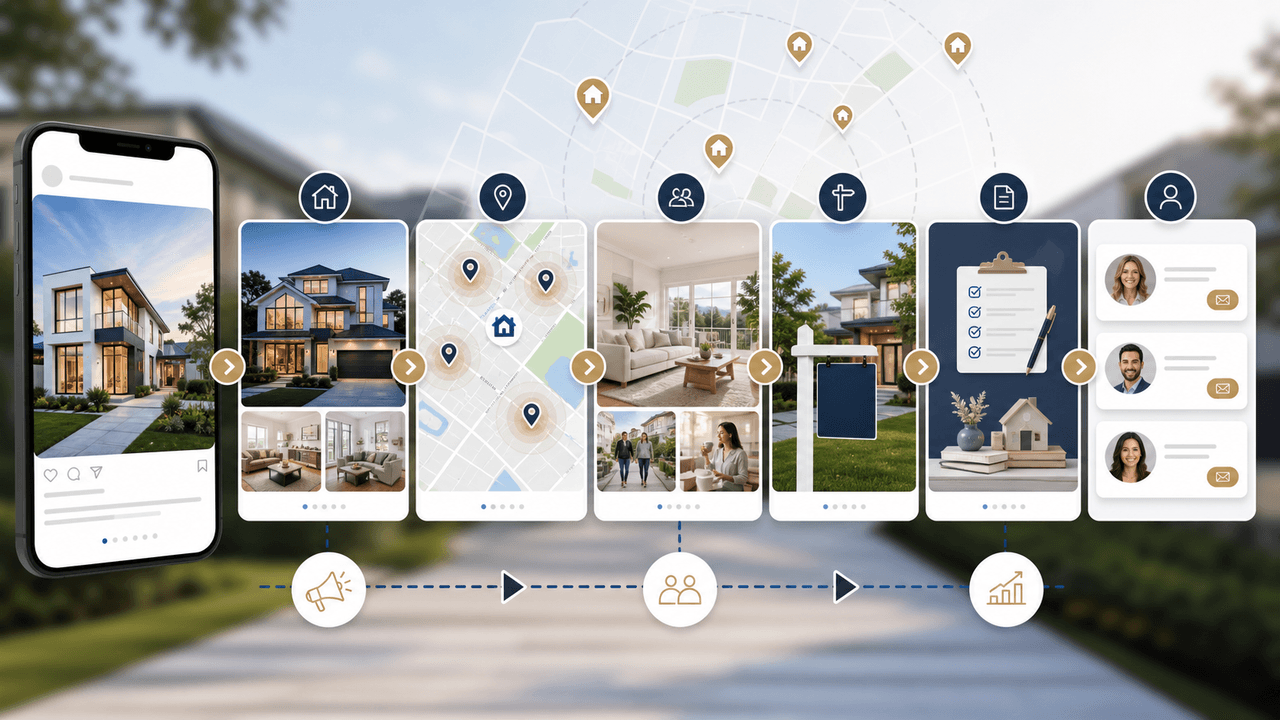
A real estate listing social media checklist should include a teaser, hero property carousel, floor-plan or layout explainer, neighborhood context, showing reminder, FAQ post, and sold or under-contract recap where appropriate. One post rarely carries all the information a buyer needs.
The sequence should answer the buyer's practical questions: where is it, what is the layout, what problem does the home solve, what is nearby, what should the buyer notice, how do they see it, and who should they contact? The better the sequence, the fewer unqualified inquiries the agent has to sort through.
Compliance review matters. HUD fair housing advertising guidance and NAR fair housing resources are reminders that real estate marketing must avoid discriminatory language and steering. Social content should describe the property and area accurately without implying who should or should not live there.
Callout
Listing content rule
Describe the property, features, location context, and showing path. Do not describe the ideal buyer in a way that creates fair housing risk.
Chapter 2
Collect the assets before the listing goes live
Listing content is easiest when the agent collects all assets before the launch day. Waiting until the property is live creates a scramble and usually produces a single generic post.
The core asset set includes professional photos, floor plan or layout notes, short room descriptions, key upgrades, location context, showing instructions, seller-approved details, and links to the listing page. If the property has a unique feature, capture it in both wide and close-up formats.
Make a separate compliance note file. Flag words that describe people rather than property, unverifiable claims, school or safety statements that need careful sourcing, and anything the seller has not approved.
Hero exterior photo.
Top five interior photos.
Floor plan or layout notes.
Three buyer-relevant features.
Neighborhood context and commute caveats where appropriate.
Showing or open-house details.
Listing URL and contact path.
Fair housing and claim-review notes.
Chapter 3
Build the hero listing carousel
The hero listing carousel should not be a gallery dump. It should guide the buyer through a property story. Lead with the strongest image, then move through the layout and features in the order a showing would reveal them.
Use simple copy. A buyer viewing on a phone does not need full MLS language on every slide. They need feature, context, and next step. For example: 'Open kitchen with sightline to living room' is stronger than a long decorative paragraph.
The final slide should make the next action obvious: view the full listing, request a showing, attend the open house, or message the agent for disclosures and details.
- 1
Slide 1: strongest visual and property hook
Use the exterior, kitchen, view, living space, or architectural feature that best summarizes the home.
- 2
Slide 2: basic facts
Beds, baths, approximate square footage where allowed, location, and price if the agent's workflow includes it.
- 3
Slides 3 to 6: buyer-relevant features
Show the kitchen, living area, primary suite, outdoor space, office, storage, garage, or renovation details.
- 4
Slide 7: layout or flow
Use a floor-plan detail, room sequence, or simple note about how the home lives.
- 5
Slide 8: showing CTA
Send buyers to the listing page, open house, showing request, or agent contact path.
Chapter 4
Create neighborhood content without steering
Neighborhood posts are powerful because buyers care about context. They can also create risk if the content suggests protected-class preferences or steers people toward or away from an area.
Keep neighborhood content factual and buyer-service oriented. Show parks, transit, restaurants, commuting routes, local services, and public amenities where appropriate. Avoid language such as 'perfect for young families' or claims about who belongs there. Let buyers decide fit.
When discussing schools, crime, demographics, or safety, be careful. Many agents route buyers to official public sources rather than making broad claims in social captions. This protects the agent and gives buyers better source paths.
Use factual amenity content: parks, shops, transit, trails, public facilities, commute access.
Avoid protected-class signals or ideal-buyer labels.
Use official or public sources for school, transit, and municipal claims.
Describe property features rather than buyer identity.
Have a broker or compliance reviewer approve reusable neighborhood templates.
Chapter 5
TikTok slideshow ideas for real estate listings
TikTok slideshows can work for listing launches because the agent already has strong photos. The slideshow format gives each image a short explanation instead of forcing buyers to infer why the feature matters.
TikTok image-based storytelling works best when the first slide creates a reason to swipe. For real estate, that reason can be a surprising layout, a rare feature, a price-point question, a neighborhood hook, or a before-after renovation story.
Keep each slideshow linked to a clear path. If the viewer cannot find the full listing, showing information, or agent contact after saving the post, the content has leaked demand.
Eight details you would miss from the listing photos.
A room-by-room walkthrough in seven slides.
Why this layout works for remote work.
Before-and-after renovation details.
Three outdoor spaces buyers should notice.
Open-house checklist for this weekend.
What the floor plan tells you that photos do not.
Neighborhood amenities within a short drive or walk, stated factually.
Five questions to ask before touring this property.
Listing recap after the first open house.
Chapter 6
Use Google Business Profile for agent visibility
Real estate agents often think only about Instagram and TikTok, but local search matters when a buyer or seller researches the agent. Google Business Profile posts and photos can support visibility with updates, events, services, and office context.
Use Google updates for open houses, buyer seminars, seller workshops, market education, and availability notes. Use photos to show the office, team, signage, and service context. Keep listing-specific content aligned with brokerage rules and platform policies.
The same listing content should point to consistent destinations: listing page, showing form, open-house details, or contact form. A buyer should not see three versions of the same listing with three different next steps.
- 1
Publish the listing carousel
Lead with Instagram or Facebook where the agent's local audience is strongest.
- 2
Adapt to TikTok slideshow
Use the same photos with shorter copy and a stronger first-slide hook.
- 3
Add Google update where appropriate
Promote the open house, event, or service update with consistent details.
- 4
Log inquiries
Track which post drove showing requests, listing saves, DMs, and buyer questions.
Chapter 7
How AttentionClaw helps agents batch listing content
AttentionClaw helps agents turn one listing asset set into multiple social formats: hero carousel, floor-plan explainer, neighborhood context, TikTok slideshow, open-house reminder, and recap post.
The agent or brokerage should still own listing accuracy, seller approval, fair housing review, and brokerage compliance. AttentionClaw speeds up formatting and consistency after the content facts are approved.
This is especially useful for agents managing multiple listings or farming a local market. The same brand system can support listing launches, buyer education, seller preparation, and neighborhood guides.
Callout
Listing production workflow
Collect assets, draft the listing story, run fair housing and brokerage review, generate formats in AttentionClaw, final-check details, and schedule the launch sequence.
Chapter 8
Measure qualified buyer and seller actions
The main metrics for listing social content are listing clicks, saves, showing requests, open-house attendance, DMs with buyer questions, seller inquiries, and follow-up consultations. Likes are secondary.
Track which content type created which action. A neighborhood guide may attract future sellers. A floor-plan explainer may attract serious buyers. An open-house reminder may drive immediate attendance. Each has a different role.
Review the post sequence after the listing closes or expires. Which posts created useful conversations? Which generated repetitive questions? Which details did buyers misunderstand? Use those notes to improve the next listing launch.
Track listing URL clicks by post.
Track showing requests and open-house attendance.
Track saves on floor-plan and checklist posts.
Track seller inquiries from neighborhood and market posts.
Record buyer questions that should become future FAQ content.
Next step
Turn listing assets into a full social launch sequence
AttentionClaw helps agents transform approved photos, property notes, and neighborhood context into branded listing carousels, TikTok slideshows, and open-house reminders.
Common Questions
FAQ
More Reading
Keep reading
8-chapter read
Real Estate Investor Education Instagram Carousels
Real estate investor education carousels should explain due diligence, risk questions, property math, scam warning signs, and consultation CTAs without promising passive income or guaranteed returns.
9-chapter read
Real Estate Seller Nurture Instagram Carousels: Educate Homeowners Before They List
Real estate seller nurture carousels should help homeowners understand pricing, staging, timing, equity questions, and listing preparation before they request a valuation.
9-chapter read
Home Inspector Buyer Prep Instagram Carousels: Explain the Inspection Before the Appointment
Home inspector buyer-prep carousels should explain what an inspection is, what buyers should attend to, what the report can and cannot do, and how to book without overpromising findings.
9-chapter read
Home Inspector Repair Request Instagram Carousels: Explain Findings Without Giving Negotiation Advice
Home inspector repair-request carousels should help buyers understand inspection findings, documentation, contractor follow-up, and agent or attorney boundaries without negotiating on the viewer's behalf.
8-chapter read
Real Estate Neighborhood Guide Social Content: Local Posts With Fair Housing Review
Real estate neighborhood guide content should help buyers understand local amenities, commute options, housing types, market process, and questions to research without steering or making unsupported claims. Fair-housing review is essential for every local guide post.
9-chapter read
Property Management Vacancy Instagram Carousels: Market Rentals With Guardrails
Property management vacancy carousels should show the rental clearly, explain application steps, avoid discriminatory language, and route prospects to current listing details. Good social content reduces questions without creating fair housing or maintenance risk.
8-chapter read
Mortgage Broker Loan Estimate Carousel Content: Explain Without Misleading
Mortgage Loan Estimate carousels should teach buyers what to review, what to compare, and what questions to ask without advertising unavailable terms or giving personalized loan advice in public posts.
9-chapter read
Real Estate Open House Social Content: Promote Listings Without Losing the Plot
Open house social content should help qualified visitors understand the property, schedule, showing logistics, and next step while respecting fair housing, listing accuracy, and safety. A good campaign includes teaser posts, day-of reminders, property-feature carousels, visitor FAQs, and follow-up content.
9-chapter read
Real Estate Seller Lead Social Content: Posts That Earn Listing Consultations
Seller lead social content should help homeowners understand preparation, pricing conversations, timing, local market context, and listing consultation next steps. The best posts are accurate, fair-housing aware, locally useful, and designed to turn curiosity into valuation or consultation requests.
Real Estate Carousel Marketing With Facts, Context, and Fair-Housing Guardrails
Real estate carousel marketing works best as a documented publishing process: verify authority and facts, describe the property rather than a preferred resident, disclose the professional source, and give every slide one useful job.
Sources
- Advertising and Marketing — U.S. Department of Housing and Urban Development
- Fair Housing Advertising — National Association of REALTORS
- Create & manage posts on your Business Profile — Google Business Profile Help
- Tips for business-specific photos on your Business Profile — Google Business Profile Help
- TikTok Image Ads: Visual Marketing Solutions to Engage Customers — TikTok For Business
Written by
AttentionClaw
Editorial Team
Editorial context
Part of the Content Planning topic cluster. Last updated June 22, 2026.