Chapter 1
The direct answer: launch one drink with clear menu context
A coffee shop seasonal drink TikTok slideshow should show the drink, describe the flavor, state whether it is hot, iced, or both, explain the availability window, flag ingredient questions, and send viewers to a clear order path.
FDA guidance says food businesses can be subject to federal, state, and local requirements. CDC food-safety guidance also emphasizes prevention basics, which matters when drink content references ingredients, storage, handling, or menu substitutions.
The slideshow should not promise allergen-free drinks, imply reviewed nutrition claims without review, or hide important availability and ingredient details.
Callout
Coffee shop rule
Show the drink beautifully, but keep the menu promise precise: flavor, ingredients, availability, ordering, and reviewed safety language.
Chapter 2
Build seasonal drink posts from customer questions
Customers want to know what is in the drink, how sweet it is, whether it has caffeine, whether dairy or nut ingredients are involved, whether it is available all day, and whether they can order it ahead.
A strong slideshow keeps one intent per URL and one product per post. Do not combine three drinks, a loyalty program, a catering pitch, a hiring notice, and pastry specials in the same asset.
Use approved drink photos, barista notes, menu copy, seasonal calendar details, ingredient disclosures, and ordering links as the raw material.
Drink name and hero image.
Flavor notes and sweetness level.
Hot, iced, blended, or non-coffee format.
Ingredient or allergen question prompt.
Availability window and limited-quantity notes.
Recommended pastry or food pairing.
Mobile order, pickup, delivery, or in-store CTA.
Reviewed disclaimer for substitutions or menu changes.
Chapter 3
Use an eight-slide seasonal drink slideshow
The sequence works because it converts curiosity into a menu decision.
Review all ingredient, allergen, nutrition, substitution, availability, and customer quote language before publishing.
- 1
Slide 1: drink hook
Open with the seasonal moment and a clean image of the drink.
- 2
Slide 2: flavor promise
Describe the flavor in plain menu language.
- 3
Slide 3: format choice
Show hot, iced, decaf, milk, or size options when they are reviewed and available.
- 4
Slide 4: ingredient note
Prompt customers to check ingredients or allergens with the shop rather than making broad safety claims.
- 5
Slide 5: availability window
State when the drink is available and whether quantities are limited.
- 6
Slide 6: pairing
Add a pastry, breakfast, or afternoon pairing if the shop wants a higher basket size.
- 7
Slide 7: social proof
Use accurate customer quotes, barista notes, or sales context without fake review claims.
- 8
Slide 8: CTA
Invite viewers to order ahead, stop in today, save the drink, or share it with a friend.
Chapter 4
How AttentionClaw packages coffee shop content
AttentionClaw helps coffee shops turn drink photos, menu notes, barista descriptions, seasonal calendars, ingredient prompts, and order links into review-ready TikTok slideshow drafts.
Templates can cover seasonal lattes, cold brew specials, holiday drinks, limited syrups, pastry pairings, loyalty promotions, catering trays, and weekend menu drops.
Callout
Coffee shop workflow
Choose one drink, add reviewed menu and ingredient notes, attach approved photos, generate slideshow, review, publish with an order CTA.
Chapter 5
Measure order intent and sell-through
Track order clicks, saves, drink mentions at checkout, DMs, limited-run sell-through, pairing attach rate, and repeat orders.
A strong seasonal drink slideshow should create more customers who know what to order before they reach the counter.
Mobile order clicks.
Save rate.
Drink mentions at checkout.
Featured-drink sell-through.
Pairing attach rate.
Chapter 6
How to Handle Ingredient Questions in Seasonal Drink Slideshows
Seasonal drink questions cluster around three categories: what is in it, whether it works with dietary needs, and how sweet or strong it is. A slideshow that addresses at least one of these per drink reduces the flood of 'what's in it?' DMs and moves the conversation toward ordering. The most useful ingredient slide is not a full recipe — it is a summary of the primary flavor components and an honest callout for the most common allergen concerns: dairy, tree nuts, gluten in syrups.
Caffeine is worth a dedicated treatment for drinks that customers may not realize contain espresso or matcha. A customer who orders what they think is a caffeine-free lavender drink and finds it contains a shot may feel surprised rather than delighted. Flagging 'contains espresso' or 'naturally caffeinated from matcha' as a simple icon or line of text gives customers the information they need to order confidently.
Customization options convert browsers to buyers. If a drink can be made oat-milk, sugar-free syrup, or with half the pumps, say so in the slideshow. Many customers assume seasonal specials are fixed recipes and self-select out without asking. A slide that ends with 'ask about dairy-free and low-sugar versions' captures that audience without cluttering the main flavor story.
Callout
A simple allergen disclosure approach
Rather than full nutritional data, use a brief line on the ingredient slide: 'Contains: dairy, tree nut syrup. Oat milk available. Ask your barista about other swaps.' This is accurate, actionable, and keeps the slide readable.
Chapter 7
Creating Genuine Urgency Around Limited-Run Seasonal Drinks
Seasonal drinks are a natural urgency driver because they genuinely are temporary. The challenge is communicating that availability window without resorting to artificial countdown pressure that erodes trust when the drink reappears next season. Honest language like 'available through the end of the month' or 'while seasonal ingredients last' is more credible than 'going fast!' because it gives customers real information to plan around.
The first week of a new seasonal launch is your highest-traffic content window. Post the drink introduction slideshow on launch day, follow with a 'how it's made' or ingredient story mid-week, and use a 'last week to try it' reminder as the run winds down. Three posts over the run creates a natural narrative arc that rewards followers who are paying attention and captures late-deciders who need a reminder.
Pairing suggestions extend the seasonal drink's reach without additional production cost. A slide that pairs the autumn spice latte with a specific pastry or food item creates a higher-ticket combination and surfaces items that might not get their own featured post. For a small shop, pairing suggestions also cross-promote slower-moving items without making those items the star.
- 1
Launch week post
Introduce the drink: name, visual, two or three flavor notes, availability window, allergen summary, and order CTA.
- 2
Mid-run post
Go behind the drink: a brief ingredient or process detail, a barista perspective, or a pairing suggestion that drives a higher-value order.
- 3
End-of-run reminder
Flag the final week with honest language: 'Last week of the season.' Include a save or share prompt for customers who want to remember to ask for it next year.
Chapter 8
Building a Seasonal Drink Content Bank You Can Reuse Year to Year
A small coffee shop typically cycles through the same seasonal drinks each year. That means last year's slideshow assets — drink photography, flavor notes, allergen callouts — can be refreshed rather than rebuilt from scratch. The core content structure stays the same. What changes is the lead frame, any new customization options, and the current availability window. If you photographed the drink well last year, re-shooting for the sake of novelty is optional.
The deeper value of a content bank is consistency in how you describe the drink. When a barista's verbal description and the social post's flavor notes use the same words — 'lightly sweetened with house-made brown sugar syrup, topped with a sea salt foam' — the customer who ordered based on the post feels exactly what they expected. Consistent language reduces post-visit disappointment and builds the kind of precise brand voice that makes a small shop memorable.
Tag each season's best-performing posts by metric: saves, orders mentioned at checkout, DMs, and profile follows. This creates a lightweight record of which drink presentations generated the most real demand — information that helps you decide how much content investment to put into next season's launch versus a quieter mid-season drink.
Next step
Turn seasonal drink notes into order-ready slideshows
Use AttentionClaw to package drink photos, ingredient notes, availability windows, and order CTAs into review-ready TikTok slideshow drafts.
Common Questions
FAQ
More Reading
Keep reading
8-chapter read
Restaurant Allergy Menu Social Content: Help Guests Ask the Right Questions
Restaurant allergy and menu transparency posts should explain how guests can ask about ingredients, allergens, cross-contact, takeout, and event menus. Good content is helpful and careful: it routes specific allergy needs to staff instead of making broad safety promises.
8-chapter read
Carousel Slide Order That Converts: Hook, Proof, Offer, CTA
A converting carousel usually follows a clear order: hook, context, problem, solution or product, proof, objection handling, offer, and CTA. The exact slide count can change, but the reader should never wonder why the next slide exists.
7-chapter read
Restaurant Catering Event Social Content: Promote Private Dining and Catering
Restaurant catering content should show packages, event use cases, lead times, service options, food safety expectations, and booking steps. The best campaigns make it easy for planners to choose the right format and contact the restaurant before the event date.
8-chapter read
Restaurant Weekly Specials TikTok Slideshows: Turn Menu Updates Into Visits
Restaurant weekly specials become stronger social content when they show the dish, explain the occasion, answer practical questions, and point to a reservation, order, or visit. TikTok slideshows let restaurants publish timely menu content without a full video shoot.

How to Batch Instagram Carousels and Save 10+ Hours Every Week
Most creators spend 2-3 hours per carousel because they restart from scratch every time. A batch production system cuts that to 15 minutes per post.
8-chapter read
Home Services TikTok Slideshow Ideas: Local Posts for Contractors and Repair Pros
Home service businesses can use TikTok slideshows to show before-and-after proof, explain maintenance, answer emergency questions, spotlight local jobs, and turn field photos into useful content. The best posts are specific, visual, local, and tied to a clear call-to-book.
5-chapter read
40 TikTok Slideshow Ideas for Local Service Businesses
Local service businesses should use TikTok slideshows to answer the practical questions customers ask before booking: what the service solves, what it costs, what the process looks like, what results are realistic, and why this local provider is trustworthy.

Local Business Instagram Carousels: Drive Foot Traffic Without Paid Ads
Local businesses do not need viral content. They need carousels that reach the right 5,000 people within a ten-mile radius. A local carousel strategy turns your expertise, your team, and your community presence into foot traffic without spending a dollar on ads.
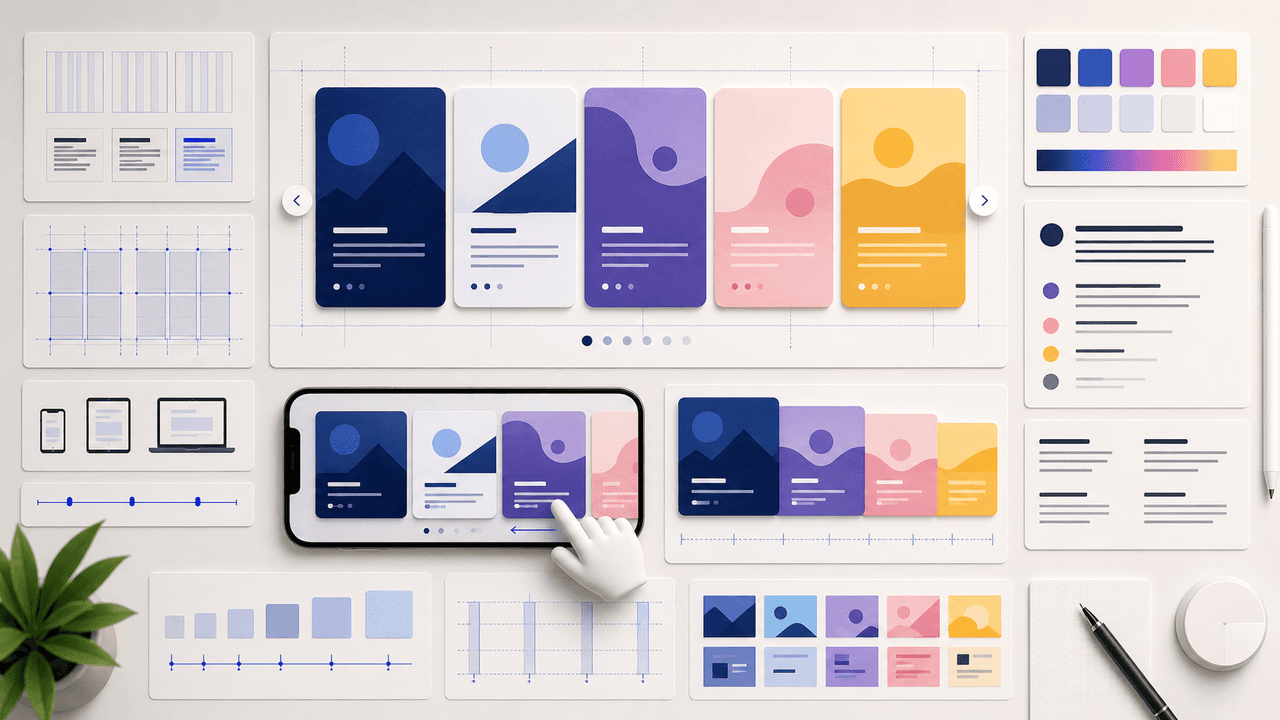
Carousel Design Principles: The Visual Rules That Get More Swipes
Great carousel design is not about being a graphic designer. It is about following a set of visual rules that make your content readable, recognizable, and swipeable. This guide breaks down each rule with concrete specifications you can apply immediately.
Sources
- How to Start a Food Business — U.S. Food and Drug Administration
- Food Safety — Centers for Disease Control and Prevention
- Preventing Food Poisoning — Centers for Disease Control and Prevention
- About Carousel Ads — Meta Business Help Center
- The Consumer Reviews and Testimonials Rule: Questions and Answers — Federal Trade Commission
Written by
AttentionClaw
Editorial Team
Editorial context
Part of the Carousel Creation topic cluster. Last updated June 22, 2026.