Chapter 1
The direct answer: turn open house interest into informed visits
A trade school open house Instagram carousel should explain what prospective students will see, what questions to ask about program length, costs, licensing or certification, hands-on training, job support, and how to register.
FTC consumer advice tells students to research vocational schools and certificate programs carefully before choosing. The U.S. Department of Education's OCTAE page describes federal work around career and technical education, adult education, and community colleges.
The carousel should not promise jobs, guaranteed salaries, licensing outcomes, or financial aid eligibility unless those claims are current, documented, and reviewed.
Callout
Trade school content rule
Sell the open house and questions to ask; do not sell unsupported job-placement or income promises.
Chapter 2
Build carousels from student decision questions
Prospective students want to know what the program teaches, how long it takes, what equipment they use, whether classes fit work schedules, what credentials may be involved, and how career support works.
Each carousel should answer one search intent. A post about open house questions should not also become a full tuition page, aid guide, and alumni-success claim.
Use shop-floor photos, classroom visuals, instructor-approved demos, equipment closeups, and checklist cards.
What to ask at a trade school open house.
How to compare certificate programs.
What hands-on training looks like.
What costs and fees to clarify.
What credentials or exams to ask about.
How job support is described.
What schedules fit working adults.
What to bring to the open house.
Chapter 3
Use an eight-slide open house carousel
The carousel should prepare students for a more useful visit, not pressure them into a decision.
Review every claim about cost, aid, credentials, job placement, and salary before publishing.
- 1
Slide 1: decision hook
Open with 'Touring trade schools? Bring these questions.'
- 2
Slide 2: program fit
Ask about prerequisites, schedule, format, program length, and hands-on time.
- 3
Slide 3: training environment
Show labs, tools, safety gear, classrooms, and instructor interaction.
- 4
Slide 4: costs
Prompt questions about tuition, fees, tools, books, exams, and payment options.
- 5
Slide 5: credentials
Ask what certificate, license, exam, or credential the program prepares students to pursue.
- 6
Slide 6: career support
Ask how placement, apprenticeships, resume help, or employer relationships are documented.
- 7
Slide 7: red flags
Encourage students to verify claims and avoid pressure to enroll immediately.
- 8
Slide 8: CTA
Invite viewers to register for the open house or save the question list.
Chapter 4
Keep outcomes and testimonials documented
Trade school content is especially vulnerable to overclaiming. Salary examples, placement rates, completion rates, licensing outcomes, and alumni stories all need documentation and context.
Testimonials should reflect real student experiences without implying that every student gets the same outcome.
No guaranteed job claim.
No unsupported salary number.
No hidden cost implication.
No misleading credential language.
Clear open house CTA.
Chapter 5
How AttentionClaw packages trade school open house content
AttentionClaw helps trade schools turn program FAQs, instructor notes, lab visuals, admissions scripts, and reviewed outcome language into Instagram carousel drafts.
Templates can cover open house questions, program fit, tool lists, safety training, adult learner schedules, application steps, and career support.
Callout
Trade school workflow
Choose one student question, add reviewed claim boundaries, select approved visuals, generate carousel, review, publish with open house CTA.
Chapter 6
Measure registered and prepared visitors
Track open house registrations, checklist saves, admissions calls, application starts, and whether visitors ask better program-fit questions.
A strong carousel improves inquiry quality before admissions spends time on a call.
Open house registrations.
Checklist saves.
Admissions calls.
Application starts.
Program-fit question quality.
Chapter 7
A pre-visit checklist that helps prospective students get more from the open house
Open house content is most useful when it helps a visitor prepare rather than just announces the event. A checklist carousel — 'what to do before you arrive' — serves two purposes: it helps the prospective student feel prepared, and it signals that the school treats them as a capable adult making a serious decision rather than a marketing target.
The checklist should be specific to the trade or program. A prospective HVAC student has different preparation questions than a prospective welding student. At minimum, a pre-visit checklist should help the visitor identify their specific questions about schedule, cost, financial aid, and what the training program actually covers in day-to-day terms.
Write down your two or three biggest questions about schedule and time commitment
Look up whether any financial aid, grants, or employer-sponsored tuition applies to your situation
Ask whether you can see the actual training equipment and workspace, not just a conference room
Find out what the program expects students to complete before entering the workforce
Ask what distinguishes graduates who do well from those who struggle — this reveals real program culture
Bring any documentation needed for an application if you are close to a decision
Chapter 8
How to frame outcomes honestly without underselling the program
Trade school marketing is especially prone to outcome claims that cannot be supported: guaranteed employment, specific salary figures, or placement rate percentages that lack clear methodology. At the same time, a school that refuses to say anything about outcomes comes across as evasive. The middle path is framing outcomes in terms the school can actually document.
Instead of 'graduates earn X per year,' a post might say 'our program covers the certifications required by most employers in this trade in our region.' Instead of 'we place 90% of graduates,' a post might say 'most graduates complete the program with a nationally recognized certification that is recognized by employers across the region.' These framings are more defensible and, in practice, more credible to a skeptical prospective student.
Callout
Keep outcome claims source-ready
If a post mentions employment rates, salary ranges, or certification outcomes, the school should be able to point to a documented source for those figures — program data, a third-party survey, or a publicly available industry report. If no source exists, the claim should not appear in the post.
Chapter 9
Serving two audiences: students and the adults who influence their decisions
Many trade school prospects — particularly those coming directly out of high school — are making decisions alongside parents or guardians who have their own questions. Content that only speaks to the student may miss the person who will ultimately sign the enrollment agreement or co-sign a financial aid application. A carousel that directly addresses parent or family concerns is a useful addition to the content mix.
Parent concerns tend to be different from student concerns. Parents often want to understand long-term earning potential, job stability, whether the trade is physically demanding, and what the program's reputation looks like in the regional job market. Creating a dedicated 'what families ask at open houses' carousel acknowledges this audience without condescending to the student, and it often gets shared within households before an enrollment decision is made.
Next step
Turn trade school open house questions into carousels
Use AttentionClaw to package program FAQs, lab visuals, and reviewed outcome language into registration-ready carousel drafts.
Common Questions
FAQ
More Reading
Keep reading
11-chapter read
Course Waitlist Launch Instagram Carousels
Course waitlist launch carousels should explain who the course is for, what the waitlist gives people, what results are not guaranteed, and when enrollment opens.
12-chapter read
Private School Open House Instagram Carousels: Help Families Decide to Visit
Private school open house carousels should answer family questions about programs, daily life, admissions, student support, privacy, and tour registration without making unsupported outcome claims.
9-chapter read
Course Cohort Launch Instagram Carousels: Sell the Group Experience Without Overpromising
Course cohort launch carousels should explain who the cohort is for, what the schedule includes, how support works, what proof is available, and what enrollment deadline matters.
9-chapter read
Real Estate Open House Social Content: Promote Listings Without Losing the Plot
Open house social content should help qualified visitors understand the property, schedule, showing logistics, and next step while respecting fair housing, listing accuracy, and safety. A good campaign includes teaser posts, day-of reminders, property-feature carousels, visitor FAQs, and follow-up content.
8-chapter read
Carousel Slide Order That Converts: Hook, Proof, Offer, CTA
A converting carousel usually follows a clear order: hook, context, problem, solution or product, proof, objection handling, offer, and CTA. The exact slide count can change, but the reader should never wonder why the next slide exists.

How to Batch Instagram Carousels and Save 10+ Hours Every Week
Most creators spend 2-3 hours per carousel because they restart from scratch every time. A batch production system cuts that to 15 minutes per post.
7-chapter read
Dental Clinic Social Media Content Calendar: 30 Days of Patient Trust Posts
A dental clinic content calendar should educate patients, reduce appointment anxiety, show the practice environment, explain common treatments, and build trust without overclaiming outcomes or exposing patient information. Use weekly content pillars, review-safe proof, Google Business Profile updates, and recurring carousel and TikTok slideshow formats.
5-chapter read
40 TikTok Slideshow Ideas for Local Service Businesses
Local service businesses should use TikTok slideshows to answer the practical questions customers ask before booking: what the service solves, what it costs, what the process looks like, what results are realistic, and why this local provider is trustworthy.
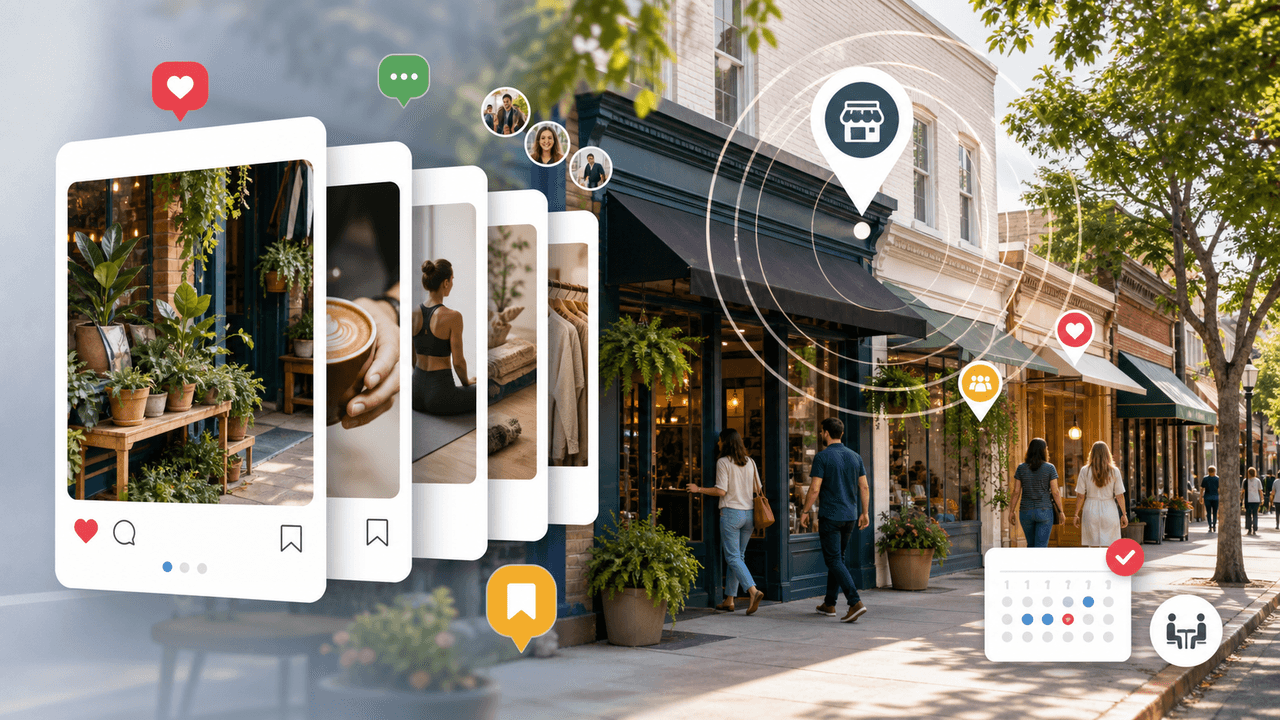
Local Business Instagram Carousels: Drive Foot Traffic Without Paid Ads
Local businesses do not need viral content. They need carousels that reach the right 5,000 people within a ten-mile radius. A local carousel strategy turns your expertise, your team, and your community presence into foot traffic without spending a dollar on ads.
Sources
- Choosing a Vocational School or Certificate Program — FTC Consumer Advice
- Office of Career, Technical, and Adult Education — U.S. Department of Education
- About Carousel Ads — Meta Business Help Center
- FTC's Endorsement Guides: What People Are Asking — Federal Trade Commission
Written by
AttentionClaw
Editorial Team
Editorial context
Part of the Carousel Creation topic cluster. Last updated June 22, 2026.