Chapter 1
The short answer: TikTok is the fast visual pitch; Instagram is the saved explanation
Use a TikTok slideshow when the product story can be understood quickly through vertical images, strong first-frame context, and a native-feeling sequence. Use an Instagram carousel when the reader needs a structured explanation, comparison, checklist, tutorial, or reference they may save and return to.
The difference is not that one platform is better. It is that the viewer mode is different. TikTok slideshows often need faster visual payoff and less dense text. Instagram carousels can carry more educational structure when each slide is readable and the sequence has a clear point.
For ecommerce and product launches, the best workflow is usually to adapt one idea into both formats. A product bundle launch can become a TikTok slideshow showing the bundle in use, and an Instagram carousel explaining who each item is for, why the bundle works, and how to choose a variant.
Choose TikTok slideshow for visual proof, quick product stories, lifestyle context, and fast launch hooks.
Choose Instagram carousel for education, comparisons, product decision guides, checklists, and saved frameworks.
Do not export the same file unchanged to both platforms.
Keep product identity and campaign message consistent while changing crop, text density, and pacing.
Measure each format by its job, not by one universal engagement metric.
Chapter 2
The practical differences that affect creative decisions
TikTok slideshow creative should feel immediate. The product or buyer situation needs to be visible early, and each frame should make the next swipe obvious. Dense text, tiny labels, and slow setup usually hurt the format because the feed context rewards quick comprehension.
Instagram carousel creative can carry more explanation, but only if the design is disciplined. The first slide still needs a strong hook, and the middle slides need clear hierarchy. A carousel is not a blog post squeezed into images; it is a guided sequence of decisions or insights.
Official platform ad specs reinforce that these formats have constraints. TikTok Carousel Ads and Meta carousel ads both use multiple cards or images, but placement, crop, text behavior, audience context, and destination options differ. Build format-specific templates rather than one universal slideshow.
Text density: lower on TikTok, moderate on Instagram.
Visual rhythm: faster on TikTok, more structured on Instagram.
Best hook: situation or transformation on TikTok, direct promise or framework on Instagram.
Best proof: product-in-use and before-after on TikTok, comparison and detail proof on Instagram.
Best CTA: product tap, shop, or learn more on TikTok; save, swipe, comment, product click, or profile action on Instagram.
Chapter 3
Use TikTok slideshows for product stories that are obvious visually
TikTok slideshows are strongest when the viewer can understand the product context without a long explanation. Think travel kit packing, skincare routine order, desk transformation, outfit styling, snack prep, organizer before-after, or product launch teaser.
The first slide should show a problem, finished result, or unusual comparison. The next few slides should prove the story with motion implied through sequence: before, step, detail, result. You can use text, but the images should carry most of the explanation.
Use TikTok slideshows when you need more creative variations quickly. A launch team can test several hooks, proof orders, and offer frames without filming full video each time. That does not make the format low effort; it makes the production system different.
- 1
Best for launches
Use a fast sequence: problem, product in use, proof detail, offer, CTA.
- 2
Best for product demos
Show the routine or transformation in chronological order with minimal text.
- 3
Best for lifestyle context
Place the product in the room, bag, outfit, shelf, gym, kitchen, or trip where the buyer imagines using it.
- 4
Best for hook testing
Keep the product story the same and test different first-frame angles.
Chapter 4
Use Instagram carousels when the buyer needs a decision guide
Instagram carousels are strongest when the idea benefits from structure. Product education, variant choice, bundle logic, before-and-after explanation, and comparison posts all need a little more room for reasoning.
A good Instagram carousel can become a saved reference. That is useful for products where the buyer needs to compare options, remember routine order, explain the purchase to someone else, or come back later when ready to buy.
Do not overload the format. A carousel with nine dense slides may technically fit, but it will not perform if the reader cannot scan it on a phone. Use stronger headings, fewer words, and visible product proof.
Variant chooser: help the buyer pick size, shade, scent, material, tier, or bundle.
Education: teach product use, routine, ingredient, material, setup, or care.
Comparison: clarify old way vs new way, bundle vs individual, or product tier differences.
Checklist: give a saved reference for launch prep, product care, styling, or buying criteria.
Proof: combine customer quote, detail image, process explanation, and CTA.
Chapter 5
How to adapt one product angle into both formats
Start with the angle, not the platform. For example: 'Our travel skincare kit prevents airport-leak chaos.' That angle can become a TikTok slideshow showing the messy pouch, kit, routine, and final packed result. It can also become an Instagram carousel explaining what goes in the kit, why each item is travel-safe, and which variant fits which trip.
Keep the claim, product details, offer, and visual identity consistent. Change the narrative density. TikTok gets the faster visual story. Instagram gets the structured explanation. This is real repurposing, not copy-paste distribution.
AttentionClaw can support this by generating both platform-specific asset sets from one campaign brief. The important part is giving the system clear format instructions instead of asking for 'a social post' and accepting generic output.
- 1
Write the shared brief
Define product, buyer, promise, proof, offer, and CTA.
- 2
Create the TikTok version
Use vertical images, less text, visible product context, and a fast proof sequence.
- 3
Create the Instagram version
Use clearer headings, structured reasoning, comparison slides, and save-worthy information.
- 4
Review together
Confirm both versions make the same promise and send people to the right destination.
Chapter 6
Measure each format by the job it was hired to do
TikTok slideshows and Instagram carousels should not be judged by identical dashboards. A TikTok slideshow may be doing its job if it creates product taps, watch-through equivalents, comments about where to buy, or low-cost creative learning. An Instagram carousel may be doing its job if it creates saves, swipes, profile visits, product clicks, and informed buyer questions.
For paid tests, both formats need downstream metrics: click-through rate, add-to-cart rate, conversion rate, cost per purchase, and return on ad spend. For organic tests, track how the format affects the next content decision: which hook, proof order, product category, or objection deserves more creative.
The right answer is rarely 'use only TikTok' or 'use only Instagram.' The better question is which format teaches this specific buyer decision with the least friction.
TikTok slideshow signals: product taps, click-through, qualified comments, fast hook learning, creative fatigue rate.
Instagram carousel signals: swipe depth, saves, shares, profile visits, product clicks, comment quality.
Shared ecommerce signals: add-to-cart, conversion rate, average order value, assisted revenue, and repeat use of winning angles.
System signal: how many useful assets one product brief produces without lowering quality.
Callout
Create platform-specific TikTok and Instagram assets from one brief with AttentionClaw
Use AttentionClaw when you want one product or campaign brief to become platform-specific TikTok slideshow and Instagram carousel creative without losing brand consistency.
Next step
Create platform-specific social assets from one brief
AttentionClaw helps teams adapt one product or campaign angle into TikTok slideshows, Instagram carousels, and scheduled creative without copy-paste production.
Common Questions
FAQ
More Reading
Keep reading
9-chapter read
TikTok Slideshow Limits 2026: Photo Count and Workflow-Specific Specs
TikTok's current Help Center describes up to 35 photos in a mobile photo post. Its Content Posting API separately documents up to 35 photo URLs plus API-only image restrictions. Verify the composer available to your account before export.
7-chapter read
TikTok Slideshow vs Video: Choose by Evidence, Then Test
Neither TikTok format wins universally. Use a slideshow when the evidence works as still frames and reader-controlled order; use video when motion, timing, voice, or a live demonstration is essential. Then compare matched executions against one declared outcome.
6-chapter read
The TikTok Shop Slideshow Method for Shoppable Photos
For selected sellers with Shoppable Photos access, the method is to verify the current account workflow, choose one buying question, prove the answer with accurate product media, tag the exact product, and measure the post in Seller Center.
9-chapter read
Plumber Leak Repair TikTok Slideshows: Turn Drips Into Service Calls
Plumber leak repair slideshows should help homeowners identify safe observations, shut off water when appropriate, document the issue, and book a plumber without encouraging risky DIY repairs.
9-chapter read
HVAC Seasonal Tune-Up TikTok Slideshows: Turn Maintenance Into Bookings
HVAC tune-up slideshows should show seasonal maintenance reasons, homeowner prep, filter reminders, safety boundaries, and booking CTAs without diagnosing equipment from comments.
8-chapter read
TikTok Slideshow Creative Testing for Ecommerce
Ecommerce TikTok slideshow testing should change one major creative variable at a time: hook, product angle, image order, proof, offer, or destination. The test should explain why people clicked or bought, not just which slideshow got more views.

How to Batch Instagram Carousels and Save 10+ Hours Every Week
Most creators spend 2-3 hours per carousel because they restart from scratch every time. A batch production system cuts that to 15 minutes per post.
8-chapter read
Home Services TikTok Slideshow Ideas: Local Posts for Contractors and Repair Pros
Home service businesses can use TikTok slideshows to show before-and-after proof, explain maintenance, answer emergency questions, spotlight local jobs, and turn field photos into useful content. The best posts are specific, visual, local, and tied to a clear call-to-book.
7-chapter read
TikTok Slideshow Publishing Checklist for Small Businesses
A TikTok slideshow is ready to publish when the first slide earns attention, every slide advances one idea, the product or service proof is visible, text works on mobile, claims are supportable, the CTA is specific, and measurement is set before the post goes live.
10-chapter read
TikTok Slideshow Quality Checklist Before You Publish
A TikTok slideshow quality checklist should review the hook, slide sequence, mobile readability, product or screenshot accuracy, claim support, disclosure needs, CTA match, destination link, and campaign tracking before publishing. The checklist protects quality when teams are producing fast.
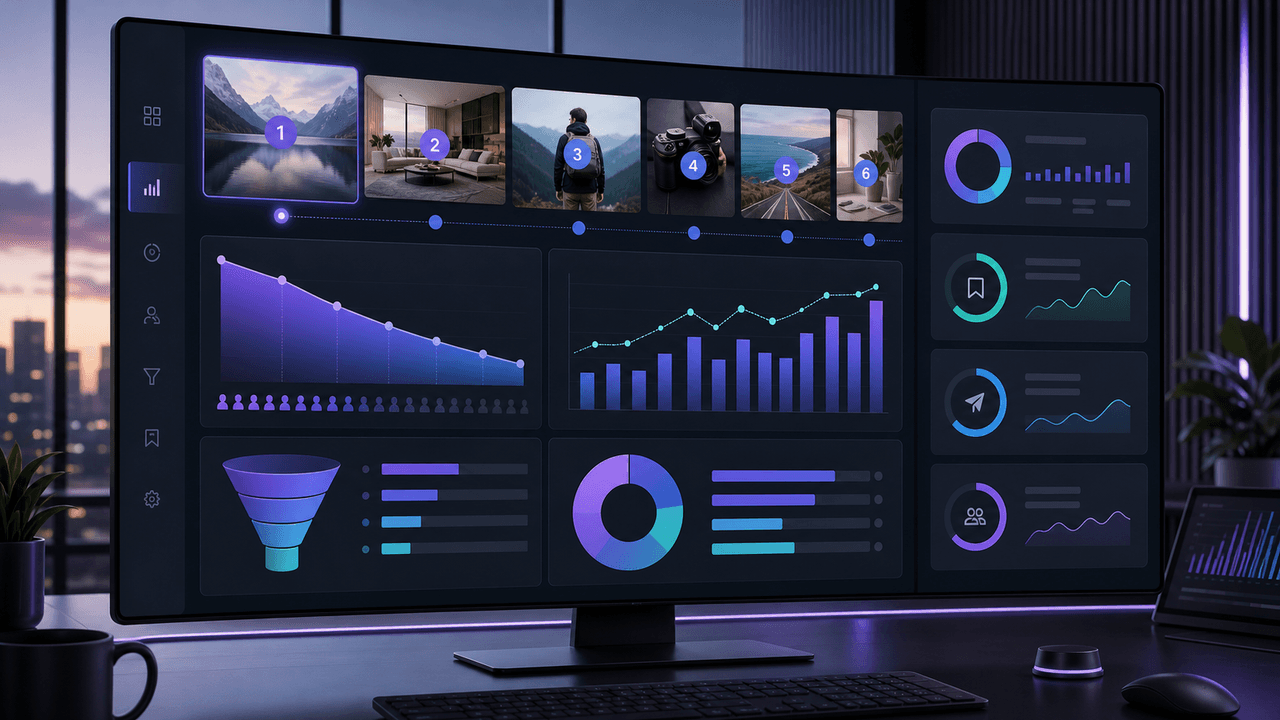
Carousel Analytics: The Metrics That Actually Matter (And How to Track Them)
Most creators obsess over likes and follower count while ignoring the carousel-specific metrics that actually predict growth. This guide breaks down the numbers worth tracking and the benchmarks that separate average from exceptional.

Optimize the post you can observe—not a secret algorithm
There is no defensible universal weight chart for Instagram carousel distribution. Check recommendation eligibility, make the content useful and original, and use a controlled ledger to learn from the metrics available in your professional account.
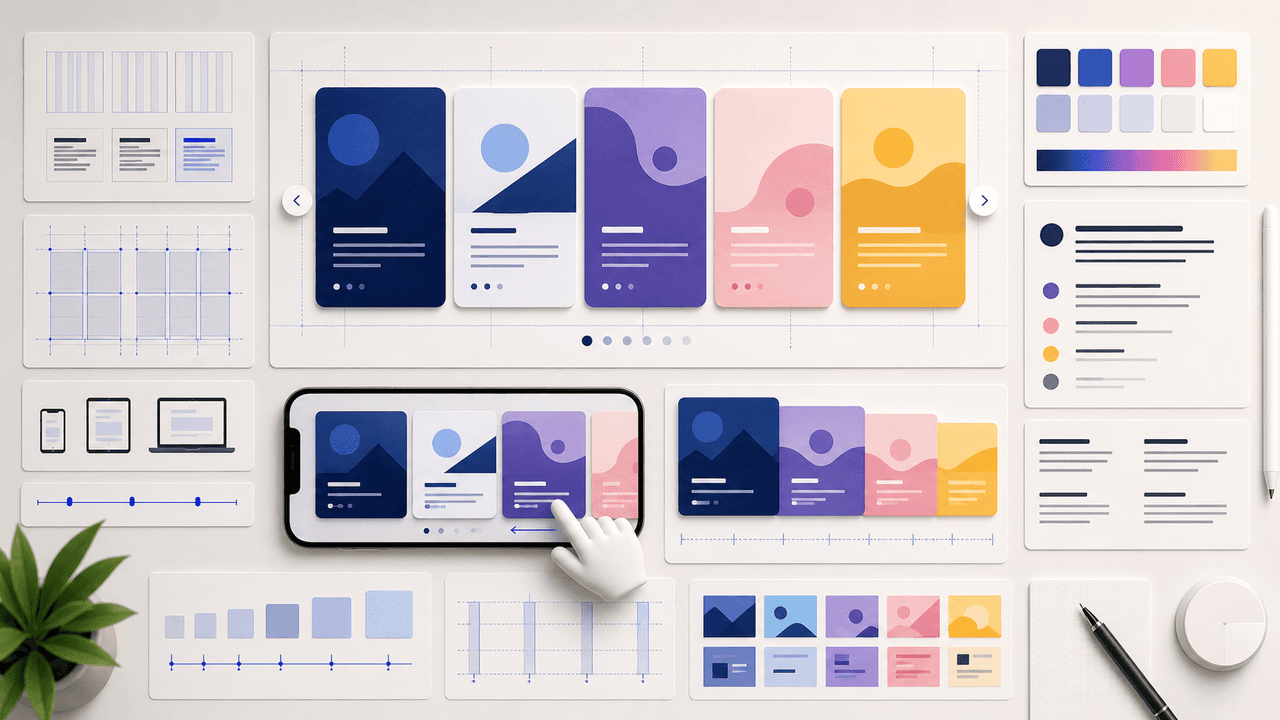
Carousel Design Principles: The Visual Rules That Get More Swipes
Great carousel design is not about being a graphic designer. It is about following a set of visual rules that make your content readable, recognizable, and swipeable. This guide breaks down each rule with concrete specifications you can apply immediately.
Sources
- About Carousel Ads in TikTok Ads Manager — TikTok Ads Manager
- Design Specifications for Carousel Ads — Meta Business Help Center
- Creative Best Practices for TikTok Ads — TikTok For Business
- Creating helpful, reliable, people-first content — Google Search Central
Written by
AttentionClaw
Editorial Team
Editorial context
Part of the Carousel Creation topic cluster. Last updated June 22, 2026.