Chapter 1
The direct answer: sell spring planting with regional guidance
A garden center spring planting Instagram carousel should answer what shoppers can plant now, which conditions matter, how much space the plant needs, what care it requires, and how to buy or reserve it.
USDA gardening advice points gardeners toward local Cooperative Extension resources for region-specific recommendations. That matters because a spring planting post that ignores climate, timing, soil, water, and local pest pressure can create bad expectations.
USDA APHIS also warns that invasive pests can move through plants, outdoor items, and firewood. Garden center content should avoid casual claims that every plant is universally safe to move, plant, or ship.
Callout
Garden center rule
Make the carousel specific enough to help a shopper choose, but reviewed enough that it does not promise plant survival or universal planting dates.
Chapter 2
Build spring planting posts from shopper questions
Shoppers want to know what grows in their area, what survives full sun, what works in containers, what supports pollinators, what needs daily water, and what can be planted before the next frost risk.
A strong carousel keeps one intent per post. Do not mix annuals, trees, compost, pest control, patio furniture, workshops, and a clearance sale into one feed asset.
Use staff picks, bench cards, plant tags, planter photos, local delivery notes, pickup windows, and reviewed care language as the raw material for the carousel.
Plant type and seasonal use.
Sun, shade, soil, and water needs.
Container, raised bed, or landscape fit.
Local timing or region note.
Native, pollinator, or habitat context when reviewed.
Pest, invasive species, or movement warning when relevant.
Pickup, delivery, workshop, or plant list CTA.
Staff contact path for exact local guidance.
Chapter 3
Use an eight-slide spring planting carousel
The goal is to reduce vague DMs and increase qualified store visits.
Review all plant availability, local timing, pest claims, native-plant claims, and photos before publishing.
- 1
Slide 1: seasonal hook
Open with one spring planting problem, such as balcony color, pollinator beds, or beginner vegetables.
- 2
Slide 2: region note
State that timing and plant fit depend on local conditions, frost risk, and reviewed guidance.
- 3
Slide 3: sun and space
Show whether the plants need full sun, part shade, containers, beds, or larger landscapes.
- 4
Slide 4: plant picks
Feature a short list of available plants with clear shopper use cases.
- 5
Slide 5: care basics
Summarize watering, soil, spacing, and maintenance without overpromising results.
- 6
Slide 6: pest and movement note
Add reviewed guidance when pests, invasive species, shipping, firewood, or plant movement could matter.
- 7
Slide 7: shop logistics
Explain availability, pickup, delivery, workshop, or consultation details.
- 8
Slide 8: CTA
Invite shoppers to save the list, visit this week, reserve plants, or ask staff for local guidance.
Chapter 4
How AttentionClaw packages garden center content
AttentionClaw helps garden centers turn plant lists, staff notes, care cards, seasonal displays, workshop details, and product photos into review-ready Instagram carousel drafts.
Templates can cover beginner spring planting, container gardens, pollinator beds, vegetable starts, shade plants, soil prep, seasonal workshops, and weekend inventory drops.
Callout
Garden center workflow
Choose one planting question, add reviewed local notes, attach approved plant photos, generate carousel, review, publish with a visit or reserve CTA.
Chapter 5
Measure store visits and plant demand
Track collection clicks, saves, DMs, workshop signups, plant reservation requests, and sell-through on featured items.
A strong spring planting carousel should create more informed shoppers who know what to ask for when they arrive.
Plant collection clicks.
Save rate.
Plant reservation requests.
Workshop signups.
Featured-item sell-through.
Chapter 6
A Regional Plant Selection Framework for Spring Planting Carousels
The most useful thing a garden center carousel can do is reduce the uncertainty of 'will this actually grow where I live?' Generic plant advice frustrates shoppers who plant based on what looked good on a post and then watch it fail because the hardiness zone or frost timing was wrong. A carousel that anchors recommendations to a last-frost date range, a USDA hardiness zone band, or a simple regional season window ('safe to plant outdoors after mid-April in most of our area') earns far more trust than a list of pretty plants with no context.
You do not need to cover every microclimate. Group plants into two or three broad conditions that match your customer geography: full sun, partial shade, and full shade. Within each condition, offer two or three plants at different price points and care levels. This gives the first-time gardener, the time-pressed homeowner, and the experienced hobbyist each a path through the content without requiring separate posts.
Seasonal plant availability is also a trust signal. When a post says 'we have these in stock now' and a customer arrives to find the recommended plant sold out or not yet available, the carousel becomes a liability. Either update posts when stock changes or write carousel copy that acknowledges timing: 'these typically arrive in early April — ask us about our waitlist.'
Anchor recommendations to a regional last-frost date or hardiness zone rather than a calendar month
Group by sun exposure: full sun, partial shade, and full shade cover most residential garden situations
Include at least one low-maintenance option per group for shoppers who want results without high effort
Note whether a featured plant is annual, perennial, or biennial — many shoppers assume perennial and are disappointed when annuals die in winter
Flag when a featured plant is toxic to dogs or cats — this is a high-search question and builds genuine goodwill
Chapter 7
Common Spring Planting Mistakes Worth a Carousel of Their Own
A 'mistakes to avoid' carousel is one of the highest-saving formats in the garden center category because it addresses the anxiety behind every purchase: will I kill this? Shoppers who have lost plants before are actively searching for the information that will help them succeed this time. A carousel that walks through the five most common errors — planting too early, overwatering newly transplanted specimens, skipping soil amendment, spacing too close, and choosing plants for looks rather than conditions — gives those shoppers real value and positions your team as a knowledgeable resource.
The most damaging mistake for new gardeners to make is planting cold-sensitive annuals before the last frost window has safely passed. This is worth its own slide because it happens every year and it is preventable. A slide that shows the visual difference between frost-damaged transplants and healthy ones, with a simple rule — 'wait until nighttime temps are consistently above a safe threshold for your area' — saves customers money and prevents the discouraging experience of watching a fresh planting fail.
Overwatering is the second most common issue and the hardest to diagnose because the symptoms — yellowing leaves, wilting — look identical to underwatering. A carousel slide that explains the 'finger-check' method for soil moisture and distinguishes between wilting from dehydration versus root rot gives shoppers a diagnostic they can use at home and reinforces your role as a helpful advisor rather than just a seller.
Chapter 8
Integrating Workshop and In-Store Event Promotion into Spring Planting Carousels
Spring is the natural season for garden center workshops: container planting, starting seeds indoors, pest management, and pollinator garden design all map to customer interests at the exact moment they are thinking about planting. A spring planting carousel that mentions an upcoming workshop in its final slide converts educational content into event attendance without feeling like a hard sell.
The workshop mention works best when it connects directly to a limitation the carousel acknowledges. If the carousel says 'container gardening in small spaces can be tricky — soil choice and drainage are the variables most people get wrong,' a final slide that reads 'join our container planting workshop on [date] — we will cover exactly this' closes the loop naturally. The workshop is the next step for the reader who wants hands-on guidance.
For stores that run recurring workshops, a static 'events this season' final slide that can be updated between posts is more efficient than rebuilding individual carousels for each event. This approach keeps the educational content evergreen while the promotional layer stays current. Track workshop signups that mention seeing the carousel post to understand how much of your registration traffic is coming from social.
Next step
Turn spring planting questions into garden center carousels
Use AttentionClaw to package plant lists, care notes, seasonal timing, and shopping CTAs into review-ready carousel drafts.
Common Questions
FAQ
More Reading
Keep reading
9-chapter read
Home Organizer Before-and-After Instagram Carousels: Show Systems, Not Just Bins
Home organizer before-and-after carousels should show the system, the client problem, the maintenance plan, and the consultation path while protecting household privacy and avoiding unrealistic transformation claims.
8-chapter read
Carousel Slide Order That Converts: Hook, Proof, Offer, CTA
A converting carousel usually follows a clear order: hook, context, problem, solution or product, proof, objection handling, offer, and CTA. The exact slide count can change, but the reader should never wonder why the next slide exists.
8-chapter read
Home Services Seasonal Maintenance Content Calendar: Book Preventive Work
Seasonal maintenance content helps home service companies book preventive work before emergencies happen. Use weather-aware checklists, HVAC filter reminders, water and mold prevention posts, storm prep, and local booking CTAs to turn useful education into service demand.
8-chapter read
Home Services TikTok Slideshow Ideas: Local Posts for Contractors and Repair Pros
Home service businesses can use TikTok slideshows to show before-and-after proof, explain maintenance, answer emergency questions, spotlight local jobs, and turn field photos into useful content. The best posts are specific, visual, local, and tied to a clear call-to-book.
5-chapter read
40 TikTok Slideshow Ideas for Local Service Businesses
Local service businesses should use TikTok slideshows to answer the practical questions customers ask before booking: what the service solves, what it costs, what the process looks like, what results are realistic, and why this local provider is trustworthy.
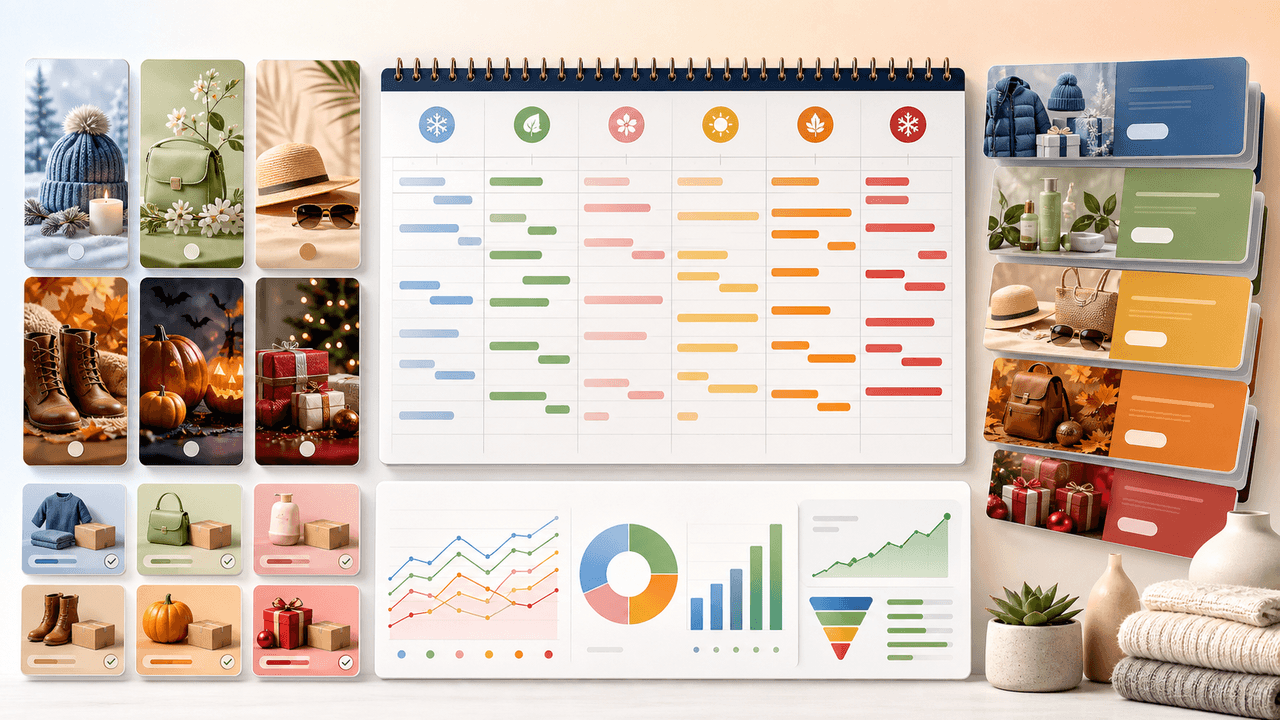
Seasonal Carousel Campaigns for E-Commerce: A Year-Round Playbook
E-commerce brands that plan seasonal carousel campaigns in advance outsell reactive competitors by a wide margin. This playbook covers every major selling season with specific carousel formats, timelines, and content strategies that drive revenue year-round.

Local Business Instagram Carousels: Drive Foot Traffic Without Paid Ads
Local businesses do not need viral content. They need carousels that reach the right 5,000 people within a ten-mile radius. A local carousel strategy turns your expertise, your team, and your community presence into foot traffic without spending a dollar on ads.

Carousel Design Principles: The Visual Rules That Get More Swipes
Great carousel design is not about being a graphic designer. It is about following a set of visual rules that make your content readable, recognizable, and swipeable. This guide breaks down each rule with concrete specifications you can apply immediately.
Sources
- Gardening Advice — U.S. Department of Agriculture
- Hungry Pests — USDA Animal and Plant Health Inspection Service
- Firewood — U.S. Department of Agriculture National Invasive Species Information Center
- About Carousel Ads — Meta Business Help Center
- The FTC's Endorsement Guides: What People Are Asking — Federal Trade Commission
Written by
AttentionClaw
Editorial Team
Editorial context
Part of the Carousel Creation topic cluster. Last updated June 22, 2026.