Chapter 1
Why reactive seasonal content costs you thousands in lost sales
Every year, the same pattern repeats across e-commerce Instagram. A holiday approaches, brands scramble to create themed content, and the results are carousels that look rushed, feel generic, and arrive too late to capture early shoppers. Meanwhile, the brands that planned ahead launched their seasonal carousels two weeks before the competition, captured first-mover attention, and built momentum that compounded through the entire selling period.
Seasonal shopping behavior follows a predictable curve. Awareness and browsing start 3-6 weeks before a holiday. Active comparison shopping happens 2-3 weeks out. Purchase decisions peak in the final week. If your first seasonal carousel appears when everyone else's does, you are entering the conversation at the most competitive and most expensive moment.
Proactive seasonal planning also gives you better content. When you are not rushed, you can develop multi-carousel campaigns that tell a story across weeks. You can test different hooks and angles. You can coordinate carousels with email, ads, and landing pages for a cohesive experience that random, last-minute posts can never deliver.
Early seasonal content captures shoppers in the browsing phase before competitors enter the conversation
Multi-week campaigns compound reach and build familiarity that single posts cannot achieve
Planned content allows coordination across carousels, email, ads, and landing pages
Rushed seasonal content looks generic and blends in with every other brand's last-minute efforts
The cost of planning ahead is a few hours of strategy; the cost of being reactive is thousands in lost sales
Chapter 2
The three-phase seasonal campaign framework
Every seasonal campaign, regardless of the holiday, follows the same three-phase structure. Master this framework once and apply it to every selling season.
- 1
Phase 1: Warm-up (4-6 weeks before)
Publish 2-3 carousels that establish relevance to the upcoming season without hard selling. For a summer campaign, this might be a carousel about outdoor routines, travel packing tips, or seasonal trends. The goal is to associate your brand with the seasonal context in your audience's mind.
- 2
Phase 2: Campaign launch (2-3 weeks before)
Launch your core seasonal carousels: gift guides, seasonal product showcases, limited-edition reveals, and promotional announcements. This is when most buying intent is forming. Publish 3-5 carousels that directly connect your products to the holiday or season.
- 3
Phase 3: Urgency and close (final week through the event)
Shift to urgency-driven carousels: countdown posts, shipping deadline reminders, last-chance offers, and flash sale announcements. Every carousel in this phase should create a clear reason to buy now rather than later.
Callout
Plan the sequence, not just the posts
The power of seasonal campaigns comes from the cumulative effect of multiple carousels over weeks. A single holiday carousel is a post. A three-phase sequence of 8-10 carousels is a campaign that compounds awareness, trust, and urgency.
Chapter 3
Black Friday and Cyber Monday: the carousel campaign that defines your year
For most e-commerce brands, BFCM represents 20 to 40 percent of annual revenue. The carousel strategy for this period needs to be your most planned, most polished, and most aggressively executed of the year. Half-measures during BFCM are unacceptable because your competitors are going all out.
Start your BFCM warm-up in early October. Publish carousels that highlight your best-selling products, share behind-the-scenes content about upcoming deals, and build a VIP early-access list. By the time BFCM week arrives, your audience should already know what you sell, trust your brand, and be watching for your deals to drop.
During BFCM week itself, plan a minimum of one carousel per day. Monday through Wednesday should build anticipation with deal previews and early-access content. Thursday and Friday are your main sales push with your biggest offers front and center. Saturday through Monday extend the sale with daily carousels featuring different product categories or tiered discounts.
- 1
October: Warm-up carousels
Publish 3-4 carousels showcasing top products, seasonal styling, and VIP list sign-up CTAs. Use educational formats: 'The 5 products our customers reorder most' or 'What sold out first last Black Friday.' No deals yet. Just awareness and anticipation.
- 2
Early November: Campaign launch
Publish 4-5 carousels revealing your BFCM plans: what is on sale, how big the discounts are, and when deals go live. Include a gift guide carousel organized by recipient or price range. Feature early-access or exclusive deals for email subscribers and followers.
- 3
BFCM week: Daily sales carousels
Publish one carousel per day Monday through Monday. Each carousel should feature a different angle: deal overview, category spotlight, bestseller countdown, customer favorites, last-chance reminder. Support each carousel with Stories throughout the day.
- 4
Post-BFCM: Extended sale and recap
Publish 2-3 carousels extending Cyber Week deals or offering exclusive post-sale offers. Include a recap carousel highlighting sold-out items, total orders, and customer reactions to build FOMO for next year.
Chapter 4
Q1 campaigns: New Year and Valentine's Day
January is a reset month for most consumers, making it ideal for carousels about fresh starts, new routines, and self-improvement. Products that align with New Year's resolution energy, whether fitness gear, organization tools, skincare routines, or productivity accessories, should lead with transformation messaging.
Valentine's Day is the first major gifting holiday of the year and is relevant far beyond romantic products. Gift guide carousels that frame your products as thoughtful gifts for partners, friends, or self-purchases capture a wide audience. The key is specificity: 'Gifts for the partner who has everything' is more effective than 'Valentine's Day Sale.'
For Q1, begin your warm-up content in the last week of December or early January. Valentine's campaigns should start in late January, giving you a full three weeks before February 14th to build awareness and drive purchase decisions.
- 1
New Year carousels (January 1-15)
Publish 2-3 carousels themed around fresh starts: 'Upgrade your morning routine for 2026,' 'The starter kit for your fitness goals,' or 'Everything you need to organize your space this year.' Connect your products to the aspirational energy of January.
- 2
Valentine's warm-up (January 20-31)
Publish 2 carousels introducing gift ideas without hard selling. Focus on the thoughtfulness angle: 'Gifts they will actually use every day' or 'How to pick a gift that shows you pay attention.' Subtle product placement in styled imagery.
- 3
Valentine's campaign (February 1-14)
Publish 4-5 carousels: a gift guide by recipient type, a gift guide by price range, a bundle or limited-edition carousel, a shipping deadline reminder, and a last-minute gift ideas carousel. Coordinate with email for maximum conversion.
Chapter 5
Q2 and Q3 campaigns: spring refresh, summer, and back-to-school
The spring and summer months lack the urgency of holiday gifting seasons, but they present massive opportunities for carousels that tap into seasonal lifestyle shifts. People change their routines, wardrobes, environments, and spending patterns with the weather. Your carousels should reflect and anticipate these shifts.
Spring content works best when it is framed around renewal and refreshing: new season wardrobes, spring cleaning, outdoor activities, and health goals. Summer content should focus on travel, outdoor living, leisure, and heat-specific solutions. Both seasons are ideal for lookbook carousels and lifestyle-driven content.
Back-to-school in late July through August is the second-largest shopping season after BFCM for many e-commerce categories. This includes not just school supplies but also dorm essentials, tech, fashion, skincare, and organizational products. Treat it with the same three-phase campaign approach as BFCM.
- 1
Spring refresh (March-April)
Publish 3-4 carousels around seasonal transitions: 'The spring wardrobe refresh checklist,' 'Spring cleaning essentials you did not know you needed,' or 'Transition your routine from winter to spring.' Lookbook formats and before-after carousels work well.
- 2
Summer lifestyle (May-June)
Publish 3-4 carousels connecting your products to summer activities: travel, outdoor entertaining, fitness, and vacation prep. Use bright, warm visual treatments. Bundle carousels and themed collections perform strongly during this period.
- 3
Back-to-school (July-August)
Run a three-phase campaign starting in mid-July. Warm-up with organization and preparation carousels. Launch with product-specific back-to-school guides. Close with shipping deadline urgency and limited-time bundles.
Callout
Seasonal visual treatments
Each season should have a subtle visual variation in your carousels: warmer tones for summer, crisp tones for fall, fresh greens for spring. This seasonal styling makes your feed feel current and relevant without abandoning your core brand identity.
Chapter 6
The best carousel formats for each type of seasonal campaign
Different seasonal moments call for different carousel formats. A gift guide carousel structure works perfectly for Valentine's Day but falls flat for a summer lifestyle campaign. Matching the right format to the right season maximizes both engagement and conversion.
- 1
Gift guide carousel (holidays and gifting occasions)
Structure: Hook slide with occasion and recipient, 6-8 product slides organized by category or price range, CTA with shipping deadline. Best for: Valentine's Day, Mother's and Father's Day, Christmas, graduation season.
- 2
Seasonal lookbook carousel (lifestyle seasons)
Structure: Theme hook, 6-8 styled product scenes, shop-the-look CTA. Best for: spring refresh, summer, fall fashion, back-to-school. Focus on aspiration and lifestyle context rather than individual product features.
- 3
Countdown and urgency carousel (sale events)
Structure: Bold countdown hook, 4-6 deal spotlight slides, deadline and CTA. Best for: BFCM, flash sales, end-of-season clearance. Every slide should reinforce the limited-time nature of the offer.
- 4
Year-in-review or best-of carousel (year-end)
Structure: Reflective hook, 8-10 slides highlighting top products, milestones, or customer favorites from the year. CTA pointing to bestsellers or the new collection. Best for: December, brand anniversaries.
- 5
Seasonal tips and education carousel (any season)
Structure: Seasonal problem hook, 6-8 slides of actionable advice, product integration in final slides. Best for: New Year routines, spring cleaning, summer skincare, winter prep. Builds trust while connecting products to seasonal needs.
Chapter 7
Building your annual seasonal content calendar
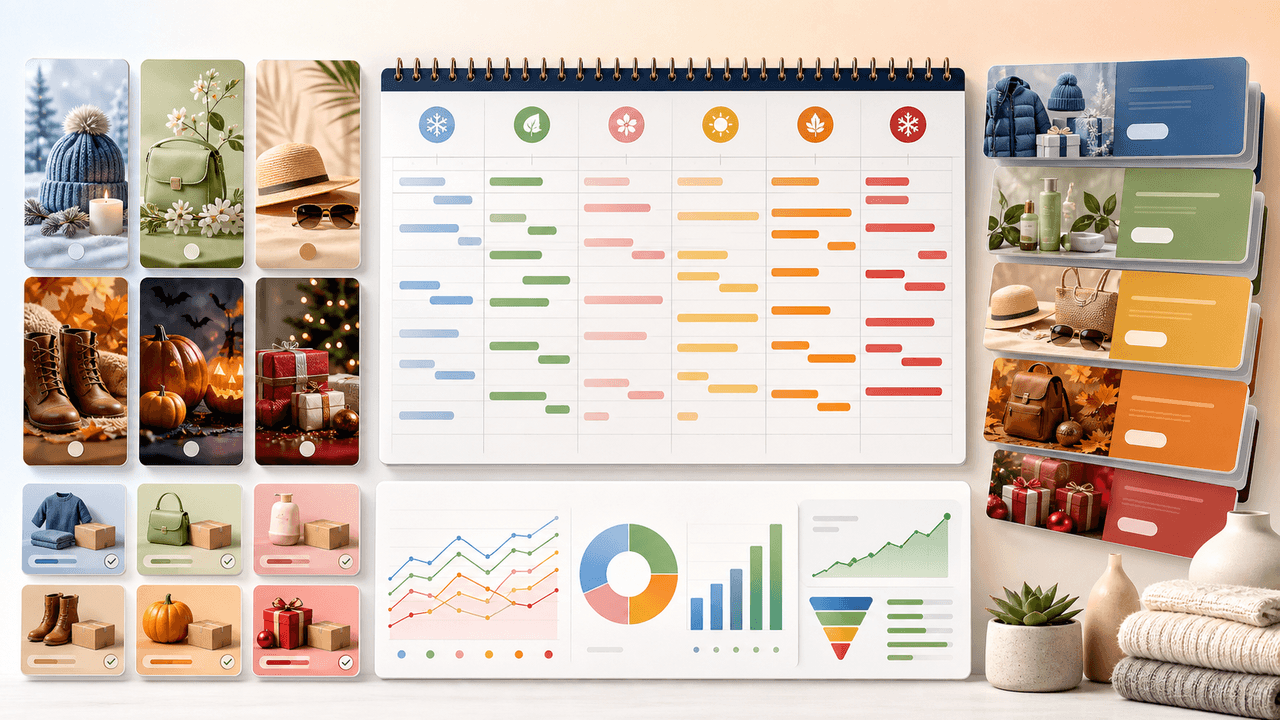
An annual content calendar prevents the two most common seasonal marketing failures: starting too late and missing smaller opportunities. When you map out the full year in advance, you can see the rhythm of selling seasons and plan your carousel production accordingly.
The calendar should mark three things for each season: the warm-up start date, the campaign launch date, and the final selling push date. Working backward from major holidays, you can schedule production blocks that ensure carousels are ready before they are needed.
Beyond the major holidays, identify niche seasonal moments that are relevant to your specific products and audience. A pet supply brand should plan for National Pet Day. A fitness brand should plan for New Year's resolution season. A stationery brand should plan for back-to-school and planner season in fall. These smaller moments face less competition and can drive meaningful revenue.
Map every relevant seasonal moment for your product category across all 12 months
Mark three dates for each season: warm-up start, campaign launch, and urgency close
Schedule production blocks 6 weeks before each campaign's warm-up start date
Identify niche seasonal moments specific to your product category for lower-competition opportunities
Review and update the calendar quarterly based on performance data from completed campaigns
Share the calendar with your entire team so content, email, ads, and inventory are aligned
Chapter 8
Seasonal design variations without losing brand identity
Your carousels should feel seasonally relevant without becoming unrecognizable. This is a design challenge that many e-commerce brands handle poorly, either ignoring seasonal styling entirely and looking out of touch, or going so heavy on holiday themes that their brand identity disappears behind candy canes and pumpkins.
The solution is a seasonal accent layer that sits on top of your core design system. Your fonts, logo placement, and primary brand colors stay exactly the same year-round. What changes is a secondary accent color, background textures or patterns, and seasonal photography style. These subtle shifts signal seasonality without disrupting brand recognition.
Create seasonal design presets at the beginning of the year. For each major season, define the accent color, any seasonal graphic elements, and the photography mood. When campaign time arrives, you apply the preset to your existing carousel templates instead of designing from scratch.
- 1
Define your seasonal accent palette
Choose one accent color for each season that complements your primary brand colors. Warm amber for fall, deep green for the holidays, soft pink for Valentine's, fresh green for spring, warm coral for summer. These accents appear in backgrounds, highlight text, and graphic elements.
- 2
Create seasonal graphic elements
Design 3-4 simple seasonal elements per season: a subtle leaf pattern for fall, a minimal snowflake for winter, a sun motif for summer. Use these as background textures or corner accents, not as dominant design features.
- 3
Adjust photography mood
Apply seasonal color grading to your product imagery: warm and golden for fall, cool and crisp for winter, bright and saturated for summer. This is the single most impactful seasonal change and can be done with a simple filter preset.
- 4
Keep your core system untouched
Your primary brand colors, typography, logo placement, and slide layouts remain identical across all seasons. The seasonal layer is additive, not replacement. Someone who sees your summer carousel and your winter carousel should immediately know both are from the same brand.
Chapter 9
Batch-producing an entire seasonal campaign in one session
A typical seasonal campaign involves 8-12 carousels across three phases. Producing these one at a time as the campaign progresses is inefficient and risky because you might fall behind, lose visual consistency, or simply run out of energy midway through the season.
Instead, produce the entire campaign in one or two focused sessions before the warm-up phase begins. Write all the copy for all carousels first, then design them in a batch. This ensures visual consistency, allows you to see the full campaign arc, and means you are simply scheduling and publishing during the actual campaign rather than creating under pressure.
For brands running multiple seasonal campaigns per year, tools like AttentionClaw make batch production dramatically faster. Input your product details and brand style, and generate carousel variations for each campaign phase. Review, refine copy where needed, and schedule. What would take a design team several days can be accomplished in an afternoon.
Produce all 8-12 campaign carousels before the warm-up phase begins
Write all carousel copy first in a single session for consistent messaging
Design all carousels in a second session for visual consistency across the campaign
Review the full campaign sequence to ensure variety in format and a logical narrative arc
Schedule everything in advance so the campaign runs on autopilot during busy selling periods
Use AI tools to generate seasonal carousel variations quickly and maintain brand consistency
Chapter 10
Measuring the ROI of your seasonal carousel campaigns
Seasonal campaigns are finite events with clear start and end dates, which makes them easier to measure than evergreen content. Take advantage of this by setting up proper tracking before each campaign launches so you can accurately attribute revenue to your carousel content.
Create unique UTM parameters for each seasonal campaign and each carousel within the campaign. This lets you track which phase generated the most revenue, which carousel formats converted best, and which products drove the most sales during the seasonal push. After the campaign ends, compile this data into a performance brief that informs next year's strategy.
Compare year-over-year performance for recurring seasonal campaigns. Track not just revenue but also reach, engagement rate, and new followers acquired. Over time, you will see which seasonal moments are most valuable for your brand and can allocate more resources to those campaigns while scaling back on underperformers.
Use unique UTM parameters for each campaign phase and individual carousel
Track revenue attribution per carousel to identify which formats and phases convert best
Compare year-over-year performance for recurring seasonal campaigns
Measure new follower acquisition during seasonal campaigns for long-term audience growth
Create a post-campaign brief with data, insights, and recommendations for next year
Use the brief to pre-plan next year's campaigns with specific improvements
Next step
Build seasonal carousel campaigns in hours, not weeks
AttentionClaw generates brand-consistent Instagram carousels and TikTok slideshows for every seasonal campaign. Define your brand style once, produce entire campaign sequences at scale.
Common Questions
FAQ
More Reading
Keep reading
8-chapter read
Toy Store Gift Guide Instagram Carousels
Toy store gift guide carousels should group products by age, interest, budget, and safety notes while keeping reviews, inventory, and product claims accurate.
7-chapter read
Ecommerce Carousel Ad Creative Testing Framework
Ecommerce carousel ad testing should isolate one variable at a time: hook, proof order, product angle, offer, or CTA. Start with three hook variants using the same middle slides, then test proof and offer only after a clear signal appears.
9-chapter read
Carousel Ad Slide Order Examples for Ecommerce Offers
Ecommerce carousel slide order should follow the buyer's decision: hook, product context, proof, objection, offer, and CTA. Different offers need different ordering, but every slide should make the next swipe feel useful.
7-chapter read
Ecommerce Carousel Landing Page Match for Paid Social Ads
Ecommerce carousel landing-page match means the page immediately continues the same product, variant, proof, offer, and buying reason shown in the ad. If the carousel sells one use case, do not send the buyer to a generic homepage.
Build one product launch carousel people can verify
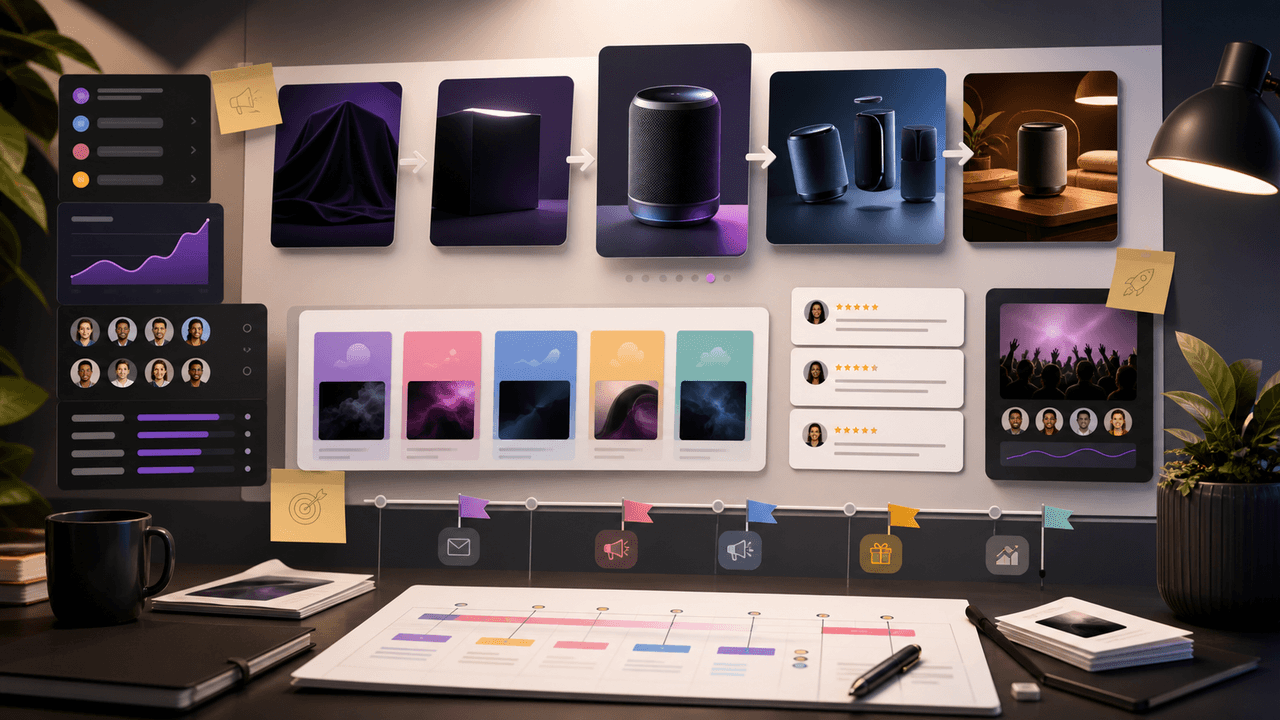
An Instagram product launch carousel should explain what changed, who it is for, what evidence supports the promise, what the offer includes, and where to act. This guide provides the brief, asset gate, full sequence, and measurement plan.
30-Day Social Content System for Shopify and DTC Brands
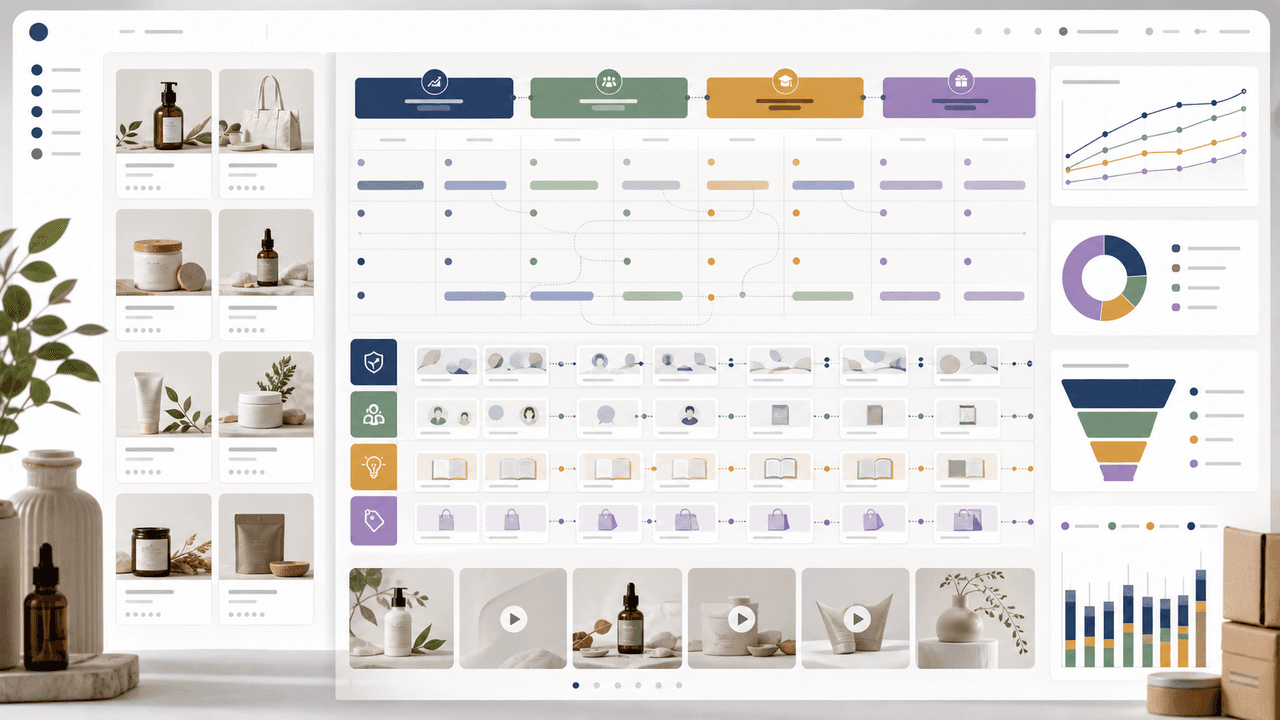
A 30-day Shopify social content system should turn products, objections, proof, education, and offers into a repeatable calendar. Plan four weekly arcs, batch creative by content job, repurpose each product angle across Instagram carousels and TikTok slideshows, then measure buyer actions instead of only engagement.
Product Comparison Carousels: Help Shoppers Choose (And Choose You)
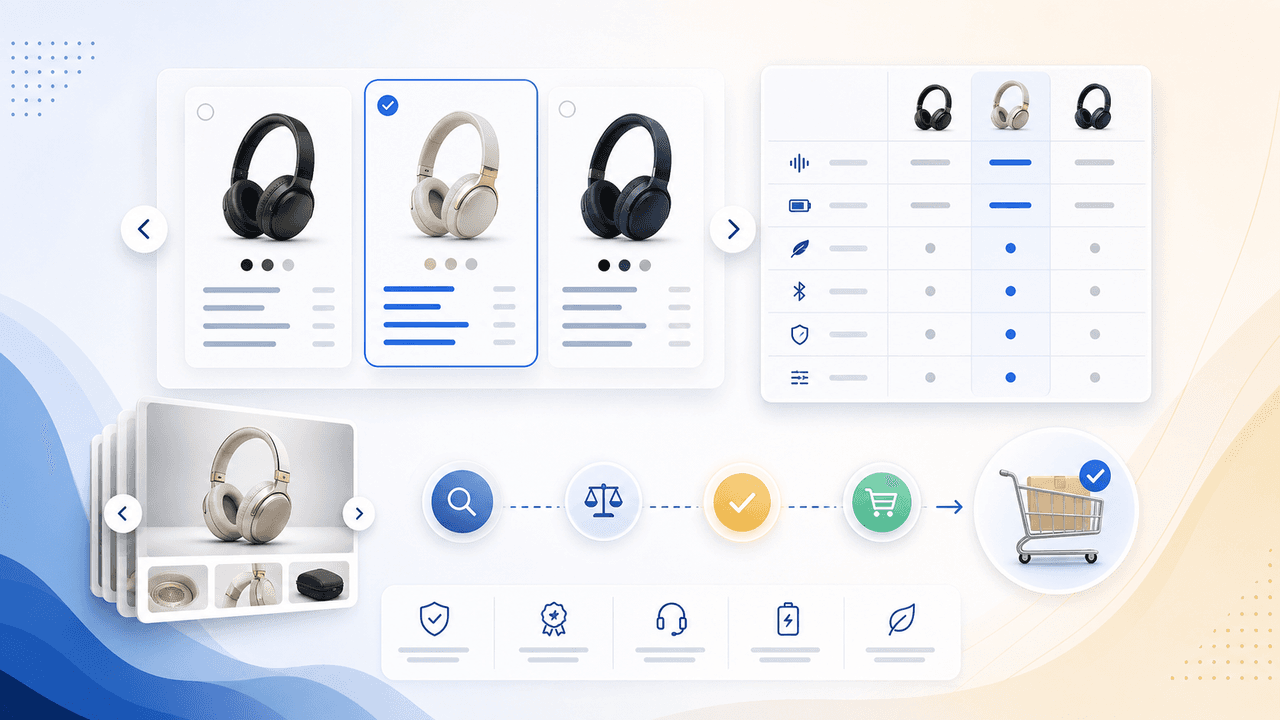
Comparison carousels are some of the highest-converting content in e-commerce because they meet shoppers at the exact moment they are deciding between options. Done right, they make your product the obvious choice without feeling like a biased sales pitch.
UGC Carousels for E-Commerce: Turn Customer Photos Into Your Best Sales Tool
User-generated content converts at 4-5 times the rate of brand-produced content, but most e-commerce brands either ignore UGC or use it poorly. Repurposing customer photos into structured carousel formats turns scattered social proof into your highest-performing sales asset.
E-Commerce Instagram Content Pillars: The 5-Pillar Framework That Sells
Most e-commerce Instagram accounts either post too much product content and bore their audience, or too much lifestyle content and fail to sell. The five-pillar framework creates a balanced content mix that consistently educates, entertains, builds trust, and drives purchases.
8-chapter read
Build a TikTok Product Launch Slideshow from the Offer Out
An ecommerce launch slideshow should answer one buying question with verified product evidence, preserve the exact offer across the post and destination, and adapt separately for organic photo posts, Shop links, or paid Carousel Ads.
Written by
AttentionClaw
Editorial Team
Editorial context
Part of the Content Planning topic cluster. Last updated June 22, 2026.