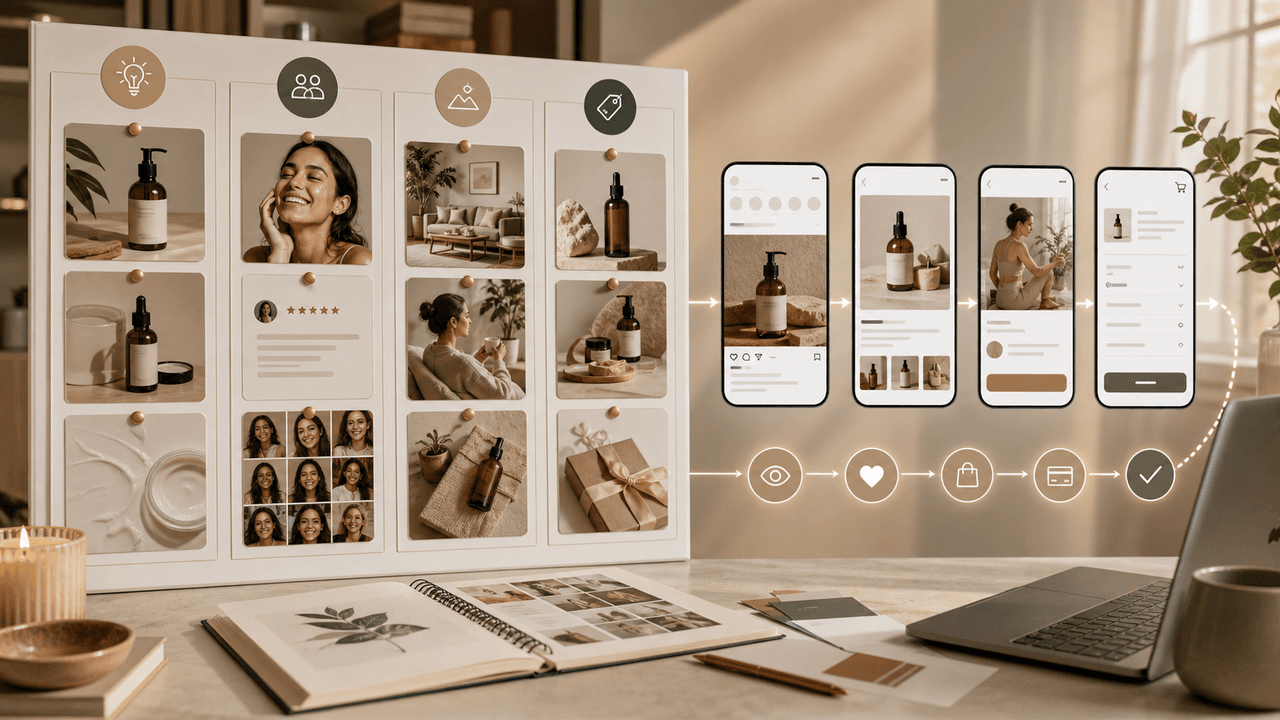
Chapter 1
Why posting without content pillars is costing you sales
Without a content pillar system, most e-commerce brands default to one of two patterns. Either they post product after product in an endless stream of buy-this content that makes their feed feel like a catalog, or they swing the other direction with lifestyle and inspirational content that generates engagement but never converts. Both patterns leave money on the table.
Content pillars solve this by creating a structured framework that ensures your content serves multiple purposes across every week. Each pillar has a specific job: one builds trust, another educates, another sells directly, another entertains, and another deepens the relationship with existing customers. Together, they create a complete customer journey within your Instagram feed.
The brands that grow consistently on Instagram are not necessarily the ones with the best photography or the biggest budgets. They are the ones with a system that ensures they are always publishing the right mix of content. Content pillars are that system.
All-product feeds feel like catalogs and lose followers who are not ready to buy right now
All-lifestyle feeds generate engagement but fail to convert followers into customers
Content pillars ensure every week includes content that sells, educates, entertains, and builds trust
A structured system eliminates the daily what-should-I-post decision that stalls content production
Brands with pillar systems report more consistent engagement and revenue from Instagram
Chapter 2
Pillar 1: Product showcase content (25% of posts)
This is your direct selling content. These carousels put your products front and center with the goal of driving immediate purchase consideration.
Product showcase content includes new arrival announcements, hero product features, bundle promotions, sale announcements, and seasonal product highlights. These carousels are explicitly about your products and are designed to move followers toward a purchase.
The key to product content that performs well is framing. Every product carousel should lead with the benefit or outcome the customer gets, not the product name or feature list. Instead of 'Introducing our new Vitamin C Serum,' lead with 'The 30-second addition to your morning routine that fades dark spots in 14 days.' The product is the same, but the framing speaks to what the buyer actually wants.
Limit product showcase content to about 25 percent of your total posts. More than that and your feed starts to feel like a constant sales pitch. Less than that and you are not giving followers enough opportunities to buy. One in four posts should directly feature a product with a purchase CTA.
- 1
New arrival carousel
Announce new products with a benefit-led hook, lifestyle imagery, feature breakdown, and purchase CTA. Publish within the first week of a product launch for maximum newness appeal.
- 2
Hero product deep dive
A 10-slide carousel going deep on your best-selling product: the problem it solves, key features with benefits, customer testimonial, and a compelling CTA. Publish monthly for your top 3-5 products on rotation.
- 3
Bundle or collection carousel
Present products that work together as a system or collection. Show each item's role, the combined benefit, and bundle pricing with savings. This format directly increases average order value.
- 4
Limited-time offer carousel
Sale announcements, flash deals, and seasonal promotions with clear urgency elements: deadline, limited quantity, or exclusive access. Every slide should reinforce the time-sensitive nature of the offer.
Chapter 3
Pillar 2: Educational content (25% of posts)
Educational content positions your brand as an authority in your category while genuinely helping your audience. These carousels teach skills, share knowledge, and solve problems that are related to but not dependent on your products. The relationship between education and sales is indirect but powerful: people buy from brands they trust, and they trust brands that teach them useful things.
The best educational content for e-commerce sits at the intersection of your product category and your customer's daily life. A skincare brand teaches routines and ingredient science. A kitchen tool brand teaches cooking techniques. A fitness equipment brand teaches workout programming. The education is genuinely useful on its own, and your product naturally fits as the tool that makes it easier.
Structure educational carousels for maximum value density. Each slide should teach one actionable point. Avoid padding with motivational fluff or restating the same idea in different words. A 10-slide educational carousel should give the reader 8-10 specific, useful pieces of information they can act on immediately.
- 1
How-to tutorial carousel
Step-by-step instructions for achieving a specific outcome related to your product category. 'How to build a capsule wardrobe in 5 steps' or 'The beginner's guide to layering skincare products.' Your products can appear as tools but the tutorial works without them.
- 2
Myth-busting carousel
Debunk common misconceptions in your product category. 'Five skincare myths that are actually damaging your skin' or 'Everything you think you know about protein powder is wrong.' Myth-busting content performs well because it creates a surprise pattern that encourages swiping.
- 3
Buyer's guide carousel
Teach customers how to evaluate and choose products in your category. Share the criteria that matter, the red flags to avoid, and what good quality looks like. This positions your brand as transparent and helpful while subtly guiding shoppers toward your product's strengths.
- 4
Industry trend or data carousel
Share relevant industry data, emerging trends, or research findings that your audience would find interesting. Position your brand as the knowledgeable insider that keeps customers informed.
Callout
Education builds the most durable trust
Followers gained through educational content have the highest long-term value because they follow you for your expertise, not just your products. When you launch a new product, these followers are the most likely to buy because they already trust your knowledge.
Chapter 5
Pillar 4: Lifestyle and brand identity content (15% of posts)
Lifestyle content is not about selling products. It is about selling the identity and aspiration your brand represents. These carousels show the world your customers want to live in: the aesthetic, the values, the energy, and the community. This pillar is what transforms a transactional e-commerce account into a brand people identify with.
Lifestyle content should feel aspirational but attainable. It should make the viewer think, I want that life, and then connect the dots to your products as part of achieving it. A fitness brand's lifestyle content shows the energy and confidence of active people. A home decor brand shows the calm and beauty of well-designed spaces. The products appear naturally within these scenes.
This is also where your brand values and personality come through most clearly. If your brand stands for sustainability, lifestyle content might show zero-waste routines. If your brand stands for adventure, it might show travel moments and outdoor experiences. These values create emotional attachment that keeps customers loyal beyond any single product.
- 1
Seasonal lifestyle carousel
Curate 8-10 images that capture the seasonal mood your brand embodies: summer energy, fall coziness, spring freshness. Products appear in the scenes but are not the focus. The lifestyle is the content.
- 2
Day-in-the-life carousel
Follow a customer, founder, or team member through a day that represents your brand's lifestyle. Products appear naturally throughout the routine. This format humanizes the brand and creates aspirational content simultaneously.
- 3
Brand values carousel
Share the principles behind your brand: sourcing practices, sustainability commitments, community involvement, or founder story. This builds emotional connection and differentiates your brand from competitors selling similar products.
- 4
Mood and aesthetic carousel
A purely visual carousel that establishes brand aesthetic: color palette inspiration, texture and material close-ups, or curated scenes that evoke the brand's emotional territory. Minimal text, maximum mood.
Chapter 6
Pillar 5: Engagement and community content (15% of posts)
Engagement content is designed primarily to start conversations, encourage interaction, and make your audience feel like they are part of a community rather than a marketing funnel. This pillar directly impacts your algorithmic reach because Instagram prioritizes content that generates comments, shares, and saves.
The most effective engagement content asks for participation. Polls, this-or-that comparisons, caption-this challenges, and opinion questions all invite your audience to contribute rather than passively consume. Each comment boosts the carousel's visibility in the algorithm, which in turn increases reach for your product and educational content.
Engagement content also serves as market research. When you post a this-or-that carousel between two product variations, the comments tell you which one your audience prefers. When you ask what problem your audience struggles with most, the answers inform your next educational carousel. This pillar feeds intelligence back into every other pillar.
- 1
This-or-that carousel
Present two options on each slide and ask the audience to choose in the comments. Options can be product variations, style preferences, or lifestyle choices related to your brand. This format consistently generates high comment counts.
- 2
Poll and question carousel
Ask your audience a series of questions related to your product category. Each slide is a different question. Prompt answers in the comments. Use the responses to inform future product development and content creation.
- 3
Challenge or prompt carousel
Issue a challenge related to your brand: a 7-day routine, a styling challenge, or a goal-setting prompt. Each slide outlines one day or step. Encourage followers to share their progress and tag the brand.
- 4
Community spotlight carousel
Feature community members, loyal customers, or brand ambassadors with their permission. Highlight their story, their use of your products, and why they are part of the community. This makes the featured person feel valued and motivates others to engage.
Chapter 7
Putting the pillars together: your weekly content calendar
Here is how the five-pillar framework translates into a realistic weekly posting schedule for an e-commerce brand publishing four to five times per week.
The percentages for each pillar are guidelines, not rigid rules. The exact mix will vary by week depending on product launches, seasonal campaigns, and your available UGC. What matters is that over any two-week period, all five pillars are represented. No pillar should go dormant for more than a week.
Start by mapping your week against the pillar percentages. If you post five times per week, a typical week might include one product carousel, one educational carousel, one social proof carousel, one lifestyle carousel, and one engagement carousel. If you post four times, combine engagement elements into other pillars or alternate weeks.
- 1
Monday: Educational carousel
Start the week with value-first content that attracts new followers and builds authority. Educational carousels have high Explore potential and set a helpful, non-salesy tone for the week.
- 2
Tuesday: Social proof carousel
Follow education with customer proof. After learning something useful from your brand, seeing that real customers love your products creates a powerful trust sequence.
- 3
Wednesday: Product showcase carousel
Mid-week is prime purchasing time. Feature a product with a clear CTA. The educational and proof content earlier in the week has warmed the audience for this direct selling moment.
- 4
Thursday: Engagement carousel
Drive conversation and comments to boost your account's algorithmic standing. Use a this-or-that format, a question prompt, or a community challenge.
- 5
Friday: Lifestyle carousel
Close the week with aspirational brand content. Lifestyle carousels perform well on weekends when browsing behavior is more leisurely and emotional.
Callout
The pillar system makes content planning effortless
With five defined pillars, you never have to wonder what to post. Each day's content type is pre-determined. Your only decision is which specific topic or product to feature within that pillar. This eliminates decision fatigue and makes batch production straightforward.
Chapter 8
Adapting pillar ratios for launches, seasons, and growth phases
The default 25-25-20-15-15 ratio is your baseline, but smart brands adjust the mix based on their current business priority. During a product launch, shift more weight toward product and social proof pillars. During a brand-building phase, emphasize education and lifestyle. During holiday selling seasons, increase product and engagement content to maximize conversions.
The key is to make temporary adjustments, not permanent shifts. After a product launch week where 40 percent of your content was product-focused, swing back to the baseline the following week. If your educational content has been performing exceptionally well, temporarily increase it to 30 percent and reduce lifestyle content. Always return to the baseline within two weeks.
Track which pillar mix generates the best results for your specific brand. Some audiences respond more to educational content and tolerate less product content. Others are deal-driven and want more product showcases. Your analytics will tell you your ideal custom ratio, but the five-pillar structure ensures you are never too far from a balanced approach.
Product launch weeks: increase product and social proof to 35-30%, reduce lifestyle and engagement
Holiday selling seasons: increase product and engagement, maintain social proof, reduce education
Brand-building phases: increase education and lifestyle, maintain social proof, reduce product
Post-launch weeks: swing back toward education and engagement to avoid feed fatigue
Always return to baseline ratios within two weeks of any temporary adjustment
Track revenue by pillar to discover your brand-specific optimal content mix
Chapter 9
Batch-producing a full week of pillar-based content in one session
The five-pillar framework makes batch production dramatically easier because each day's content type is predetermined. Instead of starting each production session by deciding what to create, you already know: one educational carousel, one product carousel, one social proof carousel, one lifestyle carousel, and one engagement carousel.
Organize your batch session by pillar, not by day. Write all educational content first, then all product content, then curate social proof, and so on. Grouping similar creative tasks together keeps you in the right mindset and produces more consistent quality than switching between content types.
With tools like AttentionClaw, the design and assembly phase becomes the fastest part of the session. Once your brand style is defined, generate carousel designs from your copy and product details. Review, adjust where needed, and schedule. A full week of five pillar-based carousels can be produced in a single focused session.
- 1
Session block 1: Planning (15 minutes)
Open your content calendar and assign a specific topic or product to each pillar for the week. Reference your content bank for educational topics, your UGC library for social proof, and your product calendar for showcases.
- 2
Session block 2: Copy writing (45 minutes)
Write the slide-by-slide copy for all five carousels. Start with the educational carousel (requires the most writing), then product, engagement, and lifestyle. Social proof copy is usually just customer quotes with minimal additions.
- 3
Session block 3: Design and assembly (30-45 minutes)
Using your carousel templates or an AI tool, generate the visual designs for all five carousels. Drop in photography, apply brand styling, and export. With consistent templates, this step is mostly mechanical.
- 4
Session block 4: Review and schedule (15 minutes)
Review each carousel from a follower's perspective. Check hooks, flow, and CTAs. Schedule everything for the week with captions and hashtags prepared. Total session time: approximately 2 hours.
Chapter 10
Measuring which pillars drive the most revenue and growth
Each pillar serves a different function, so each should be measured on different metrics. Judging educational content by direct sales is like judging a billboard by in-store purchases. The relationship is real but indirect. Using the right metrics for each pillar gives you an accurate picture of what is working.
Product content should be measured on link clicks, attributed revenue, and conversion rate. Educational content should be measured on saves, shares, new followers gained, and Explore impressions. Social proof should be measured on engagement rate and the conversion rate of users who interact with it. Lifestyle content should be measured on follower growth and profile visit rate. Engagement content should be measured on comment count, share rate, and the lift it creates for surrounding posts.
Review pillar performance monthly. Look for patterns: is one pillar consistently underperforming its benchmarks? That is a signal to refresh the format, not to eliminate the pillar. Are two pillars overlapping in content style? That is a signal to differentiate them more clearly. The framework is designed to be tuned based on data, not followed blindly.
Product pillar: link clicks, attributed revenue, conversion rate
Education pillar: saves, shares, new followers, Explore impressions
Social proof pillar: engagement rate, influence on conversion rate
Lifestyle pillar: follower growth rate, profile visit rate, brand sentiment
Engagement pillar: comment count, share rate, algorithmic lift for surrounding posts
Review pillar performance monthly and adjust formats, not the pillar system itself
Next step
Produce a full week of pillar-based carousels in under two hours
AttentionClaw generates brand-consistent Instagram carousels and TikTok slideshows from your content ideas. Define your brand style once, then produce every content pillar at scale.
Common Questions
FAQ
More Reading
Keep reading
8-chapter read
Toy Store Gift Guide Instagram Carousels
Toy store gift guide carousels should group products by age, interest, budget, and safety notes while keeping reviews, inventory, and product claims accurate.
8-chapter read
Carousel Slide Order That Converts: Hook, Proof, Offer, CTA
A converting carousel usually follows a clear order: hook, context, problem, solution or product, proof, objection handling, offer, and CTA. The exact slide count can change, but the reader should never wonder why the next slide exists.

Choose Content Pillars Your Team Can Actually Support
An Instagram content pillar is a durable editorial promise to a defined audience, supported by evidence your team can keep producing. It is not a mandatory posting ratio, a list of formats, or an SEO topic cluster. Use the worksheet in this guide to decide which themes deserve recurring coverage and which should remain occasional.
10-chapter read
Product Launch Social Checklist for Shopify Brands
A Shopify product launch social checklist should connect store readiness with social creative: product page accuracy, product media, launch offer, audience segments, teaser posts, proof posts, carousel scripts, TikTok slideshows, claim review, destination links, UTM tracking, and post-launch learning.
Four Product Carousel Formats Built Around Evidence
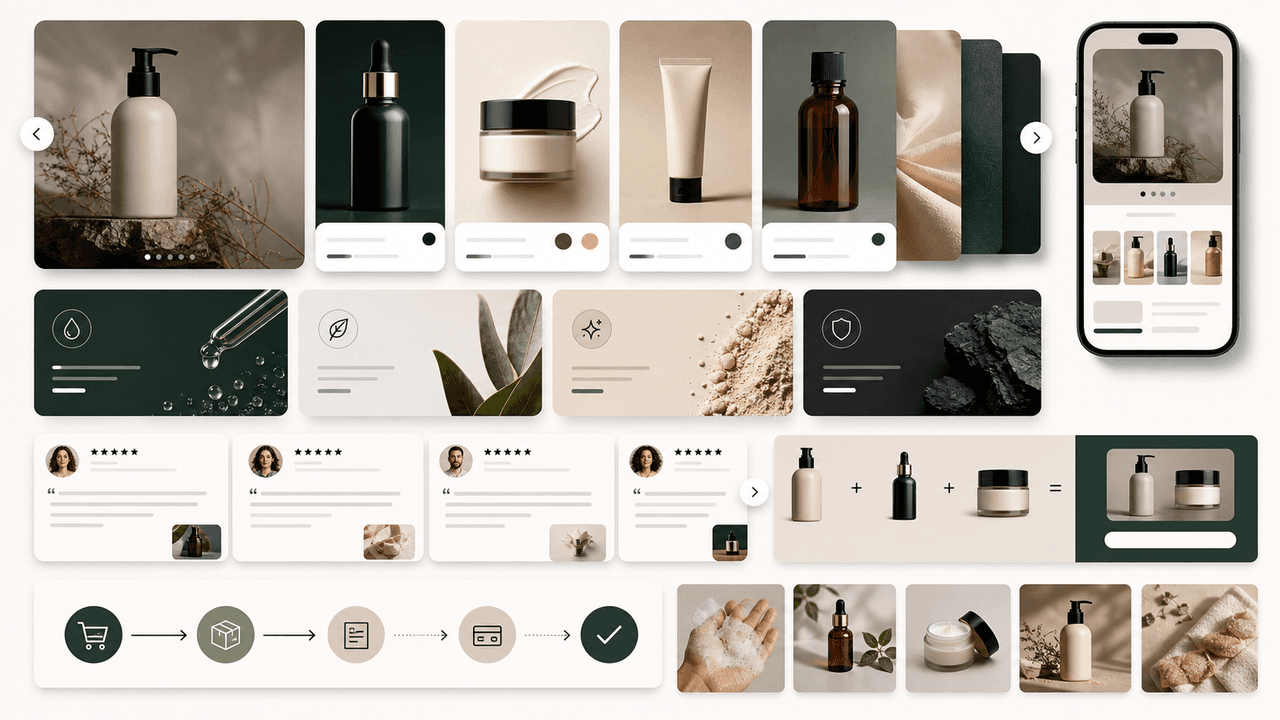
The best ecommerce carousel template depends on the buyer question and the evidence available. These four formats organize approved product details, media, comparison facts, bundle contents, and use cases into reviewable slide sequences without promising that a template will generate sales.
Turn Product Benefits Into a Week of Social Posts
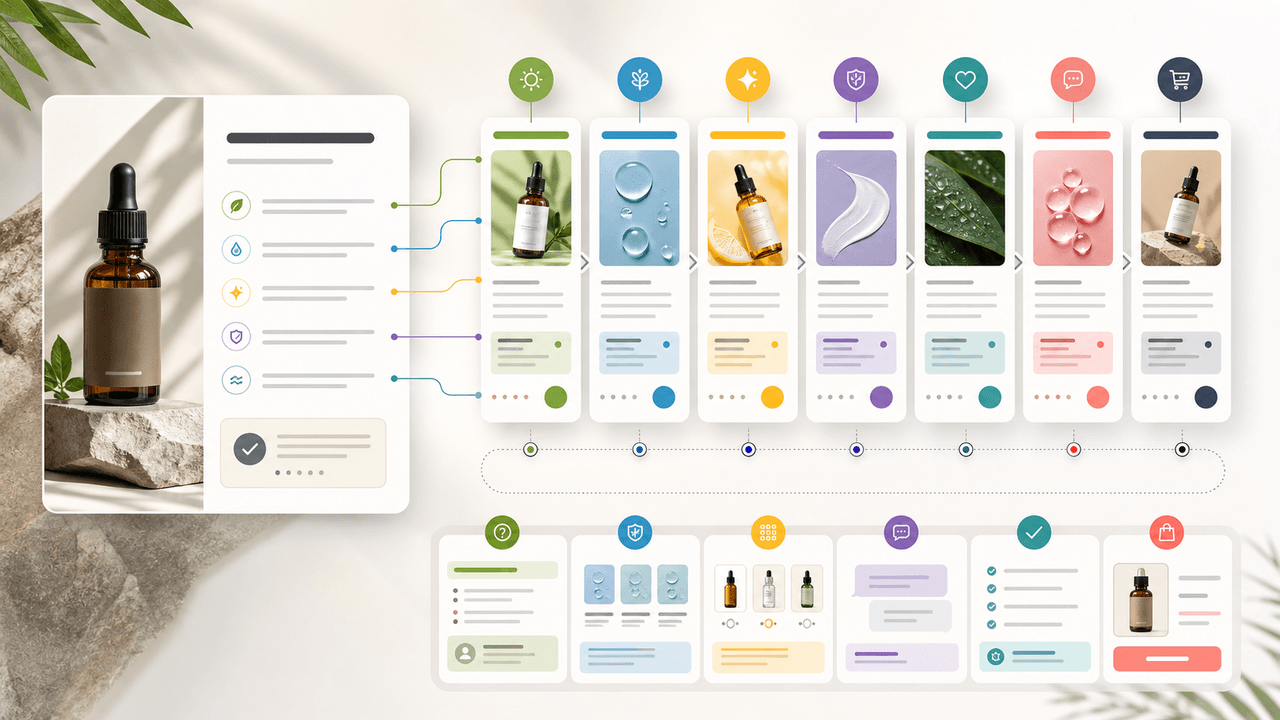
A product benefit list can become a full week of social posts when each post answers a different buyer question: what it does, who it is for, how it works, what proof supports it, what objection it answers, how to choose a variant, and what to do next.
Seasonal Carousel Campaigns for E-Commerce: A Year-Round Playbook
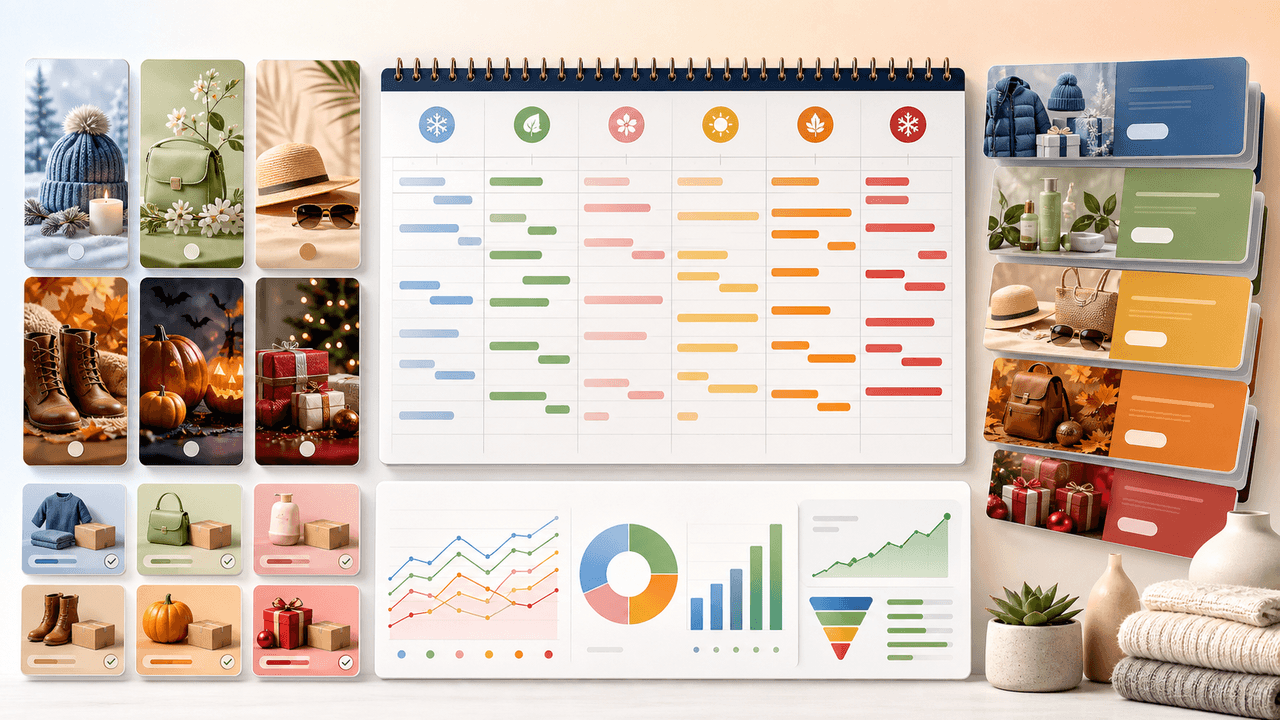
E-commerce brands that plan seasonal carousel campaigns in advance outsell reactive competitors by a wide margin. This playbook covers every major selling season with specific carousel formats, timelines, and content strategies that drive revenue year-round.
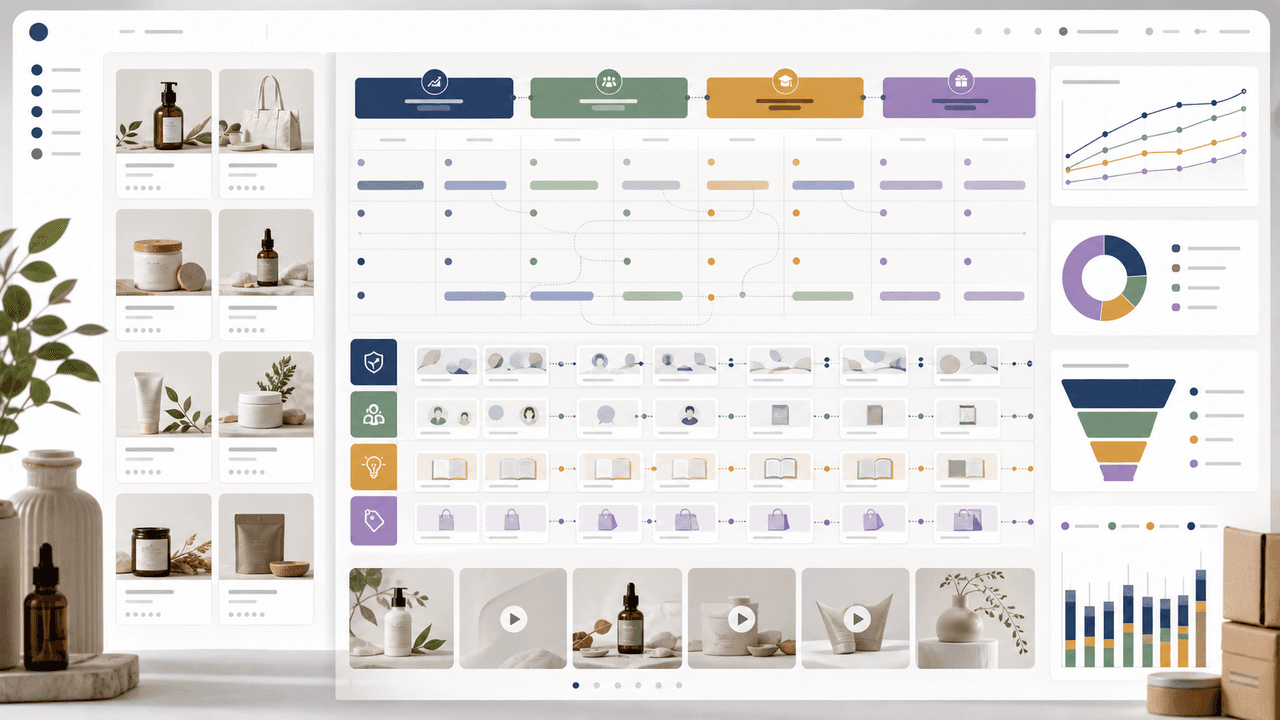
30-Day Social Content System for Shopify and DTC Brands
A 30-day Shopify social content system should turn products, objections, proof, education, and offers into a repeatable calendar. Plan four weekly arcs, batch creative by content job, repurpose each product angle across Instagram carousels and TikTok slideshows, then measure buyer actions instead of only engagement.

UGC Carousels for E-Commerce: Turn Customer Photos Into Your Best Sales Tool
User-generated content converts at 4-5 times the rate of brand-produced content, but most e-commerce brands either ignore UGC or use it poorly. Repurposing customer photos into structured carousel formats turns scattered social proof into your highest-performing sales asset.

Optimize the post you can observe—not a secret algorithm
There is no defensible universal weight chart for Instagram carousel distribution. Check recommendation eligibility, make the content useful and original, and use a controlled ledger to learn from the metrics available in your professional account.
Written by
AttentionClaw
Editorial Team
Editorial context
Part of the Content Planning topic cluster. Last updated June 22, 2026.