Chapter 1
The short answer: retarget by hesitation, not by generic reminder
A retargeting content system is a set of carousel, slideshow, and static ad sequences mapped to specific audience behaviors and buying hesitations. Product-page viewers may need proof. Cart abandoners may need offer clarity or risk reversal. App store visitors may need a first-action demo. Demo-page visitors may need a sharper use-case explanation.
Meta's website custom audience documentation describes using website visitor data to create audiences for ads, while TikTok's website traffic audience documentation describes audiences based on visits or specific website actions. Those audience tools are only half the system. The other half is content that matches what the audience did and what they likely still need.
For AttentionClaw teams, retargeting should be planned during the first creative batch. Every prospecting angle should have a follow-up angle: if the first ad sold the problem, retarget with proof; if it sold the product, retarget with objection handling; if it sold the offer, retarget with urgency or comparison.
Do not retarget every warm visitor with the same generic product ad.
Segment by behavior: viewed page, watched content, engaged with post, added to cart, started checkout, joined waitlist, or visited pricing.
Map behavior to content job: proof, objection, comparison, offer, urgency, use case, or reminder.
Use carousel and slideshow sequences to answer multiple objections in order.
Track retargeting separately from prospecting so warm-audience creative gets its own learning loop.
Callout
Retargeting rule
The warmer the audience, the more specific the creative should become.
Chapter 2
Start with an audience-to-hesitation map
Retargeting is often set up as a technical audience before it is planned as a content strategy. That creates the common `all visitors, all ads` problem. A better system starts with behavior and asks what that behavior suggests.
Someone who viewed a product page and left may not understand fit, price, proof, shipping, variant, or difference from alternatives. Someone who added to cart and left may need reassurance about returns, delivery, discount timing, or trust. Someone who visited a pricing page may need proof that the result is worth the cost.
The audience-to-hesitation map does not need to be perfect. It just needs to be more useful than treating every warm person the same. Over time, conversion data and comments will reveal which hesitation was most important.
- 1
Page viewer
Likely hesitation: unclear fit or value. Content job: product education, use cases, detail proof, or comparison.
- 2
Engaged social viewer
Likely hesitation: interest without product understanding. Content job: explain what the product does and who it is for.
- 3
Add-to-cart visitor
Likely hesitation: price, shipping, trust, timing, or final risk. Content job: guarantee, reviews, offer clarity, bundle value, or deadline.
- 4
Pricing or demo visitor
Likely hesitation: proof, internal justification, workflow fit, or urgency. Content job: case-style proof, objection handling, and next-step clarity.
- 5
Customer or subscriber
Likely opportunity: expansion, repeat purchase, referral, or feature adoption. Content job: education, cross-sell, new use case, or upgrade path.
Chapter 3
Create five retargeting content lanes
Retargeting creative should be modular. Instead of making one warm-audience ad and hoping it works, create five lanes that answer different reasons for hesitation. This gives the media buyer and content team a shared menu.
The lanes are proof, objection, comparison, offer, and education. Each lane can be built as a carousel or TikTok slideshow because warm audiences often need more than one frame of information. The sequence lets you show the claim, support it, answer doubt, and close with the right next step.
Use different lanes at different audience depths. Product education is useful for page viewers. Objection and proof are useful for high-intent visitors. Offer and urgency are useful when the user has shown purchase behavior but not completed.
- 1
Proof lane
Reviews, before-after, product detail, usage demo, app screenshot, customer quote, benchmark, or behind-the-scenes process. Use when trust is the missing piece.
- 2
Objection lane
Return policy, setup time, product fit, ingredient concern, compatibility, shipping, learning curve, or price explanation. Use when hesitation is predictable.
- 3
Comparison lane
Old way versus new way, single product versus bundle, manual process versus workflow, generic page versus matched page. Use when the buyer needs a decision rule.
- 4
Offer lane
Bundle value, first-order incentive, trial, bonus, free gift, deadline, preorder, or seasonal drop. Use when the buyer understands the product but needs a reason to act.
- 5
Education lane
How to use the product, first successful app action, routine order, feature walkthrough, or product category lesson. Use when a visitor showed interest but may not understand the path to value.
Chapter 4
Carousel and slideshow structures for warm audiences
Warm audiences do not need the same opening as cold audiences. They may already recognize the brand or product. The first slide can be more direct: `Still comparing travel kits? Check the size difference.` or `Before you leave the cart, here is the return policy in plain English.`
Meta carousel ads can carry multiple cards with their own headlines and CTAs, while TikTok carousel ads allow ordered image swipes. Use that sequence to answer a chain of buyer questions. A retargeting carousel should feel like a helpful follow-up, not a repetition of the first pitch.
The best structure depends on the audience behavior. Product-page viewers need education. Cart abandoners need reassurance. App store visitors need outcome proof. Demo-page visitors need use-case specificity.
Product-page viewer carousel: product reminder, use case, detail proof, review, objection, CTA.
Cart abandoner carousel: item reminder, offer terms, shipping or return reassurance, social proof, deadline, CTA.
App visitor slideshow: problem reminder, first-action demo, screenshot proof, review, install CTA.
SaaS pricing visitor carousel: workflow pain, feature proof, role-specific result, objection, demo CTA.
Customer retargeting carousel: new use case, benefit, example, upgrade or repeat-purchase CTA.
Chapter 5
Plan rotation before fatigue shows up
Retargeting audiences are smaller than prospecting audiences, so fatigue arrives faster. If the same person sees the same reminder ad ten times, the creative becomes background noise or annoyance. Build rotation into the content system from the start.
A useful rotation has at least three active lanes: proof, objection, and offer. Rotate lanes by behavior and time since visit. In the first 24 to 72 hours, use direct continuation from the page or cart. After that, shift to proof and education. For longer windows, use new content, seasonal angles, or different use cases.
Do not solve fatigue by adding random new creative. Add creative that answers a different hesitation. If the proof lane is tired, create a stronger proof format. If the offer lane is tired, review whether the offer itself is weak before making more discount graphics.
- 1
0 to 3 days
Use direct continuation: cart reminder, viewed product proof, app install prompt, demo follow-up, or exact offer clarification.
- 2
4 to 14 days
Use proof and objection content: reviews, comparisons, guarantees, detailed demo, routine education, or compatibility answers.
- 3
15 to 30 days
Use refreshed angles: seasonal use case, new bundle, customer story, product education, or different offer framing.
- 4
Customers
Use adoption, replenishment, cross-sell, referral, or upgrade content instead of acquisition reminders.
Chapter 6
Measure retargeting creative separately from prospecting
Retargeting has different economics and different intent. Do not average its click-through rate, cost per purchase, or conversion rate with cold traffic and call that a creative result. Warm audiences should be segmented in reporting.
Use separate UTMs, campaign names, or ad set names for retargeting content. The creative name should include the audience behavior and content lane: `meta_carousel_cart_objection_return_policy_v1` or `tiktok_slideshow_viewed_product_proof_reviews_v2`. This makes the weekly review understandable.
The most useful retargeting report asks which hesitation was solved. Did proof beat discount? Did comparison beat reminder? Did education beat urgency? Those answers improve future prospecting creative too because they reveal what buyers needed before converting.
Track by audience behavior: page view, product view, add-to-cart, checkout start, app store tap, demo visit, or customer.
Track by content lane: proof, objection, comparison, offer, education, or reminder.
Review conversion quality, not only click-through rate.
Watch frequency and creative fatigue alongside conversion rate.
Promote winning retargeting objections into prospecting FAQs and landing-page sections.
Chapter 7
Keep retargeting useful, specific, and respectful
Retargeting should feel relevant, not invasive. Avoid copy that says or implies you are watching an individual. `Still thinking about the blue serum?` can feel uncomfortable. `A quick guide to choosing the right serum size` is more useful and less creepy.
Use audience behavior to choose helpful content, not to write surveillance-flavored copy. A product-page visitor can receive product education. A cart abandoner can receive offer clarity. A pricing-page visitor can receive proof. The ad does not need to reveal why the person is seeing it.
Platform audience tools and privacy rules change over time, so retargeting plans should be checked against current ad account settings, consent implementation, and regional requirements before launch. This article covers content strategy, not legal compliance.
Do not write copy that identifies the user's exact behavior in a creepy way.
Do not overuse urgency for low-intent visitors.
Do not retarget customers with acquisition discounts that undermine trust.
Do not use sensitive attributes or unsupported assumptions in creative.
Do not let audience setup outrun consent, pixel, or analytics review.
Chapter 8
How AttentionClaw supports a retargeting content system
AttentionClaw can turn one prospecting campaign into a structured follow-up library. Start with the winning prospecting angle, then generate retargeting sequences for proof, objection, comparison, offer, and education. Each sequence should use the same product identity, brand style, CTA rules, and naming convention.
This is especially useful for teams with many products, app features, or client accounts. Instead of manually rebuilding warm-audience creative from scratch, the team can produce controlled variants from a brief and spend human review time on accuracy, offer fit, and destination match.
The result is not more ads for the sake of volume. It is a warmer, more coherent path from first attention to final decision.
Callout
Build a structured follow-up library from one campaign
Use AttentionClaw to generate retargeting carousels and TikTok slideshows by audience behavior and content lane, so warm traffic gets the proof or objection answer it needs.
Next step
Build retargeting creative by audience behavior
AttentionClaw helps teams turn one paid social campaign into proof, objection, offer, and education variants for warm audiences.
Common Questions
FAQ
More Reading
Keep reading
8-chapter read
TikTok Slideshow Retargeting Creative Framework
TikTok retargeting slideshows should move warmer viewers from curiosity to decision by answering the specific concern that likely stopped them: proof, price, setup, fit, shipping, trust, or next step.
7-chapter read
Instagram Carousel Retargeting Creative Framework
Instagram carousel retargeting creative should answer the next objection after someone already showed interest. Use proof, comparison, FAQ, offer, setup, or product-detail sequences instead of repeating the cold hook.
7-chapter read
Prospecting vs Retargeting Carousel Creative: What to Change
Prospecting carousel creative earns first attention and explains the buying problem. Retargeting carousel creative assumes some awareness and answers the next hesitation: proof, objection, offer, setup, or urgency.
8-chapter read
Paid Social UTM Naming Convention for Meta and TikTok Creative
A useful paid social UTM convention makes every click traceable to platform, medium, campaign, audience, offer, creative angle, and destination without turning reports into unreadable code.
7-chapter read
Instagram Carousel Ads for App Install Campaigns
Instagram carousel ads can drive better app install intent when each card explains one user job, shows the app doing real work, and hands off to a store or landing page that repeats the same promise.
9-chapter read
Paid Social Creative Brief Template for Carousel and Slideshow Ads
A paid social creative brief should define the buyer, offer, hook family, proof, slide sequence, destination, tracking, and review gate before any carousel or TikTok slideshow is generated.
7-chapter read
Offer-Specific Content Systems for Paid Social Creative
Paid social content converts better when it is built around one offer, one audience state, and one next step. An offer-specific system turns the same product into different creative for trials, bundles, launches, waitlists, demos, discounts, and education.
8-chapter read
Landing Page Handoff for Paid Social Creative
A paid social landing-page handoff works when the page continues the same promise, product, proof, and offer that earned the click. The ad should not send people to a generic page and force them to restart the buying decision.
7-chapter read
Campaign Source Tracking for Social Carousels and Slideshow Ads
Carousel and slideshow measurement breaks when every post uses the same link, vague campaign names, or platform-only reporting. Use UTMs, creative IDs, landing-page variants, and a naming convention that lets the team connect hook, offer, audience, and destination.
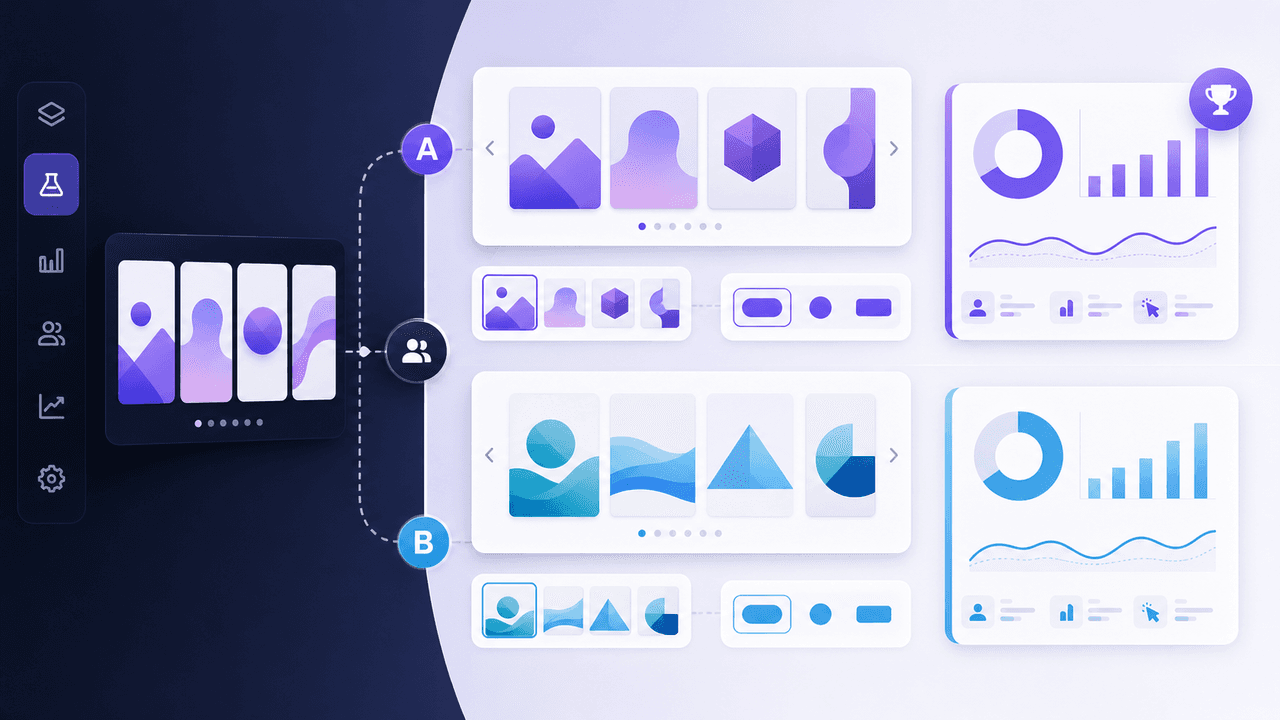
Carousel A/B Testing: How to Systematically Improve Every Post
Most creators improve their carousels through intuition and guesswork. A systematic A/B testing framework removes the guessing and tells you exactly what works for your specific audience — one variable at a time.
Sources
- Learn about website custom audiences — Meta Business Help Center
- About Website Traffic Audience — TikTok Ads Manager
- About Custom Audiences — TikTok Ads Manager
- About Carousel Ads — Meta Business Help Center
Written by
AttentionClaw
Editorial Team
Editorial context
Part of the Content Planning topic cluster. Last updated June 22, 2026.