Chapter 1
The direct answer: show the inspection reason and the booking path
An auto repair seasonal maintenance TikTok slideshow should show one seasonal risk, the visual signs drivers can understand, what the shop checks, why timing matters, and how to book. The post should educate without pretending a slideshow can diagnose a vehicle.
NHTSA summer road safety guidance notes that regular maintenance such as tune-ups, oil changes, battery checks, and tire rotations can help prevent breakdowns. Auto shops can turn that practical reminder into visual seasonal content.
TikTok slideshows are useful because the shop can use real inspection photos: tires, battery terminals, filters, wipers, coolant, lights, brake wear, and dashboard warnings. Each image gets one simple explanation and one next step.
Callout
Auto shop content rule
Do not diagnose a viewer's car from a post. Show common seasonal checks and route drivers to a real inspection.
Chapter 2
Build campaigns around seasonal driving moments
Auto repair content becomes more searchable and useful when it ties maintenance to a recognizable moment. 'Summer road trip check' is clearer than 'car tips.' 'Before the first freeze' is clearer than 'winter maintenance.'
Each season should have its own slideshow lane. The images, urgency, and CTA change with weather, road conditions, and driver behavior.
Local climate matters. A shop in Arizona will emphasize heat, battery strain, tires, and AC. A shop in Minnesota will emphasize cold starts, tires, wipers, battery, and fluids. A coastal shop may include corrosion and hurricane prep.
Summer road trip inspection.
Winter cold-start and tire check.
Back-to-school commute check.
Holiday travel maintenance reminder.
Rainy-season wiper and tire tread guide.
Pre-vacation dashboard warning checklist.
Fleet or work-truck seasonal check.
Used-car inspection before buying season.
Chapter 3
Use a six-slide maintenance slideshow
The slideshow should be simple enough for a service advisor to draft and accurate enough for a technician to approve. Use one maintenance theme per post.
Keep photos clear and non-alarming. Show examples and explain that each vehicle needs proper inspection. Avoid fear-based claims that exaggerate risk or imply every viewer has the same problem.
The final slide should make booking easy: call, schedule online, request inspection, or send vehicle information if the shop supports that workflow.
- 1
Slide 1: seasonal hook
Name the driving moment, such as summer trip, first freeze, school commute, or rainy season.
- 2
Slide 2: visible issue
Show tire tread, wiper wear, dirty filter, corrosion, low fluid, or warning light context.
- 3
Slide 3: why it matters
Explain the practical risk in plain language without diagnosing the viewer's vehicle.
- 4
Slide 4: what the shop checks
List inspection points the shop actually performs for that service.
- 5
Slide 5: when to book
Connect timing to trips, weather, mileage, symptoms, or manufacturer recommendations.
- 6
Slide 6: CTA
Book a seasonal check, call the shop, or use the online appointment link.
Chapter 4
Capture shop photos that drivers understand
A mechanic can see a problem instantly, but a driver may need context. Capture photos that compare normal versus worn where appropriate, show scale, and avoid identifiable customer information.
Google Business Profile photo guidance supports showing products and services to help customers understand a business. Auto shops can use exterior, bays, tools, technician process, and completed service photos across local search and social channels.
Always remove license plates, VINs, customer paperwork, addresses, and faces unless there is explicit approval. Trust can be damaged quickly if a shop uses a customer's vehicle carelessly for content.
Close-up of tire tread with safe context.
Worn versus new wiper blade.
Dirty versus clean cabin air filter.
Battery corrosion example.
Dashboard warning symbol explainer graphic.
Technician inspection checklist photo.
Service bay or front desk booking photo.
Chapter 5
Educate without scare tactics
Drivers are sensitive to repair trust. A seasonal slideshow should make the shop feel transparent, not manipulative. Use clear language about inspection, symptoms, and appointment timing.
If the shop uses customer reviews, follow FTC endorsement principles: reviews should be honest, not misleading, and not edited into claims the customer did not make.
Avoid showing extreme failures as if they are common unless the post clearly frames them as unusual. Content that creates panic may drive calls, but it can also reduce long-term trust.
Use 'have it inspected' instead of 'you definitely need this repair.'
Explain what affects price instead of quoting universal prices.
Use technician-reviewed language.
Do not imply every car needs the same service.
Keep customer photos private unless approved.
Chapter 6
How AttentionClaw helps auto shops turn inspections into content
AttentionClaw helps auto shops turn technician notes, inspection photos, seasonal reminders, and approved service language into TikTok slideshows and Instagram carousels.
The shop can keep templates for summer road trip, winter prep, tire check, battery check, wiper check, dashboard warning, and used-car inspection. Each template asks for one approved CTA and one inspection disclaimer.
This lets the shop publish educational content without asking technicians to become daily video creators. Technicians review facts; AttentionClaw handles structure.
Callout
Shop workflow
Select seasonal theme, gather approved inspection photos, confirm service language, generate slides, review privacy and claims, publish, then track bookings.
Chapter 7
Measure appointments, calls, saves, and better repair conversations
The best auto repair slideshow metrics are appointment bookings, phone calls, quote form submissions, saves on checklist posts, and more informed customer conversations.
Track by seasonal theme. If winter battery posts drive bookings earlier, keep them. If warning-light explainers create too many broad DMs, adjust the CTA to ask drivers to schedule diagnostics.
Use front desk feedback. If callers reference a specific post, record it. If posts generate confusion about pricing or diagnosis, rewrite the next carousel with clearer boundaries.
Track appointment source by seasonal campaign.
Track saves on maintenance checklist posts.
Track calls after local weather changes.
Track which service questions come from TikTok or Instagram.
Track no-show and wrong-service bookings to improve CTAs.
Chapter 8
A Visual Inspection Guide Drivers Can Actually Use in the Parking Lot
The most shareable auto repair slideshow content is not shop-floor footage or a list of services — it is a visual inspection walkthrough that gives drivers something specific to check before they call. This content works because it is immediately actionable, demonstrating competence without requiring a visit, and it tends to generate responses from drivers who recognize what they're seeing in their own car.
A practical parking-lot inspection slide sequence might cover: tire tread depth using the coin test (a single clear image demonstrates the method faster than any explanation), the look of a tire sidewall bulge versus normal wear, a check under the car for active drips after the car has been parked for a few minutes, and a windshield wiper smear test in the driveway. Each of these is safe for a driver to perform, visually distinctive, and tied to a service that the shop provides.
The key to making this content drive bookings rather than replacing them is to show the driver what to look for and then be clear about what the next step is when they find it. 'If your tread depth is at or below this point, bring it in before your road trip' closes the loop from education to action without pressure.
Chapter 9
Turning Slideshow Saves Into Appointment Calls: What to Say When They Reach Out
A seasonal maintenance slideshow that works will generate inbound messages and calls from drivers who recognized something in their own car. The transition from 'I saw your TikTok' to a booked appointment depends on the first 30 seconds of that conversation — and most shops handle it inconsistently because there's no standard approach for social-originated leads.
A useful starting script acknowledges the connection immediately: 'Thanks for reaching out — did you see something on the car that matched what we showed?' This question validates the driver's concern, confirms which specific item prompted the call, and lets the service advisor move directly to a relevant question rather than a generic intake flow. A driver who says 'my tire looked like the one in your video' is already halfway through the diagnostic conversation.
The booking call should end with a confirmed appointment and a brief note about what the driver mentioned noticing. This note is useful for the technician and also signals to the customer that their call was treated as a real service inquiry, not a vague 'maybe we should look at it.' Drivers who feel heard at the first contact are more likely to return for future service.
Callout
Front desk tip for social-originated calls
When a caller mentions your TikTok or Instagram, log it in the appointment note. Over a season, this data tells you which specific slideshow topics generated the most appointment calls — which is more useful than likes or saves alone.
Next step
Turn inspection photos into booking content
AttentionClaw helps auto repair shops convert technician notes, seasonal reminders, and approved inspection photos into TikTok slideshows and Instagram carousels.
Common Questions
FAQ
More Reading
Keep reading
11-chapter read
Auto Repair Road Trip Checklist TikTok Slideshows
Auto repair road trip slideshows should turn seasonal travel anxiety into a clear inspection checklist, service appointment CTA, and safety-aware maintenance message.
9-chapter read
Mobile Mechanic Diagnostic TikTok Slideshows: Turn Car Trouble Into Booked Calls
Mobile mechanic diagnostic slideshows should help drivers document symptoms, warning lights, sounds, location, and safety concerns before booking without turning the post into unsafe repair advice.
9-chapter read
Auto Detailing Booking TikTok Slideshows: Turn Before-After Proof Into Appointments
Auto detailing booking slideshows should show packages, vehicle condition, process steps, safe expectations, and appointment CTAs without overpromising impossible results.
9-chapter read
Appliance Repair Diagnostic TikTok Slideshows: Get Better Service Calls
Appliance repair diagnostic slideshows should help homeowners document model numbers, symptoms, sounds, leaks, and safety issues before booking without teaching risky electrical or gas repairs.
8-chapter read
Carousel Slide Order That Converts: Hook, Proof, Offer, CTA
A converting carousel usually follows a clear order: hook, context, problem, solution or product, proof, objection handling, offer, and CTA. The exact slide count can change, but the reader should never wonder why the next slide exists.
8-chapter read
Home Services Seasonal Maintenance Content Calendar: Book Preventive Work
Seasonal maintenance content helps home service companies book preventive work before emergencies happen. Use weather-aware checklists, HVAC filter reminders, water and mold prevention posts, storm prep, and local booking CTAs to turn useful education into service demand.
8-chapter read
Home Services TikTok Slideshow Ideas: Local Posts for Contractors and Repair Pros
Home service businesses can use TikTok slideshows to show before-and-after proof, explain maintenance, answer emergency questions, spotlight local jobs, and turn field photos into useful content. The best posts are specific, visual, local, and tied to a clear call-to-book.
5-chapter read
40 TikTok Slideshow Ideas for Local Service Businesses
Local service businesses should use TikTok slideshows to answer the practical questions customers ask before booking: what the service solves, what it costs, what the process looks like, what results are realistic, and why this local provider is trustworthy.
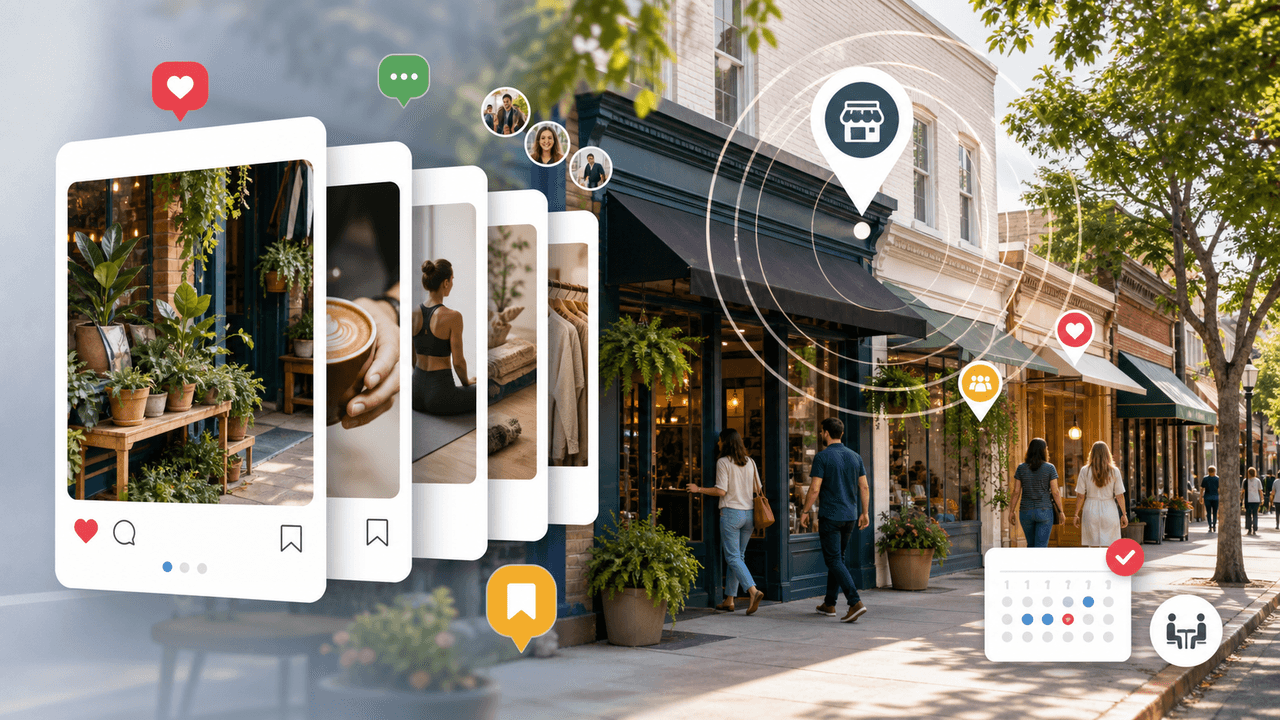
Local Business Instagram Carousels: Drive Foot Traffic Without Paid Ads
Local businesses do not need viral content. They need carousels that reach the right 5,000 people within a ten-mile radius. A local carousel strategy turns your expertise, your team, and your community presence into foot traffic without spending a dollar on ads.
Sources
- Consumer Advisory: NHTSA Offers Summer Safety Road Tips — National Highway Traffic Safety Administration
- TikTok Image Ads: Visual Marketing Solutions to Engage Customers — TikTok For Business
- Manage your Business Profile photos & videos — Google Business Profile Help
- FTC's Endorsement Guides: What People Are Asking — Federal Trade Commission
Written by
AttentionClaw
Editorial Team
Editorial context
Part of the Carousel Creation topic cluster. Last updated June 22, 2026.