Chapter 1
The direct answer: make the service checklist concrete
An auto repair road trip TikTok slideshow should explain which items a shop can inspect before travel, including tires, fluids, brakes, battery, lights, wipers, and manufacturer-recommended maintenance.
NHTSA advises regular maintenance such as tune-ups, oil changes, battery checks, and tire rotations to help prevent breakdowns. It also publishes tire safety guidance for road trips.
The slideshow should not imply that a quick inspection guarantees a breakdown-free trip or replaces manufacturer guidance.
Callout
Auto shop rule
Use the post to drive a preventive maintenance appointment, while keeping safety claims precise and reviewed.
Chapter 2
Build the post from driver questions
Drivers ask whether their tires are safe, whether they need an oil change, whether the battery is weak, whether the brakes should be checked, and what to do before a long highway drive.
Keep one intent per slideshow: pre-trip service. Do not combine road trips, used-car inspections, winter tires, collision repair, and financing in one post.
Tire tread and pressure.
Oil and fluid check.
Battery health.
Brake inspection.
Wipers and lights.
Emergency kit reminder.
Appointment booking CTA.
Chapter 3
Use an eight-slide road trip checklist
- 1
Slide 1: travel hook
Open with a before-you-drive checklist.
- 2
Slide 2: tires
Mention tread, sidewall condition, pressure, and spare tire basics.
- 3
Slide 3: fluids
List oil, coolant, brake fluid, washer fluid, and other reviewed items.
- 4
Slide 4: battery
Invite a battery test before heat, cold, or long mileage.
- 5
Slide 5: brakes
Name brake noises, vibration, and pedal concerns as reasons to book.
- 6
Slide 6: visibility
Check lights, wipers, mirrors, and windshield issues.
- 7
Slide 7: timing
Ask drivers to book before the week of the trip.
- 8
Slide 8: CTA
Send viewers to schedule a road trip inspection.
Chapter 4
How AttentionClaw packages auto repair content
AttentionClaw helps auto shops turn service menus, seasonal reminders, technician notes, appointment links, and safety sources into review-ready TikTok slideshow drafts.
The same workflow can cover seasonal maintenance, tires, brakes, detailing, service reminders, and fleet appointments.
Chapter 5
Measure service demand
Track appointment clicks, calls, DMs, checklist saves, and completed pre-trip inspections.
A strong road trip slideshow should move drivers from vague worry to a booked maintenance check.
Appointment clicks.
Phone calls.
Save rate.
Inspection bookings.
Repair approvals.
Chapter 6
Common mistakes auto shops make with road trip content
The most frequent problem is posting a generic list that mirrors every other shop's pre-trip reminder: oil, tires, fluids, done. That format earns saves but rarely drives appointments because it gives drivers no reason to act today. The post needs a specific seasonal or mileage threshold — 'if your tires haven't been rotated in 5,000 miles before a 700-mile drive' — to connect the checklist to real urgency.
A second mistake is anchoring the post too early in the calendar. A road trip reminder posted five weeks before Memorial Day gets scrolled past and forgotten. One posted eight to twelve days before a peak travel weekend, when drivers are actively planning logistics, generates higher save and click rates because the timing matches the decision window.
The third mistake is burying the booking CTA on the last slide. Many viewers swipe through two or three slides and stop. Place the appointment link or phone number prominently on slides two and three, not only at the end. The CTA slide should match the checklist slide it follows: if slide three covers tire safety, slide four should offer 'Book a tire rotation — spots fill fast before [holiday name].'
Callout
Timing matters more than content perfection
A good-enough post published 10 days before a travel holiday outperforms a polished post published the day before. Build the content in advance and schedule it for the right window.
Chapter 7
A worked slide script for a Memorial Day road trip post
The following example shows how a single seasonal hook turns into a concrete eight-slide script a shop can adapt. Each slide headline is short enough to read in two seconds on a phone screen.
- 1
Slide 1 — Hook
'Planning a long weekend road trip? Your car has a checklist too.' Pair with a photo of a packed car or an empty highway.
- 2
Slide 2 — Tires
'Check tread depth and pressure before you leave. Under-inflated tires reduce fuel economy and grip.' Include your shop's phone number here.
- 3
Slide 3 — Oil and fluids
'If you're within 500 miles of your next oil change, do it before the trip, not after.' List coolant and brake fluid as secondaries.
- 4
Slide 4 — Battery
'Batteries fail most often in heat and at high electrical load. A quick load test takes under five minutes.' Offer a free battery check in the caption.
- 5
Slide 5 — Brakes
'Squealing, grinding, or a soft pedal are not things to diagnose on the highway.' Keep this factual and direct — avoid dramatic language.
- 6
Slide 6 — Belts and hoses
'A broken belt on the road costs far more than a belt replacement in the shop.' One sentence, one fact.
- 7
Slide 7 — AC and cabin filter
'Summer trips mean your AC works hard. A clogged cabin filter reduces airflow and makes the system strain.' Optional slide — include if relevant to your market.
- 8
Slide 8 — CTA
'Book your pre-trip inspection this week — we'll check the full list in under an hour.' Include booking link, address, and hours.
Chapter 8
Turn one seasonal post into a short content series
A single road trip checklist post works, but a three-post series across two weeks builds more appointment intent. The first post (posted ten to twelve days before the holiday) introduces the checklist as a decision tool. The second post (five to seven days out) focuses on one specific item — tires or brakes — and offers a narrow limited-availability angle for the week. The third post (two to three days before the holiday) is a short reminder: 'Still have spots this week before the long weekend.'
This series format works because it meets drivers at different stages of readiness. Some will see post one and book immediately. Others will scroll past until post three reminds them they haven't acted yet. Shops that post only once capture the early planners but miss the procrastinators — typically the larger group.
Each post in the series can reuse slide assets from the original checklist, with only the headline and CTA updated. That keeps production effort low while increasing total reach across the algorithm's distribution window.
Post 1 (Day 1): Full checklist — plant the intent
Post 2 (Day 5–7): One item deep-dive with limited availability angle
Post 3 (Day 9–10): Short urgency reminder with direct booking link
Caption on all three: vary the copy so the algorithm does not treat them as duplicate content
Chapter 9
Clarify what drivers should check themselves versus what belongs in a shop visit
A road trip checklist slideshow is more useful when it separates items a driver can review at home from items that require a lift, professional tools, or a trained eye. Treating everything as a shop task overstates the service need. Treating everything as a DIY task understates it and potentially creates a safety impression the shop cannot support. The clearest approach is a two-category slide: 'Check yourself before you leave' and 'Bring it in for these.'
Items a driver can typically check at home without tools include engine oil level and color on the dipstick, wiper blade condition, tire pressure with a gauge, and washer fluid level. Items that belong in a shop visit include brake pad depth, tire tread wear pattern, battery load test, belt condition, and coolant mixture. This division is not about creating more appointments — it is about being honest about what a driver can and cannot evaluate safely, which builds more trust than a slideshow that implies everything requires a professional.
A slide that shows this division visually — two columns or two distinct sections — gives the viewer a faster scan and a clearer reason to book only what they actually need. Drivers who trust a shop's honest triage recommendations become more consistent long-term customers than those who feel pushed toward unnecessary services.
Callout
Two-column slide format
Left column: 'Check at home' — oil level, tire pressure, wiper blades, washer fluid, lights. Right column: 'Bring it in' — brake pads, tire tread wear pattern, battery load test, belts and hoses, coolant.
Chapter 10
Tailor your checklist content to vehicle age and mileage
A road trip checklist for a three-year-old vehicle with 30,000 miles has different priorities than one for a ten-year-old vehicle with 130,000 miles. A slideshow that treats all vehicles the same misses both audiences — it is too extensive for the newer car driver and not thorough enough for the high-mileage driver. Creating two separate slideshows or a slideshow that explicitly addresses vehicle age increases relevance and saves.
For newer vehicles with lower mileage, the checklist is relatively short: confirm oil change status, check tire pressure and tread, test all lights, and verify the emergency kit is in the vehicle. For older or higher-mileage vehicles, the checklist expands to include belts, hoses, battery age, cooling system, and any deferred maintenance items. A single slide that says 'If your vehicle has over 75,000 miles, also check these:' turns a generic list into a useful filter.
Vehicle age content also creates a natural seasonal variation. A spring road trip slideshow for any vehicle might focus on tires and wiper blades after winter. A summer road trip slideshow might emphasize cooling system and air conditioning. Seasonal specificity makes the content feel timely rather than evergreen, which increases the chance of a viewer sharing it before their own upcoming trip.
Chapter 11
Add an emergency kit slide that earns saves independently
The highest-saved slides in auto repair road trip slideshows are consistently the emergency kit lists. Drivers save them not because they are booking a service appointment immediately, but because they want to reference the list later. A save is a signal of genuine intent to act — and a driver who saves your emergency kit slide has a higher chance of booking when they are ready than one who just liked the post.
A practical emergency kit slide for a road trip includes: a portable jump starter or jumper cables, a basic tire inflation kit or portable compressor, a flashlight with fresh batteries, a basic first aid kit, a reflective warning triangle or flares, a phone charger compatible with the vehicle, water and a blanket, and a printed copy of the roadside assistance number. The slide does not need to be formatted as a product recommendation — it is simply a list that prepares the driver for the most common roadside situations.
If the shop sells or installs any of the items on the list — a battery tender, a tire inflation kit — the caption can mention that without making the slide feel like an advertisement. Keep the slide itself as a neutral, helpful checklist and let the caption note availability. This preserves the trust that makes the slide saveable while creating a low-friction path to a service conversation.
Next step
Turn service reminders into booking-focused slideshows
Use AttentionClaw to package auto service checklists, safety notes, and appointment CTAs into review-ready TikTok slideshow drafts.
Common Questions
FAQ
More Reading
Keep reading
9-chapter read
Mobile Mechanic Diagnostic TikTok Slideshows: Turn Car Trouble Into Booked Calls
Mobile mechanic diagnostic slideshows should help drivers document symptoms, warning lights, sounds, location, and safety concerns before booking without turning the post into unsafe repair advice.
9-chapter read
Auto Detailing Booking TikTok Slideshows: Turn Before-After Proof Into Appointments
Auto detailing booking slideshows should show packages, vehicle condition, process steps, safe expectations, and appointment CTAs without overpromising impossible results.
9-chapter read
Home Services Estimate Follow-Up TikTok Slideshows: Explain Scope Without Sounding Pushy
Home services estimate follow-up slideshows should clarify scope, materials, timing, permit questions, safety considerations, and next steps after a homeowner receives a quote.
9-chapter read
Auto Repair Seasonal Maintenance TikTok Slideshows: Turn Checkups Into Bookings
Auto repair shops can use seasonal TikTok slideshows to turn maintenance education into bookings. The strongest posts show visual inspection cues, explain why the timing matters, and route drivers to a checkup before a trip, weather change, or busy season.
8-chapter read
Home Services Review Proof Social Posts: Turn Trust Signals Into Bookings
Home service review proof posts should show trust without manipulating reviews or exposing customers. Use honest testimonials, process proof, job photos, team standards, and review-safe CTAs to help homeowners decide who to call.
8-chapter read
Carousel Slide Order That Converts: Hook, Proof, Offer, CTA
A converting carousel usually follows a clear order: hook, context, problem, solution or product, proof, objection handling, offer, and CTA. The exact slide count can change, but the reader should never wonder why the next slide exists.
8-chapter read
Home Services Seasonal Maintenance Content Calendar: Book Preventive Work
Seasonal maintenance content helps home service companies book preventive work before emergencies happen. Use weather-aware checklists, HVAC filter reminders, water and mold prevention posts, storm prep, and local booking CTAs to turn useful education into service demand.
8-chapter read
Home Services TikTok Slideshow Ideas: Local Posts for Contractors and Repair Pros
Home service businesses can use TikTok slideshows to show before-and-after proof, explain maintenance, answer emergency questions, spotlight local jobs, and turn field photos into useful content. The best posts are specific, visual, local, and tied to a clear call-to-book.
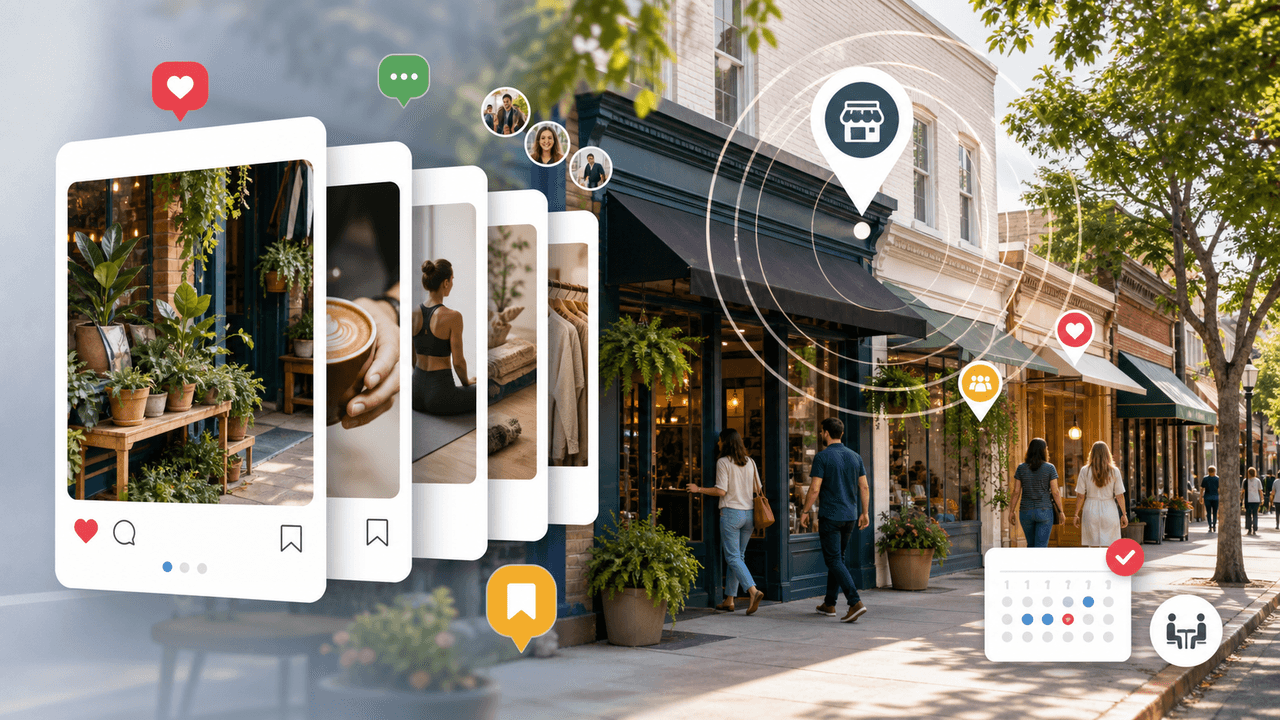
Local Business Instagram Carousels: Drive Foot Traffic Without Paid Ads
Local businesses do not need viral content. They need carousels that reach the right 5,000 people within a ten-mile radius. A local carousel strategy turns your expertise, your team, and your community presence into foot traffic without spending a dollar on ads.
Sources
- NHTSA Offers Summer Safety Road Tips — National Highway Traffic Safety Administration
- Summer Driving and Road Trip Tips — National Highway Traffic Safety Administration
- Auto Repair Basics — Federal Trade Commission
- About Carousel Ads — Meta Business Help Center
Written by
AttentionClaw
Editorial Team
Editorial context
Part of the Carousel Creation topic cluster. Last updated June 22, 2026.