Chapter 1
The direct answer: teach the next appointment
A salon rebooking Instagram carousel should explain when clients should book their next haircut, color refresh, gloss, toner, treatment, extension move-up, or consultation based on the service they just received.
It should avoid making unsupported guarantees about hair health, growth, or color results. FTC advertising basics apply to beauty claims, testimonials, and promotional offers.
The best carousel creates a client planning habit: save this maintenance guide, choose your service path, and book before peak calendar weeks fill.
Callout
Rebooking rule
Make the next appointment feel useful and planned, not like a pressure discount.
Chapter 2
Answer the questions clients forget to ask in the chair
Clients often ask too late: when should I refresh this color, how often should I trim, what if I want to go lighter, when should bridal hair be booked, and what home care helps the result last?
A carousel can educate without diagnosing every hair type. Use ranges, stylist consultation language, and service-specific caveats.
Before-and-after posts are useful, but rebooking posts keep revenue steadier because they tell happy clients what to do next.
Service received today.
Typical maintenance window.
Signs it is time to return.
What to book next.
Home-care reminders approved by the stylist.
Seasonal or event planning timeline.
Chapter 3
Use a six-slide rebooking carousel
The format works because it is tied to a specific service, not a generic 'book now' graphic.
Use real client work only with permission. Otherwise use styled detail shots, product shelf images, and appointment-card visuals.
- 1
Slide 1: service hook
Start with the service: 'Just got dimensional color? Save this timeline.'
- 2
Slide 2: maintenance window
Give a stylist-approved general timing range.
- 3
Slide 3: what changes
Explain grow-out, tone shift, dryness, shape, or event timing.
- 4
Slide 4: next service
Name the likely follow-up service and when to ask about it.
- 5
Slide 5: at-home care
Share approved maintenance reminders without overclaiming.
- 6
Slide 6: CTA
Book the next visit or message the salon with your service history.
Chapter 4
Set claim, testimonial, and discount guardrails
Beauty claims should be truthful and supportable. Avoid promising damage reversal, guaranteed growth, or identical color results for every client.
If using testimonials or client photos, follow FTC endorsement principles: keep claims honest, disclose material connections, and avoid misleading typicality.
Rebooking campaigns can include offers, but the core message should be maintenance education. Constant discounting trains clients to wait.
Use permissioned client photos.
Avoid guaranteed result language.
Make offer terms clear.
Use stylist-approved maintenance ranges.
Route complex color changes to consultation.
Chapter 5
How AttentionClaw helps salons create rebooking systems
AttentionClaw can turn a salon's service menu, stylist notes, color maintenance timelines, event calendars, and aftercare instructions into Instagram carousel series.
Series can cover blonding, vivids, gray blending, extensions, curly cuts, bridal styling, seasonal refreshes, and new-client consultations.
The salon controls service timing and product claims. AttentionClaw keeps the content focused on client planning and booking.
Callout
Salon workflow
Choose one service, add the maintenance window, review claims, add client-safe visuals, publish with a rebooking CTA.
Chapter 6
Measure retention and calendar quality
Measure rebooking clicks, appointment type mix, repeat visits, cancellations, saves on maintenance posts, and how many clients book before leaving the salon.
If clients save the post but do not book, tighten the CTA around the exact next service.
Rebooking rate by service.
Repeat appointment interval.
Maintenance carousel saves.
Consultation requests.
Revenue from returning clients.
Chapter 7
Service-specific rebooking timelines clients actually remember
Generic rebooking reminders — 'see you in six to eight weeks' — rarely stick. Clients remember guidance that is tied to their specific service and the result they want to maintain. A carousel that walks through five common services with specific timing guidance gives clients a reference they save and return to before they realize they have waited too long.
A useful structure for this carousel: one slide per service, with the service name as the headline, the ideal rebooking window, and the visible sign that the client has waited too long. For example: Balayage and highlights — eight to twelve weeks for a toner refresh, sixteen or more weeks for a full repaint depending on grow-out preference; the 'too long' signal is visible banding at the root or warm tones washing out the ends. Blunt cuts — four to six weeks to maintain a precise line; the signal is the ends beginning to feel or look uneven. This level of specificity teaches clients to self-monitor rather than relying entirely on reminders.
The carousel also works as a consultation tool. Stylists can reference specific slides during appointments to explain why a particular rebooking interval is recommended for that client's hair type, color, or cut goal. When clients hear the guidance in the chair and then see it reinforced in a saved carousel, the message is more likely to become a habit.
Balayage and highlights: toner refresh at 8-12 weeks; full repaint at 14-20 weeks depending on grow-out preference
Single-process color: root touch-up at 4-6 weeks for tight maintenance; 6-8 weeks for relaxed
Gloss and toner-only: 6-8 weeks to maintain vibrancy before warmth returns
Blunt or precision cuts: 4-6 weeks to preserve a clean line
Textured or layered cuts: 8-10 weeks before texture loses its shape
Chapter 8
How to build rebooking content that does not train clients to wait for deals
Discount-based rebooking content creates a predictable problem: clients learn to wait. If a salon regularly promotes 'book this week for 15% off,' a portion of the client base will hold off on rebooking until the next discount appears. Over time, this erodes average revenue per client and shifts the value proposition away from the service quality itself.
The alternative is result-protection framing. Instead of 'book now and save,' the message becomes 'book within your window and protect what you paid for.' A color service that required two hours and a significant investment looks worse when a client waits eighteen weeks instead of ten. The carousel's job is to make the cost of waiting visible — not to alarm, but to give clients a genuine reason to rebook that is tied to the outcome they care about.
Concrete result-protection language: 'Color fades faster in summer — book your gloss before you lose the tone.' 'Blunt lines round out after six weeks — here is what that looks like.' 'Going lighter next visit is easier when you come back before the brassy phase sets in.' Each of these gives the client a self-interested reason to rebook that has nothing to do with a promotional incentive.
Callout
Result-protection vs. discount framing
Discount framing: 'Book this week — 20% off your next color.' Result-protection framing: 'Color booked within your toner window looks richer longer — here is why the timing matters.' The second builds a habit. The first builds a wait-for-the-deal pattern.
Chapter 9
What to measure to know if rebooking carousels are actually working
Click rate and reach tell you whether the post found an audience. They do not tell you whether the post changed booking behavior. The metrics that matter for rebooking content are downstream of the post itself: average weeks between appointments for clients who save the post versus those who do not, the percentage of clients who rebook before leaving the salon versus who rebook later or not at all, and the service mix over time (whether clients are staying within their maintenance window for color or cut).
A practical way to connect social content to booking behavior is to track which clients mention the carousel during their appointment. This is informal, but it surfaces which posts are actually changing behavior versus which ones earn saves without action. If a post about balayage timing consistently prompts clients to say 'I saw your post about when to come back,' that post is doing the work the rebooking content is supposed to do.
Over time, a salon that tracks these patterns can optimize the carousel library around the posts that actually change behavior — not the posts that get the most reach. Saves and comments that ask about specific services are stronger signals than likes, because they indicate the client is connecting the content to a real decision they are considering.
Next step
Turn salon maintenance into rebooking content
AttentionClaw helps salons turn service menus, stylist notes, and aftercare education into Instagram carousels that support repeat appointments.
Common Questions
FAQ
More Reading
Keep reading
9-chapter read
Tattoo Studio Aftercare Instagram Carousels
Tattoo studio aftercare carousels should explain what clients should ask, how to follow artist instructions, infection warning signs, booking prep, and when to seek medical advice.
9-chapter read
Med Spa Consultation Follow-Up Instagram Carousels: Turn Interest Into Safe Next Steps
Med spa consultation follow-up carousels should remind prospects what was discussed, which questions to ask before booking, and why treatment recommendations depend on clinician review.
8-chapter read
Dental Recall Reactivation Social Content: Bring Overdue Patients Back
Dental recall reactivation posts should make overdue patients feel invited, not scolded. Use prevention education, appointment expectations, insurance reminders, and clear booking CTAs while avoiding diagnosis or shame.
9-chapter read
Salon Color Consultation Social Content: Set Expectations Before the Appointment
Salon color consultation content should help clients understand goals, hair history, timing, maintenance, budget, allergy considerations, and realistic outcomes before booking. Strong posts reduce mismatch between inspiration photos and appointment reality.
8-chapter read
Home Services Review Proof Social Posts: Turn Trust Signals Into Bookings
Home service review proof posts should show trust without manipulating reviews or exposing customers. Use honest testimonials, process proof, job photos, team standards, and review-safe CTAs to help homeowners decide who to call.
7-chapter read
Salon Bridal Hair Social Content Calendar: Book Trials, Weddings, and Event Styling
Bridal hair content should help clients understand style fit, trials, prep, timing, maintenance, and booking windows. A strong calendar combines portfolio proof, education, timeline posts, testimonials, and clear bridal inquiry CTAs.
8-chapter read
Carousel Slide Order That Converts: Hook, Proof, Offer, CTA
A converting carousel usually follows a clear order: hook, context, problem, solution or product, proof, objection handling, offer, and CTA. The exact slide count can change, but the reader should never wonder why the next slide exists.
8-chapter read
Salon Before-and-After Social Content Guide: Book More Consultations
Salon before-and-after posts work when they show the consultation, starting point, process, maintenance, and realistic result. Use consent, consistent lighting, careful claims, and follow-up education to turn transformations into consultation bookings.
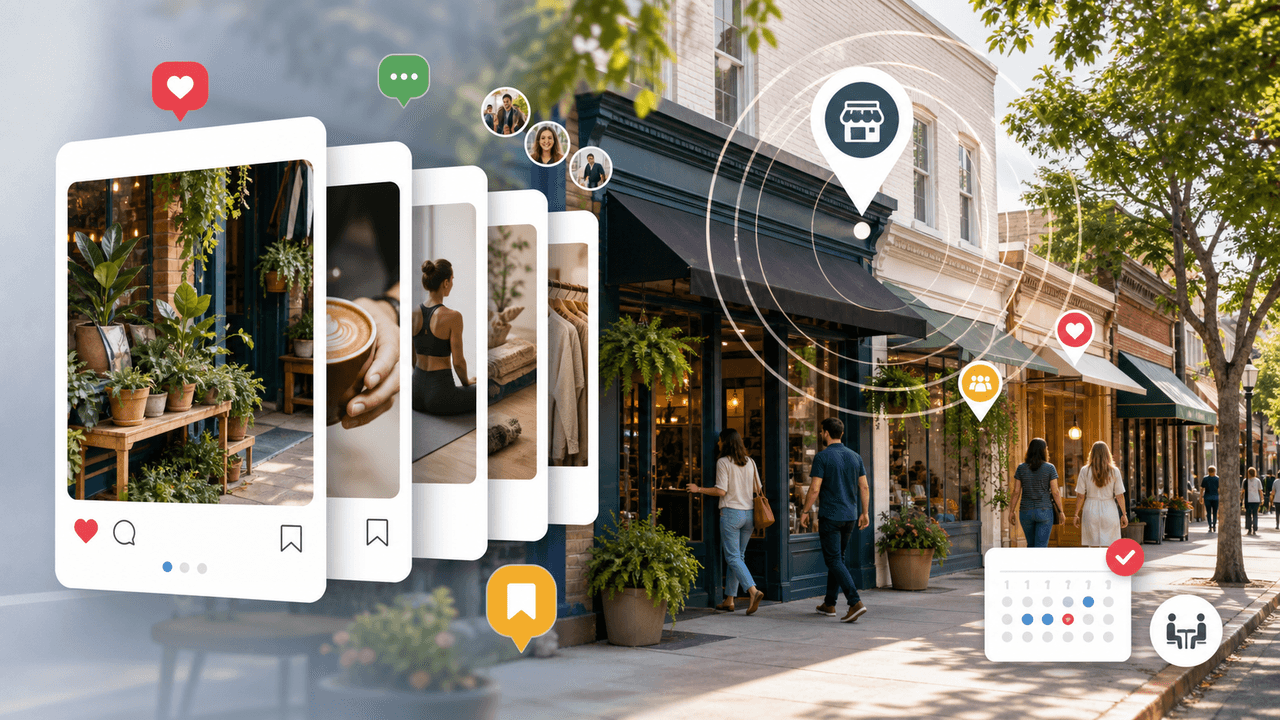
Local Business Instagram Carousels: Drive Foot Traffic Without Paid Ads
Local businesses do not need viral content. They need carousels that reach the right 5,000 people within a ten-mile radius. A local carousel strategy turns your expertise, your team, and your community presence into foot traffic without spending a dollar on ads.
Sources
- Advertising and Marketing Basics — Federal Trade Commission
- The FTC's Endorsement Guides: What People Are Asking — Federal Trade Commission
- Marketing and sales — U.S. Small Business Administration
- About Carousel Ads — Meta Business Help Center
Written by
AttentionClaw
Editorial Team
Editorial context
Part of the Carousel Creation topic cluster. Last updated June 22, 2026.