Chapter 1
The direct answer: teach verification and booking prep
A locksmith lockout TikTok slideshow should explain what customers should prepare: location, lock type, property or vehicle authorization, ID when required, pricing questions, arrival expectations, and safe contact information.
Consumer protection agencies warn people to watch for deceptive service providers and to verify business details before hiring. Locksmith content should lean into transparent identification, pricing, and authorization practices.
The post should not teach lock bypass methods or reveal security weaknesses.
Callout
Locksmith content rule
Build trust through verification, authorization, and transparent process; never teach entry methods.
Chapter 2
Build posts around lockout stress points
Customers ask how fast help can arrive, what proof of access is needed, whether the locksmith handles cars, homes, safes, rekeying, smart locks, or commercial doors, and how pricing works.
Each slideshow should answer one situation. A car lockout post should not also explain commercial access control and safe opening.
Use service vehicle photos, tool bags without bypass details, ID checklist cards, and lock-type examples. Avoid addresses, license plates, keys, and security systems.
What to ask before hiring a locksmith.
Car lockout booking checklist.
Home lockout location details.
Rekey versus lock replacement explainer.
Smart lock support questions.
What proof of authorization may be needed.
Pricing questions before dispatch.
What not to post publicly during a lockout.
Chapter 3
Use a seven-slide lockout booking slideshow
The sequence supports urgent conversion while reinforcing trust.
Review licensing, pricing, authorization, and security language before publication.
- 1
Slide 1: urgent situation
Open with the lockout scenario.
- 2
Slide 2: verify business
Tell customers to confirm business name, contact, service area, and pricing basics.
- 3
Slide 3: location
Ask for safe location, parking, property type, and access details.
- 4
Slide 4: authorization
Mention ID, proof of access, or authorization expectations where applicable.
- 5
Slide 5: lock type
Ask for lock, door, vehicle, or smart lock details without security exposure.
- 6
Slide 6: safety boundary
Do not share bypass methods, keys, addresses, or security weaknesses online.
- 7
Slide 7: CTA
Call for service, save the checklist, or ask about availability.
Chapter 4
Avoid security exposure
Locksmith content should never show how to bypass locks, duplicate restricted keys, defeat access control, or identify a weakness someone can exploit.
Do not publish customer addresses, license plates, keys, lock codes, or security panels.
A trustworthy locksmith can show process, credentials, vehicle, communication, and service boundaries without revealing methods.
No bypass methods.
No key or code exposure.
No customer addresses or plates.
Licensing and pricing reviewed.
Clear urgent-call CTA.
Chapter 5
How AttentionClaw helps locksmiths package trust content
AttentionClaw helps locksmiths turn booking scripts, pricing FAQs, lockout checklists, and privacy-safe service photos into TikTok slideshows and Instagram carousels.
Templates can cover home lockouts, car lockouts, rekeying, smart locks, commercial calls, and scam-aware verification posts.
Callout
Locksmith workflow
Choose lockout scenario, add verification and safety boundaries, select privacy-safe visuals, generate slideshow, publish with call CTA.
Chapter 6
Measure calls and trust-quality questions
Track calls, service-area questions, pricing questions, saves on lockout checklists, and whether customers provide better details before dispatch.
If callers ask clearer verification and authorization questions, the content is supporting legitimate service.
Track emergency call volume.
Track service-area questions.
Track saved checklists.
Track pricing clarification calls.
Track dispatch details quality.
Chapter 7
Help customers safely communicate their location
One slide that significantly improves lockout conversion is a location-sharing guide. Customers in distress often struggle to communicate their exact location clearly, especially in parking structures, apartment complexes, or unfamiliar neighborhoods. A slide that explains what location details to have ready — building name or address, nearest cross street, which entrance or lot, and what to look for when the technician arrives — reduces dispatch errors and speeds up the call.
This content is practically useful, which means it earns saves. Saved posts bring repeat visibility and signal to the platform that the content is worth recommending. A 'What to tell the dispatcher' slide is a resource people save before they need it and reference when they do. That is exactly the kind of content a local service business wants associated with a high-urgency search moment.
Consider making this the second or third slide, immediately after the slide that establishes what the service covers. Customers who are already in a lockout and found the post want the practical prep information fast. Customers who found the post before they were ever locked out will save it for later. Both behaviors serve the business.
Chapter 8
Use the slideshow to set pricing expectations without overpromising
Pricing surprises are the most common complaint in locksmith service reviews. A slideshow that addresses pricing honestly — without committing to a specific number — reduces that friction and builds trust before the call. Explain that pricing typically depends on lock type, time of day, and service complexity, and that the dispatcher can provide a range when the customer calls.
A slide structured as 'What affects your quote' is more useful and more credible than a slide claiming flat-rate pricing that may not hold in every scenario. List the real variables: residential versus commercial lock, standard key versus high-security cylinder, after-hours service, and whether the lock needs to be replaced versus opened. This teaches the customer how pricing works rather than making a promise the technician may need to walk back.
This framing also positions the dispatcher call as a natural next step. After explaining the variables, the CTA 'Call now for a same-day range estimate' feels like a logical action rather than a sales push. Customers who understand what drives the price are more likely to convert and less likely to dispute the invoice.
Name the variables that affect pricing (lock type, time of day, replacement vs. opening)
Avoid committing to specific price points on public social content
Use 'call for a range estimate' as the CTA rather than 'lowest price guaranteed'
Explain after-hours rates exist and that the dispatcher will clarify them upfront
Show that transparent pricing is a service differentiator, not a weakness
Chapter 9
A 'before you call' checklist slide that accelerates dispatch
A checklist slide titled 'Before you call, have this ready' shortens the average call time and improves the customer experience from the first moment of contact. Include: the property address and any suite or unit number, whether this is a residential, vehicle, or commercial lockout, the type of lock or car make and model if known, and whether there is evidence of forced entry that may require a different response.
This slide also serves a trust function. A locksmith who teaches customers what to prepare before calling signals professionalism and process. It implies that the service is organized and that the technician who shows up will be briefed and equipped. That implication reduces the anxiety of calling an unfamiliar service provider in a stressful moment.
Keep the checklist to four or five items. Longer lists overwhelm customers who are already stressed. Prioritize the items that most affect dispatch speed and technician preparedness. The goal is to remove friction from the next action, not to build a comprehensive intake form.
Next step
Turn lockout questions into trust-building slideshows
AttentionClaw helps locksmiths package verification checklists and emergency CTAs into TikTok slideshows and Instagram carousels.
Common Questions
FAQ
More Reading
Keep reading
9-chapter read
Garage Door Repair Safety TikTok Slideshows
Garage door repair safety slideshows should explain warning signs, opener safety features, when to call a technician, and what not to DIY around springs or moving doors.
9-chapter read
Rental Property Maintenance TikTok Slideshows: Reduce Tenant Confusion
Rental property maintenance slideshows should help tenants report issues clearly, protect privacy, understand seasonal maintenance, and route urgent problems without replacing lease or legal guidance.
9-chapter read
Plumber Leak Repair TikTok Slideshows: Turn Drips Into Service Calls
Plumber leak repair slideshows should help homeowners identify safe observations, shut off water when appropriate, document the issue, and book a plumber without encouraging risky DIY repairs.
8-chapter read
Emergency Home Repair Social Content: Help Homeowners Act Safely
Emergency home repair content should help homeowners take safe first steps, document damage, know when to call a professional, and avoid scams. Contractors should keep posts practical, source-backed, and clear about service availability and emergency limitations.
8-chapter read
Home Services Review Proof Social Posts: Turn Trust Signals Into Bookings
Home service review proof posts should show trust without manipulating reviews or exposing customers. Use honest testimonials, process proof, job photos, team standards, and review-safe CTAs to help homeowners decide who to call.
8-chapter read
Home Services Seasonal Maintenance Content Calendar: Book Preventive Work
Seasonal maintenance content helps home service companies book preventive work before emergencies happen. Use weather-aware checklists, HVAC filter reminders, water and mold prevention posts, storm prep, and local booking CTAs to turn useful education into service demand.
8-chapter read
Home Services TikTok Slideshow Ideas: Local Posts for Contractors and Repair Pros
Home service businesses can use TikTok slideshows to show before-and-after proof, explain maintenance, answer emergency questions, spotlight local jobs, and turn field photos into useful content. The best posts are specific, visual, local, and tied to a clear call-to-book.
10-chapter read
TikTok Slideshow Quality Checklist Before You Publish
A TikTok slideshow quality checklist should review the hook, slide sequence, mobile readability, product or screenshot accuracy, claim support, disclosure needs, CTA match, destination link, and campaign tracking before publishing. The checklist protects quality when teams are producing fast.
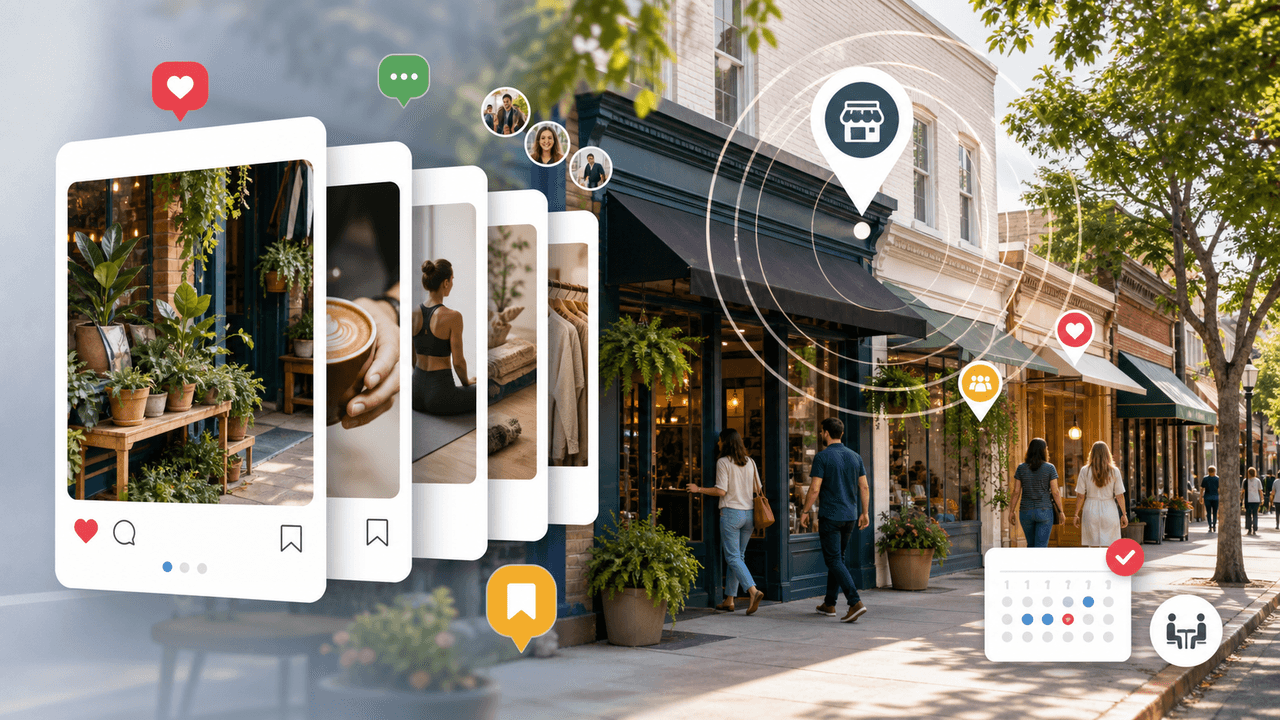
Local Business Instagram Carousels: Drive Foot Traffic Without Paid Ads
Local businesses do not need viral content. They need carousels that reach the right 5,000 people within a ten-mile radius. A local carousel strategy turns your expertise, your team, and your community presence into foot traffic without spending a dollar on ads.
Sources
- Consumer Advice — Federal Trade Commission
- Federal Trade Commission — USAGov
- TikTok Image Ads: Visual Marketing Solutions to Engage Customers — TikTok For Business
- FTC's Endorsement Guides: What People Are Asking — Federal Trade Commission
Written by
AttentionClaw
Editorial Team
Editorial context
Part of the Carousel Creation topic cluster. Last updated June 22, 2026.