Chapter 1
The direct answer: show customers how to prepare the pickup
A junk removal pickup prep TikTok slideshow should explain how to group items, take estimate photos, identify stairs or access issues, flag restricted materials, and book a pickup window.
EPA recycling guidance explains the waste management hierarchy and the value of reducing, reusing, and recycling where possible. EPA construction and demolition material guidance also supports separating reusable or recyclable materials when relevant.
The post should not promise every item can be accepted, donated, recycled, or hauled without local rules and company policies.
Callout
Junk removal content rule
Make the load easy to estimate, be honest about restrictions, and avoid vague landfill or donation claims.
Chapter 2
Build slideshows around pickup scenarios
Junk removal companies can post about garage cleanouts, furniture pickup, moving leftovers, estate cleanouts, renovation debris, appliance removal, office cleanouts, and donation sorting.
Each post should focus on one load type. A garage cleanout post should not also cover hazardous waste, construction debris, and estate privacy in full.
Use before-after photos with permission, load staging visuals, truck capacity examples, and quote checklists. Avoid addresses, documents, and private belongings.
Photos to send before a quote.
Garage cleanout staging tips.
Furniture pickup access questions.
What may be restricted.
Donation versus disposal questions.
Renovation debris estimate prep.
Estate cleanout privacy reminders.
Moving-day leftover pickup checklist.
Chapter 3
Use a seven-slide pickup prep slideshow
This sequence reduces estimate friction and keeps claims honest.
Review local disposal, donation, recycling, and restricted-item language before posting.
- 1
Slide 1: clutter scenario
Open with one load type or room.
- 2
Slide 2: sorting
Explain keep, donate, recycle, dispose, and ask categories.
- 3
Slide 3: photo checklist
Ask for wide shot, close-up, stairs, parking, and heavy-item photos.
- 4
Slide 4: access
Mention elevators, parking, gates, stairs, and loading zones.
- 5
Slide 5: restrictions
Tell customers to ask about hazardous, electronic, or local restricted items.
- 6
Slide 6: quote path
Explain estimate, pickup window, crew size, and disposal approach generally.
- 7
Slide 7: CTA
Book pickup, send photos, or save the prep checklist.
Chapter 4
Protect customer privacy and disposal accuracy
Junk photos can reveal documents, family items, medications, valuables, or addresses. Crop carefully.
Avoid blanket claims such as 'everything is recycled' unless the company can prove it for that load.
If testimonials or before-after proof appear, get permission and avoid exposing a private situation.
No addresses or documents.
No unsupported recycling claims.
Restricted-item policy reviewed.
Estate and moving cleanouts handled sensitively.
Clear pickup CTA.
Chapter 5
How AttentionClaw helps junk removal teams package pickup content
AttentionClaw helps junk removal companies turn photo-estimate scripts, load examples, restricted-item notes, and before-after proof into TikTok slideshows and Instagram carousels.
Templates can cover garage cleanouts, furniture pickup, office junk, renovation debris, move-out leftovers, and estate cleanout preparation.
Callout
Junk removal workflow
Choose load type, add photo checklist and restrictions, select privacy-safe visuals, generate slideshow, publish with pickup CTA.
Chapter 6
Measure photo estimates and booked pickups
Track pickup bookings, photo submissions, restricted-item questions, estimate accuracy, and saves on prep checklists.
If customers send better photos before booking, the slideshow is improving sales and dispatch.
Track pickup bookings.
Track photo estimate submissions.
Track restricted-item questions.
Track quote-to-booking rate.
Track crew feedback on load accuracy.
Chapter 7
A worked example: the garage cleanout slideshow
A customer messages on a Tuesday asking for a garage cleanout estimate. The junk removal company's slideshow — posted two weeks earlier — walks viewers through exactly what to do before a crew arrives. Slide one shows a cluttered garage and asks: 'Clearing out a garage? Here's how to get the most accurate estimate in under 5 minutes.' Slide two lists three photo angles: straight-on from the door, left corner, right corner. Slide three explains what to separate first: anything that is not going (keep boxes, personal files, tools you're keeping), and anything that is restricted (paint cans, propane tanks, batteries).
Slide four gives an honest ballpark: 'A full two-car garage typically takes one full truckload.' Slide five explains what 'one truckload' means in practice — cubic yards, not just a vague truck image. Slide six covers the restricted-items list so the customer is not surprised at pickup. Slide seven tells them to text three photos and a zip code to get an estimate within the hour.
The customer who watched this slideshow messages with three usable photos and already has the restricted items set aside. The job books faster, the estimate is more accurate, and the crew shows up to fewer surprises. The slideshow reduced friction at every step of the booking path.
Chapter 8
Five slideshow formats for junk removal companies
The pickup-prep format is the highest-ROI slideshow for booking, but it is not the only format that works. Different slideshow types reach customers at different stages of the decision: early-stage people who are thinking about cleaning out, mid-stage people actively requesting estimates, and late-stage people who have already booked and need to know what to expect.
Each format has a different primary job. Prep guides convert browsers to bookers. Item guides handle objections before they happen. Behind-the-scenes formats build trust. Seasonal formats catch customers who did not know they needed a pickup until they saw the post.
- 1
The prep guide
Walk the customer through exactly how to organize before the crew arrives. Reduce estimate friction and prevent scope creep.
- 2
The restricted-items explainer
Show what cannot go on the truck and where it can go instead (hazmat facility, donation, e-waste drop-off). This handles a common reason bookings stall.
- 3
The behind-the-scenes load
Show an actual job from text-estimate to finished empty space. Proof posts like this reduce booking hesitation for first-time customers.
- 4
The price-range explainer
Show load-size examples with honest price ranges. 'A single sofa plus three bags' versus 'half a garage' helps customers self-qualify before calling.
- 5
The seasonal declutter trigger
Post before spring cleaning, post-holiday, and pre-move seasons. These catch people in the decision window before they call a competitor.
Chapter 9
What to track beyond bookings
Booking rate is the obvious metric, but it only captures customers who were already close to deciding. Slides with high save rates often show material that customers want to reference — a restricted-items list, a load-size guide — which means the content is doing its job even if the viewer is not booking today. High saves predict future bookings from customers in the consideration stage.
Track photo-estimate quality over time. If the photos customers send improve after a prep slideshow is posted, the content is working. Crews that arrive to fewer surprises, mis-quoted jobs, or restricted items on the curb are an indirect measure of slideshow effectiveness. Ask the team after two to three months of posting whether estimates have become more accurate.
Comment quality is also a leading indicator. Comments like 'what do I do with old paint?' or 'can you take a mattress?' are pre-booking questions. They are prospects, not just viewers. A pinned reply with a direct answer plus a booking link turns those comments into conversion points.
Next step
Turn cleanout questions into pickup-ready slideshows
AttentionClaw helps junk removal teams package photo estimate checklists and booking CTAs into TikTok slideshows and Instagram carousels.
Common Questions
FAQ
More Reading
Keep reading
8-chapter read
Home Cleaning Move-Out TikTok Slideshows
Home cleaning move-out slideshows should explain what tenants should clear, what cleaners can assess, how disinfecting differs from cleaning, and how to book without risky product claims.
9-chapter read
Carpet Cleaning Stain Prep TikTok Slideshows: Turn Spots Into Booked Jobs
Carpet cleaning stain prep slideshows should help customers photograph stains, describe timing and material, avoid risky product mixing, and book a professional cleaning estimate.
9-chapter read
Home Services Estimate Follow-Up TikTok Slideshows: Explain Scope Without Sounding Pushy
Home services estimate follow-up slideshows should clarify scope, materials, timing, permit questions, safety considerations, and next steps after a homeowner receives a quote.
8-chapter read
Home Services Review Proof Social Posts: Turn Trust Signals Into Bookings
Home service review proof posts should show trust without manipulating reviews or exposing customers. Use honest testimonials, process proof, job photos, team standards, and review-safe CTAs to help homeowners decide who to call.
8-chapter read
Carousel Slide Order That Converts: Hook, Proof, Offer, CTA
A converting carousel usually follows a clear order: hook, context, problem, solution or product, proof, objection handling, offer, and CTA. The exact slide count can change, but the reader should never wonder why the next slide exists.
8-chapter read
Home Services TikTok Slideshow Ideas: Local Posts for Contractors and Repair Pros
Home service businesses can use TikTok slideshows to show before-and-after proof, explain maintenance, answer emergency questions, spotlight local jobs, and turn field photos into useful content. The best posts are specific, visual, local, and tied to a clear call-to-book.
5-chapter read
40 TikTok Slideshow Ideas for Local Service Businesses
Local service businesses should use TikTok slideshows to answer the practical questions customers ask before booking: what the service solves, what it costs, what the process looks like, what results are realistic, and why this local provider is trustworthy.
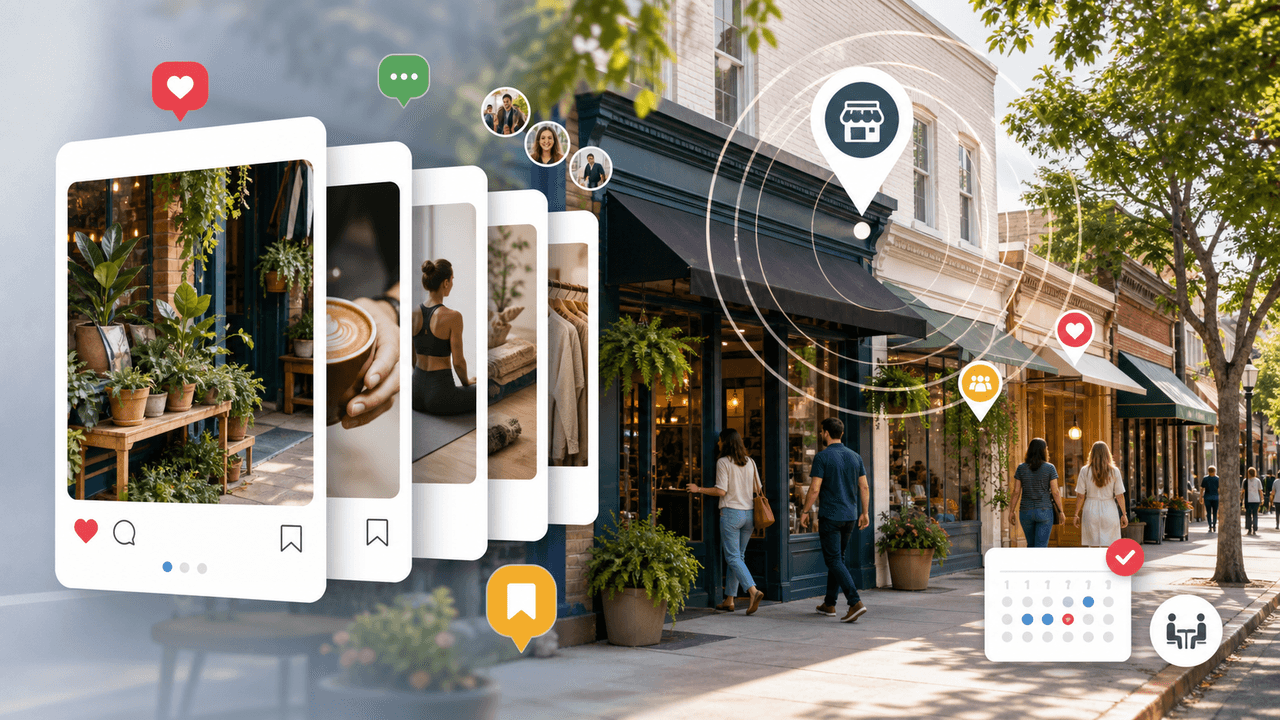
Local Business Instagram Carousels: Drive Foot Traffic Without Paid Ads
Local businesses do not need viral content. They need carousels that reach the right 5,000 people within a ten-mile radius. A local carousel strategy turns your expertise, your team, and your community presence into foot traffic without spending a dollar on ads.
Sources
- Recycling Basics and Benefits — U.S. Environmental Protection Agency
- Sustainable Materials Management: Non-Hazardous Materials and Waste Management Hierarchy — U.S. Environmental Protection Agency
- Sustainable Management of Construction and Demolition Materials — U.S. Environmental Protection Agency
- TikTok Image Ads: Visual Marketing Solutions to Engage Customers — TikTok For Business
Written by
AttentionClaw
Editorial Team
Editorial context
Part of the Carousel Creation topic cluster. Last updated June 22, 2026.